
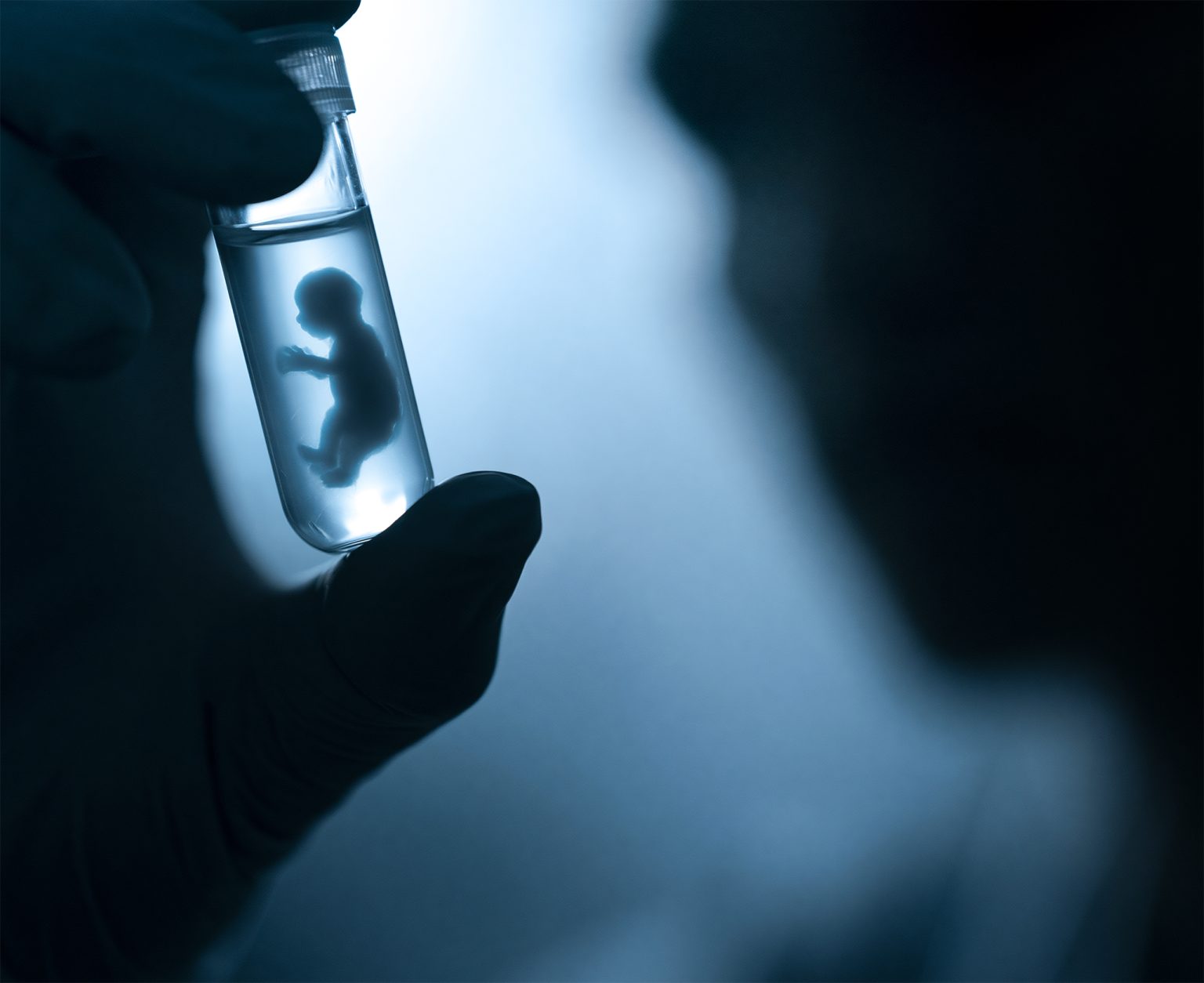
A team of scientists has announced a new gene-editing technique they say holds out the promise of saving children from previously incurable illnesses. Much of the response from the scientific community has focused on ethical concerns such as the prospect of the technique being used to create “designer babies”.
But while these fears relate to possible abuses in the future, the study also highlights a problem already occurring – what critics regard as the destruction of unborn human life in the pursuit of scientific progress.
In a preprint published on 1 June, scientists at Columbia University claim to have developed a safer gene-editing technique to alter the genome of human embryos, which increases accuracy and limits potential damage.
The study is the latest development in the field of gene editing, which has seen multiple groups from across the world – particularly China and the United States – publish work on editing human embryos. The scientific journal Nature is presently reviewing the Columbia paper, as well as another from a UK-based team of researchers whose members have so far declined to reveal their identities.
The Columbia researchers, led by Professor Dieter Egli, used a technique called base editing to replace individual genetic letters in sequences of DNA. They argue that their method damages DNA less than earlier approaches based on traditional clustered regularly interspaced short palindromic repeats (CRISPR) techniques.
The paper, which is yet to be peer reviewed, has caused a great deal of excitement in the scientific community, as well as apprehension. One genomics researcher praised Egli’s work, calling it “less reckless, more careful and ethical” than previous attempts.
However, other scientists expressed concerns about the safety of the approach. Egli himself says the potential side effects remain unknown and that the technique is not ready for clinical use.

Designer Babies
Much of the criticism of the paper related to broader concerns over the ethical implications of gene editing embryos. While it could be used to cure disease-causing mutations in the early stages of life, critics say it could also be used in a eugenic way to select traits of unborn children.
In this light, the fact that the Columbia research team partnered with companies involved in embryo screening and selection technologies, which critics argue could contribute to the development of so-called designer babies, has not helped to assuage critics’ fears.
But while these issues relate to potential problems in the future, the study highlights a more pressing ethical concern – the use of human embryos for scientific research.
The Columbia team developed their technique by testing it on human embryos, rather than animal alternatives that some bioethicists say are readily available.
This approach elicited strong criticism from concerned bioethicists for two reasons: first, because human embryos were used at all, and second, because of the way they were obtained.
A senior ethicist at the US-based National Catholic Bioethics Center, Father Tadeusz Pacholczyk, said that “from the get-go, these experiments at Columbia University were unethical”.
He argued the study should have been carried out on animal embryos, not human ones, as the same basic biological information “could readily have been obtained in that way”. He accused the university of using the unborn children as “research fodder”.

Using Frozen Leftover Children
The way the researchers acquired the embryos was also unethical, according to Pacholczyk, who said some embryos came from what he termed "leftover children" remaining in fertility clinics.
Pacholczyk questioned whether parents could consent to their unborn children being experimented on in this way, arguing that consent cannot ethically justify directly causing death or using subjects as “mere means to an end”.
The neuroscientist also noted that the human embryos created in the experiments were often “intentionally sacrificed to obtain their embryonic stem cells”. He said the practice of “creating humans for the purpose of destroying them” should be illegal.
While countries like Italy, Germany and Poland have regulated in vitro fertilization (IVF) in a way that attempts to limit the number of embryos created as part of the process, the United States has virtually no IVF regulations regarding the treatment of human embryos, according to the pro-life scientific research organization the Charlotte Lozier Institute.
A study conducted by the institute found the US allows for “the creation, destruction, and indefinite freezing of countless embryonic human beings”, while a significant number of countries including the US, Australia, Belgium and France permit or do not regulate the donation of discarded human embryos for scientific research.
As regards the practice of genetic editing of embryos, dozens of countries have banned the editing of sperm, eggs or embryos for reproduction, but the legal status of using human embryos in scientific research is more mixed.
One 2021 study found that 70 countries explicitly prohibit human genome editing for reproduction, including a majority of countries in the developed world. However, other studies suggest the picture is more complicated, with some countries such as India and Ireland having few enforcement mechanisms.
Meanwhile others like China, the United Kingdom and the United States permit the practice for scientific research with certain restrictions and limitations. It is from these last three countries that much of the research on genome editing has emerged.
Genetic Optimization
In the US, legislation bars federal funding of human embryo editing research, and the Food and Drug Administration cannot consider applications involving genetically modified embryos intended for pregnancy. But private funding is legal and the Columbia study highlights an industry that has an interest in such studies being carried out: the assisted reproduction industry.
A company called Genomic Prediction, which markets the screening of IVF embryos to avoid gene variants that raise the risk of diseases such as schizophrenia and cancer, provided the DNA sequencing of Egli’s lab-grown embryos at no cost.
Another embryo-testing firm, Nucleus Genomics, has promised to finance future testing. One of the co-authors of the Columbia paper is now chief clinical officer at the company. The CEO of Nucleus Genomics has previously spoken of the “genetic optimization” of human babies, while the company’s founder Kian Sadeghi has said embryo editing for his clients is a logical next step.
Sadeghi said he anticipates that embryo editing will be limited to “niche” cases, but developmental biologist Robin Lovell-Badge of the Francis Crick Institute warned that the partnership between Egli and Nucleus Genomics makes him “very nervous”.
While Columbia University’s study demonstrates the strides forward scientists continue to make in terms of technical improvements, it has also reignited debate regarding the uses to which scientific discoveries are put and the means used to research them.
These questions cannot be answered by science itself and require vigilance from ethicists and governments to determine what legislation is needed to ensure scientific progress continues to serve the good of all people, especially the most vulnerable.