
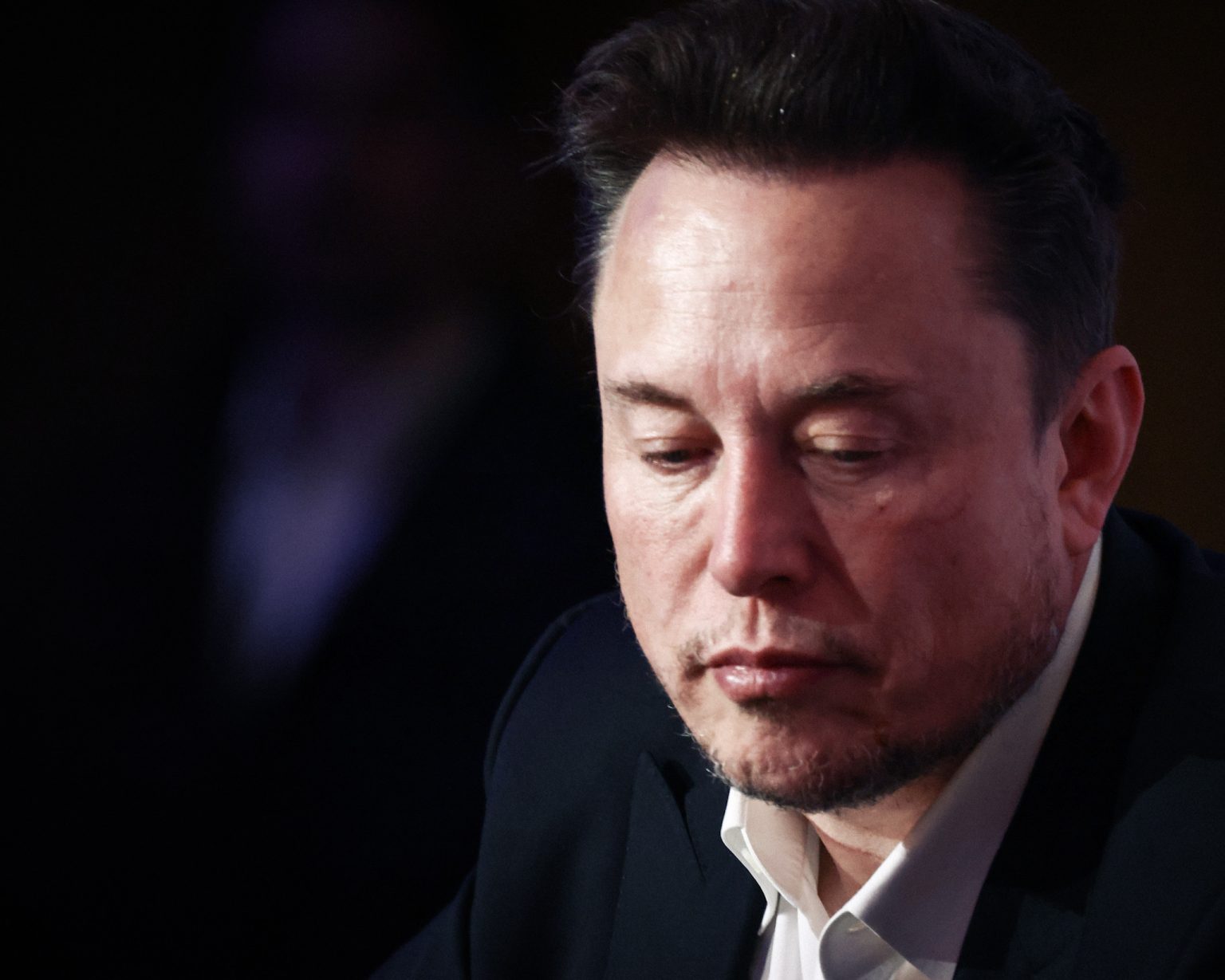
Elon Musk has announced legal action against Germany’s public broadcaster ZDF. The tech entrepreneur was responding to a ZDFheute live broadcast that accused him of calling for a “hunt on migrants” in connection with riots in Northern Ireland.
On his platform X, Musk wrote that legal action was being taken against ZDF over “outrageous lies”. A few hours later, he doubled down. Responding to a post by German author Hans Mahncke, Musk wrote: “During the lawsuit against them, we will find out exactly which cretin wrote this terrible lie.”
The controversy arose from a report on unrest in Belfast following a brutal knife attack. Presenter Christina von Ungern-Sternberg opened the broadcast by saying: “A brutal attempted murder in broad daylight in Belfast. Someone films it, the video goes viral. A racist mob then hunts migrants. The calls for this came from a British far-right extremist – and tech billionaire Elon Musk.”
To support its claim, ZDF displayed a post by Musk on X. He had shared a call for protests by British activist Tommy Robinson, adding: “Only by protesting REPEATEDLY and LOUDLY will there be any change!!” The post contained no call for a “hunt on migrants”.
ZDF later stated that the wording had been “imprecise and therefore open to misunderstanding”. According to the broadcaster, the introduction had been intended as a concise summary of protests that later turned violent and earlier calls for demonstrations on X. It said Tommy Robinson had called for protests following the knife attack and Musk had subsequently shared his post.
Criticism Over ZDF’s Reporting
ZDF’s wording drew widespread criticism not only from viewers but also from journalists in Germany.
ZDF is one of Germany’s largest public broadcasters. It is funded by a mandatory broadcasting fee and operates under a statutory public-service mandate, which places particular demands on its journalistic accuracy. The criticism of its Musk coverage therefore goes to the heart of public-service news reporting.
The controversy is the latest in a series surrounding the broadcaster’s coverage of the United States. Questions have repeatedly arisen over its reporting on Trump, migration and conservative figures, and whether ZDF presents events accurately or too readily fits them into familiar narratives.
AI Images in an ICE Report
In February, the broadcaster’s flagship news program heute journal aired a report on operations by US Immigration and Customs Enforcement (ICE) under President Donald Trump, claiming that the agency was arresting children. The segment, titled Children Living in Fear of ICE, featured dramatic footage of raids and distressed families, creating an atmosphere of fear.
It later emerged that the report included an AI-generated video that did not show real arrests, along with older footage from an unrelated event. ZDF corrected the report after the fake images came to light and prompted widespread criticism. Nicola Albrecht, head of the broadcaster’s New York bureau, was subsequently removed from her position. ZDF initially cited “technical reasons”.
At an internal staff meeting later leaked by a participant, editor-in-chief Bettina Schausten addressed the incident, according to published recordings. The AI sequence had been “knowingly inserted”. There had been “no intention” to deceive, “but it was done knowingly”. Reality, she said, must not be illustrated with AI-generated images showing “how it might have been”.
One ZDF employee described the affair at the meeting as a possible “Relotius moment for ZDF”. The reference was to former Spiegel reporter Claas Relotius, who fabricated stories for years. The employee criticized what he called a “complete focus on the narrative” and argued that even the title Children Living in Fear of ICE was problematic. In his view, the report reduced a complex debate over migration policy to a story about innocent migrant children living in fear of Trump.
Schausten rejected the comparison with Relotius. At the same time, she said: “We cannot afford this again” and “we did not tell people the truth”.
Theveßen, Hayali and Charlie Kirk
Another controversy surrounding ZDF concerned the murdered conservative American activist Charlie Kirk. The broadcaster’s Washington correspondent, Elmar Theveßen, claimed in a podcast and later on the ZDF talk show Markus Lanz that Kirk had called for homosexuals to be stoned to death. The claim was demonstrably false.
Theveßen later apologized publicly. According to his subsequent explanation, Kirk had referred to a biblical passage mentioning the death penalty. ZDF turned that reference into an alleged call for homosexuals to be stoned.
Such an allegation is no minor matter when made against a murdered political activist. It shapes how German audiences perceive him, while he can no longer defend himself.
Musk, by contrast, is very much alive and prepared to take legal action over what he regards as defamation on German public television.
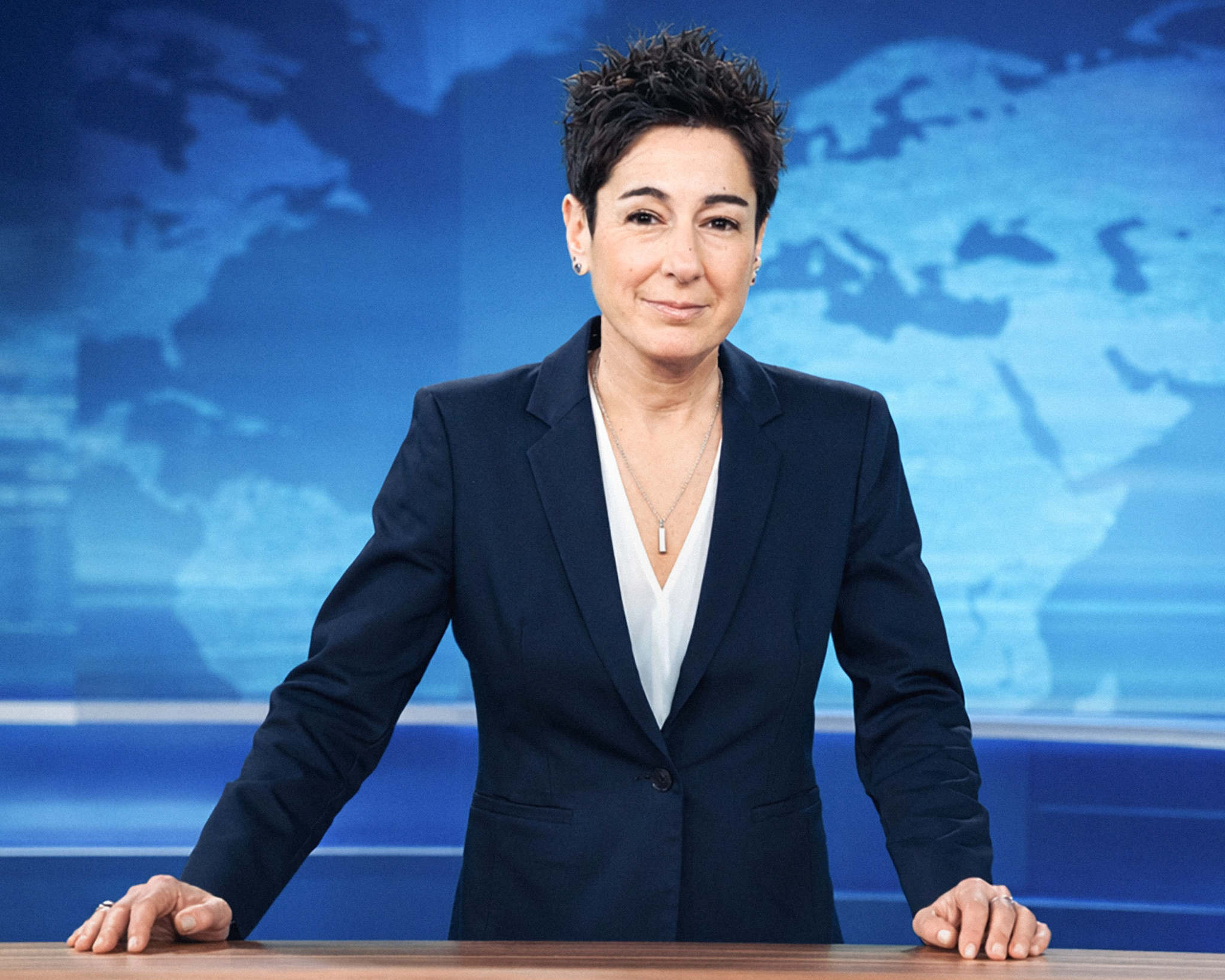
Dunja Hayali, one of ZDF’s best-known news presenters, also faced heavy criticism following Kirk’s murder. Introducing the story in a flagship news broadcast, she described him as a radical religious conspiracy theorist who had made abhorrent, racist, sexist and dehumanizing remarks.
The controversy fed into a broader debate over the tone of public-service reporting on American conservatives. On social media and in conservative outlets, Hayali was accused of framing Kirk’s murder through a moral judgment of the man who had been killed.
ZDF’s Image of America
For decades, ZDF has played a major role in shaping German perceptions of the United States. That responsibility has become especially sensitive during the Trump era. Reports from Washington on migration, border security, right-wing movements and conservative figures are more than foreign news. They also shape how a broad German audience sees the United States.
The accumulation of such incidents therefore matters. The ICE report portrayed Trump’s America using images that did not always match the narration. ZDF’s coverage of Kirk attributed an extreme claim to a murdered conservative activist without adequate basis. The Musk segment linked his sharing of a protest call to a supposed “hunt on migrants”.
The recurring impression is that ZDF often approaches stories involving Trump, American conservatives, migration or right-wing movements through a strongly moral lens. Such an approach does not inevitably produce errors. In the cases cited, however, it led to corrections, apologies and public doubts about the broadcaster’s journalistic standards.
The issue also has domestic political consequences in Germany. Many viewers encounter the United States chiefly through public-service correspondents, news presenters and analysis from major broadcast studios. Those who explain America on ZDF also help shape how Germans discuss their most important ally outside Europe.
Musk Takes the Debate International
The dispute with Musk is taking the debate beyond Germany’s media landscape. The entrepreneur has an enormous reach, owns the platform on which the disputed claim is being discussed and can draw international attention to the affair. ZDF therefore faces not only domestic media criticism but also one of the most influential figures in the global digital sphere.
Whether the dispute will reach the courts remains unclear. Its political consequences are already apparent. A German public broadcaster must now explain how sharing a call for protest came to be portrayed as encouraging a “hunt on migrants”.

The affair is the latest in a striking series of controversies. First came AI-generated images in a report on Trump’s ICE policies. Then came a false claim about Charlie Kirk. Now ZDF faces criticism over its Belfast report involving Musk.
For audiences outside Germany, one point stands out: Germany’s debate about America is not shaped in Washington alone. Much of it is also shaped by public-service television.