
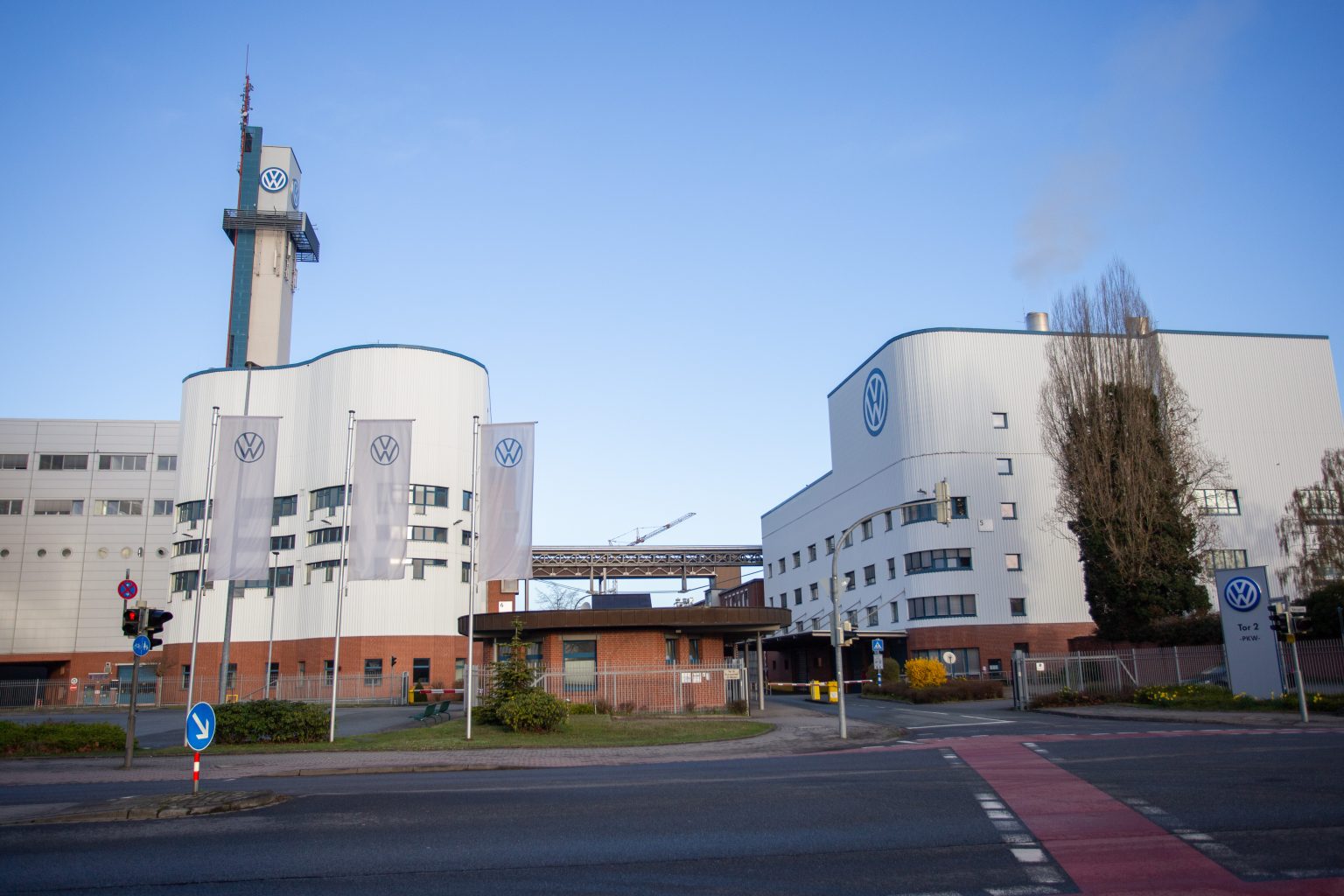
Osnabrück, which currently employs around 2,300 people, is one of the plants the Volkswagen (VW) Group plans to close or sell, and its fate now hinges on a defense deal. Since this spring, the automaker has been negotiating with the Israeli state-owned defense company Rafael Advanced Defense Systems over using the site for arms production, with Rafael's German subsidiary, Dynamit Nobel Defence, expected to take the lead role should a cooperation come about. Rafael is reported to have signed a letter of intent in April on the acquisition or use of the site.
Porsche production in Osnabrück is winding down in 2026, and the T-Roc Cabrio is due to end in mid-2027, after which no vehicle contract is guaranteed. Volkswagen intends to decide the site's future by the end of 2026. Complicating matters is the Qatar Investment Authority, one of VW's owners, which holds around 17% of the voting rights and two seats on the supervisory board, making it the third-largest voting shareholder after Porsche SE and Lower Saxony. Multiple media reports indicate that Qatar has raised significant objections to the Rafael deal.
Caught Between Qatar and Israel
The reasons cited include Qatar's difficult relationship with Israel, its role as a mediator with Hamas and strong domestic political support for the Palestinians, though none of this has been publicly confirmed by VW, Rafael or the Qatar Investment Authority. The VW Group is unlikely to push through a strategically and politically contentious arms deal against the resistance of a major shareholder and two supervisory board members, and it is this standoff that has produced a precarious situation. It soon prompted reports that Rafael had decided definitively in favor of production in India instead.
No official statement from Rafael or signed contract has borne this out, however. India had been named as an alternative site from the outset, since Rafael already has industrial partnerships there, so the deal is indeed at risk of moving abroad, though it is not yet lost. Reuters reported on 17 July, citing two people familiar with the talks, that Lower Saxony would "definitely get involved", and there is reportedly optimism that Rafael's entry can still be made possible. The precise form of that support remains unclear, but observers currently consider the two-company model the most promising option.
Various Rescue Models
One option would keep Volkswagen involved through an ownership or employment company, with Rafael and possibly Lower Saxony forming a separate production company to handle the defense components, thereby sidestepping the issue of an indirect Qatari stake in an Israeli arms company. A more radical alternative would have Lower Saxony take over the plant from VW altogether, taking the decision out of the VW Group's hands and, with it, out of reach of the Qatar Investment Authority's influence. That path would carry real risk for the state, however, which would then be on the hook not just for funding the conversion but potentially for buildings, capacity utilization, employees and future social plans as well.
Olaf Lies, Lower Saxony's Minister-President and a member of VW's supervisory board, is broadly supportive of the defense industry repurposing the site, but insists that Volkswagen cannot simply walk away and leave the state or a new owner to deal with the fallout. VW, in his view, should stay involved in whatever solution emerges. Asked about this, the State Chancellery would confirm only "constructive talks with various partners", declining to say anything further about the scale of any involvement or possible state funding.
Red-Green Backs Weapons Production
Yet according to the business magazine Capital, the red-green [SPD-Green] state government is fundamentally willing to back the shift from car-making to arms production with a stake of its own, a structure reportedly being weighed as a possible template for other VW sites under threat. Lower Saxony already holds 20% of Volkswagen's voting rights, which leaves the state in an unusual position: it could end up acting simultaneously as a major VW shareholder, a possible new plant owner, a financial backer and the party politically answerable for the outcome.
With that, the battle to preserve jobs at the Osnabrück site is wide open once again. The plant was reportedly meant to build certain components of the Iron Dome system going forward, among them mobile launch systems, heavy carrier vehicles, generators and power supply units, along with other mechanical and vehicle-related parts. Rafael's main goal was to create additional capacity for European customers, and it is this part of the plan, above all, that gives the Lower Saxony site its strongest card to play.