

The end of last week brought a sharp sell-off in technology stocks and a reminder that markets cannot ignore reality forever.
On June 5, the Nasdaq fell 4.18%. While significant, the decline was far from historic. The index dropped 12.32% during the pandemic panic of March 2020 and 11.35% on “Black Monday” in 1987. What made Friday notable was not the size of the fall but what it revealed: investors are beginning to reassess the assumptions that have fueled the AI-driven rally.
The AI Engine Stalls
The sell-off was not triggered by expensive oil or fears of recession. Instead, it began with doubts about the technology sector's ability to meet the enormous expectations investors have placed upon it.
Those doubts emerged after Broadcom released its latest earnings.
On paper, the results were outstanding. Earnings reached $2.44 per share, while revenue jumped 48% year over year to $22.19bn. Revenue from the company's custom AI-chip business surged 143% to $10.8bn, and management projected further growth in the coming quarters.
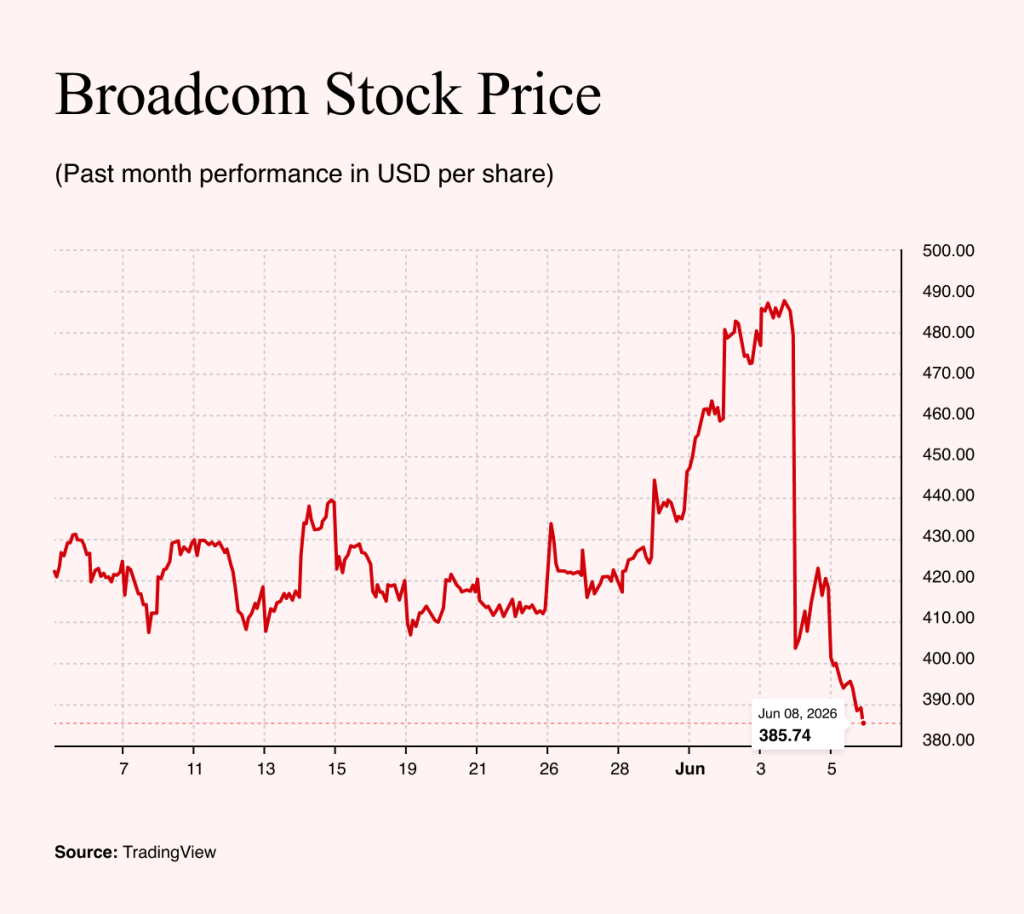
Yet the stock fell 6.1% immediately after the announcement and continued declining the following day.
The reason was simple: even exceptional results were not enough.
Broadcom is still growing rapidly, and management continues to forecast strong demand. The problem is that expectations have become so extreme that investors increasingly demand perfection. Any sign that growth may eventually normalize is treated as a disappointment.
Broadcom's decline triggered a broader reassessment across the technology sector.

Profit-Taking Spreads
Broadcom shares lost more than 20% in two days. Even after that correction, however, the company's price-to-earnings ratio remained around 64, highlighting how expensive many AI-related stocks still are.
The sell-off quickly spread. Micron also fell more than 20% in two days. In South Korea, panic selling in semiconductor giants Samsung Electronics and SK Hynix briefly disrupted trading as investors rushed to lock in profits.
Despite these declines, many of these stocks remain well above their levels at the start of the year. For now, the move looks more like aggressive profit-taking than the definitive bursting of the AI investment bubble.
Still, the episode serves as a reminder of how quickly sentiment can change when markets become crowded and expectations become excessive.
Good News Becomes Bad News
Technology stocks also faced pressure from an unexpected source: strong economic data.
The US economy added 172,000 jobs in May, far above expectations of roughly 85,000. Unemployment remained stable, despite repeated predictions that artificial intelligence would soon begin displacing workers on a large scale.
Ordinarily, strong labor-market data would be welcomed. For investors, however, it created a new problem.
If employment remains strong while inflation continues to rise, the Federal Reserve will have little reason to cut interest rates. In fact, strong economic data increases the possibility that rates will remain elevated for longer than markets previously expected.
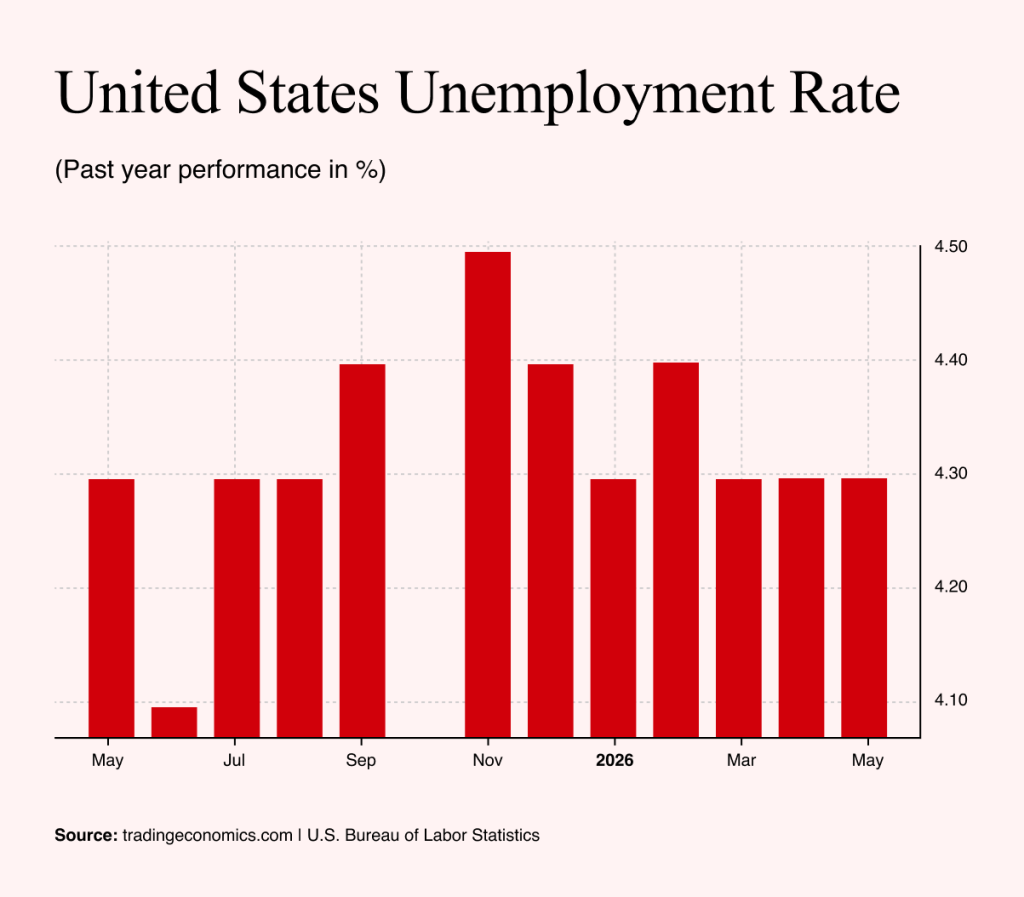
That matters because expensive financing is particularly painful for highly valued technology companies that depend on future growth to justify today's valuations.
The market is therefore confronting two uncomfortable realities at once. Expectations for AI may have become excessive, while hopes for imminent interest-rate cuts may have been premature.

A Difficult Summer Ahead
The recent sell-off does not necessarily mean the AI story is over. Investors may once again embrace the familiar strategy of buying every dip.
But the events of the past week have exposed just how dependent markets have become on optimistic assumptions.
For months, investors could simply buy AI-related stocks and watch them climb. That period of easy gains now appears less certain. Whether the current correction proves temporary or develops into something larger, markets have been reminded that enthusiasm alone cannot support valuations indefinitely.