As Islam grows in Britain and Anglican attendance declines, the Church of England faces mounting questions over its identity. Divisions at home and abroad are bringing it closer to a potential schism.
The Church of England appears to be entering a period of profound decline. After more than 500 years of independence from Rome, the established Church now seems to be losing much of its social force.
For years, congregations have been shrinking and churches closing. In 2016, the number of people attending Church of England services fell below one million for the first time ever. By contrast, a 2005 study found that nearly one million Muslims went to the mosque at least once a week. The Islamic population has since grown significantly, so more Muslims are likely to go regularly to their houses of worship than Anglicans.
Between 2014 and 2024, around 3,500 churches closed their doors. Some churches have been converted into housing, others into mosques or other places of worship, while some have simply been demolished. Many churches are old, requiring large amounts of investment to remain operational.
With declining congregations, those funds are increasingly scarce. In some areas, this issue is especially prominent, with around one quarter of all historic churches and chapels in Wales closing in recent years, while the Church of Scotland is planning to close 30–40 per cent of its churches. Alongside this visible decline, another religious force has become more prominent in Britain: Islam.
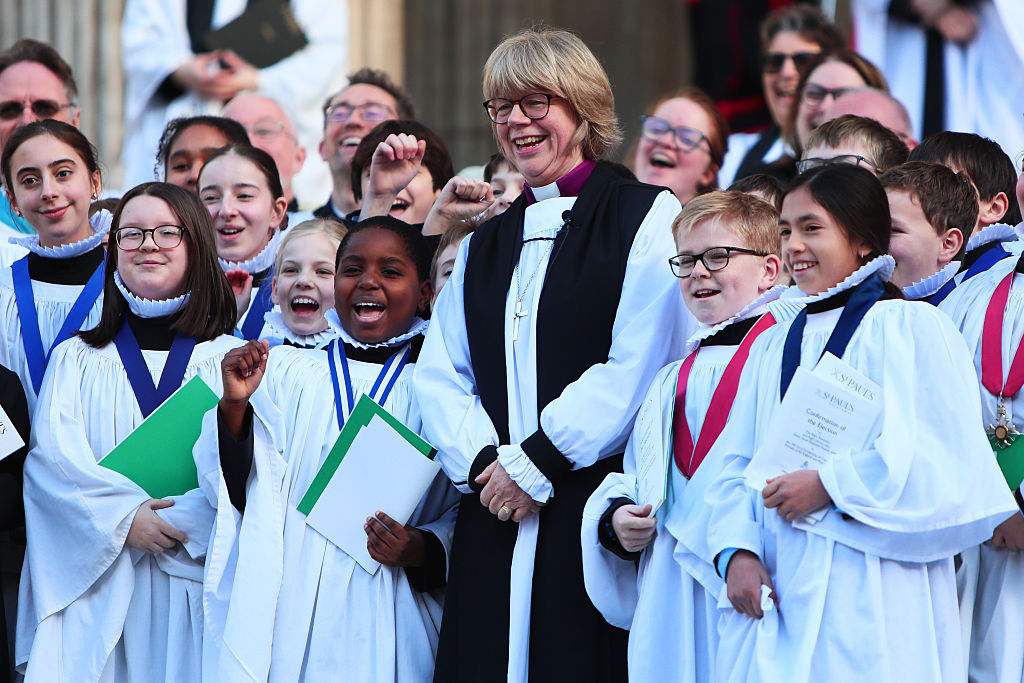
Sarah Mullally on the steps of St Paul’s Cathedral after her confirmation as the first female Archbishop of Canterbury, 28 January 2026, London. Photo: Alishia Abodunde/Getty Images
Where Does Dialogue End and Submission Begin?
Driven in part by migration and higher birth rates, Islam, once a minority faith in Britain, now has around four million followers and continues to grow. The expansion of Muslim communities has also brought debate about integration and the risks of radicalisation.
Some governments in the Gulf, including Saudi Arabia and the United Arab Emirates, have publicly expressed concern about extremist influences in parts of Europe. In recent years, some families from those countries have reportedly reconsidered sending their children to prestigious British boarding schools and universities, fearing exposure to radicalised interpretations of Islam among diaspora communities.
Against that backdrop, some Church of England parishes have hosted iftars during Ramadan, inviting Muslims to break their fast inside church buildings. To supporters, such events are gestures of hospitality and interfaith goodwill. However, they raise deeper theological concerns. Islam explicitly rejects doctrines that lie at the heart of Christian belief. For that reason, some Christians argue that hosting Islamic observances in Anglican churches risks blurring essential religious boundaries at a moment when the Church itself is already weakened.
Weak Leadership and Adherence to the Zeitgeist
The newly appointed Archbishop of Canterbury, Sarah Mullally, has so far not objected to iftar events being hosted on Church of England premises. On the contrary, she is often seen at interfaith and intercultural events in London. One question about how interfaith the dialogue really is concerns the degree to which Christian hospitality is reciprocated: mosques do not seem to welcome Anglicans for Evensong.
Other theological questions, such as late-term abortion, do not appear to concern the new archbishop either. She has scheduled a pilgrimage to Canterbury, where Chaucer’s medieval pilgrims went, that coincides with the vote on related legislation in the House of Lords this Wednesday. If the measure passes, Great Britain would have one of the most permissive abortion regimes in the world. It may not be lost on some observers that Canterbury hosts the bones of St Thomas Becket, murdered for standing up to the temporal authorities. In contrast, the Church of England appears reticent to challenge today’s elite.
Perhaps that is why Catholicism recently overtook Anglicanism in the number of believers going to church every week. In Britain, Catholicism was long persecuted, meaning that it has developed an instinct for resisting social pressure. While it is not without similar problems, that history of resistance has helped it to maintain greater adherence to orthodox belief. For many believers, that certainty has become very attractive as Britain becomes increasingly multi-faith.
National Identity and a Diminishing Religion
Interestingly, the Church of England is growing on a different continent: Africa. Christianity is spreading in many African countries, with some even sending missionaries to reconvert the nation that first brought them Christianity. But there are many differences from mainline Anglicanism in Great Britain. They are more conservative on theological issues such as abortion, the ordination of women to the priesthood and gender identity/LGBTQ. The latter topics are on the verge of causing a schism within Anglicanism.
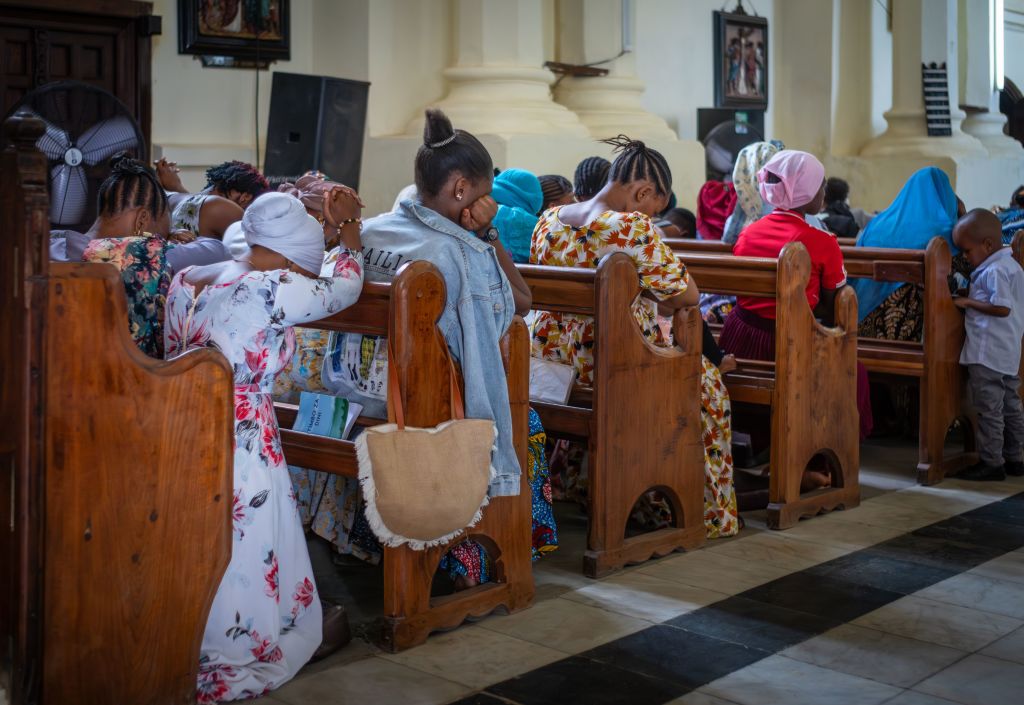
Women in colourful dresses pray during Sunday service at the Anglican Christ Church Cathedral in Stone Town, Zanzibar. Photo: Andy Soloman/UCG/Universal Images Group via Getty Images
Whether the Church of England can recover its sense of purpose remains an open question. It is a state church, and in some ways, it is used to follow the attitudes of the British elite. As those views have diverged from Christian orthodoxy, so too have many Anglicans. Institutions that once shaped the moral and cultural life of a nation rarely disappear overnight, but they can slowly lose their authority when confidence in their message weakens. The permissiveness toward Islam makes the Christians involved look less sure of their faith. Respect doesn't warrant letting another religion use religious buildings to hold its own religious events there.
At a time when Britain’s religious landscape is becoming more diverse and contested, the Church of England faces a difficult choice: should it adapt to a multi-faith society at the risk of losing its identity, or resist prevailing liberal orthodoxies and risk open conflict with the establishment? Whatever course it takes, widening divisions across the Anglican Communion raise the prospect of a new schism that could further erode its authority and role.
Welcome to the comments section of the Štandard daily. Please take note of our guidelines, comments are moderated by us. You can contact the moderators at support@statement.com.
Participate in the discussion
Comments are available to subscribers only. If you'd like to join the discussion, choose a subscription starting at €6.72 per month.
All comments 0
Register
Comments are available to registered users only. If you'd like to join the discussion, register here.