
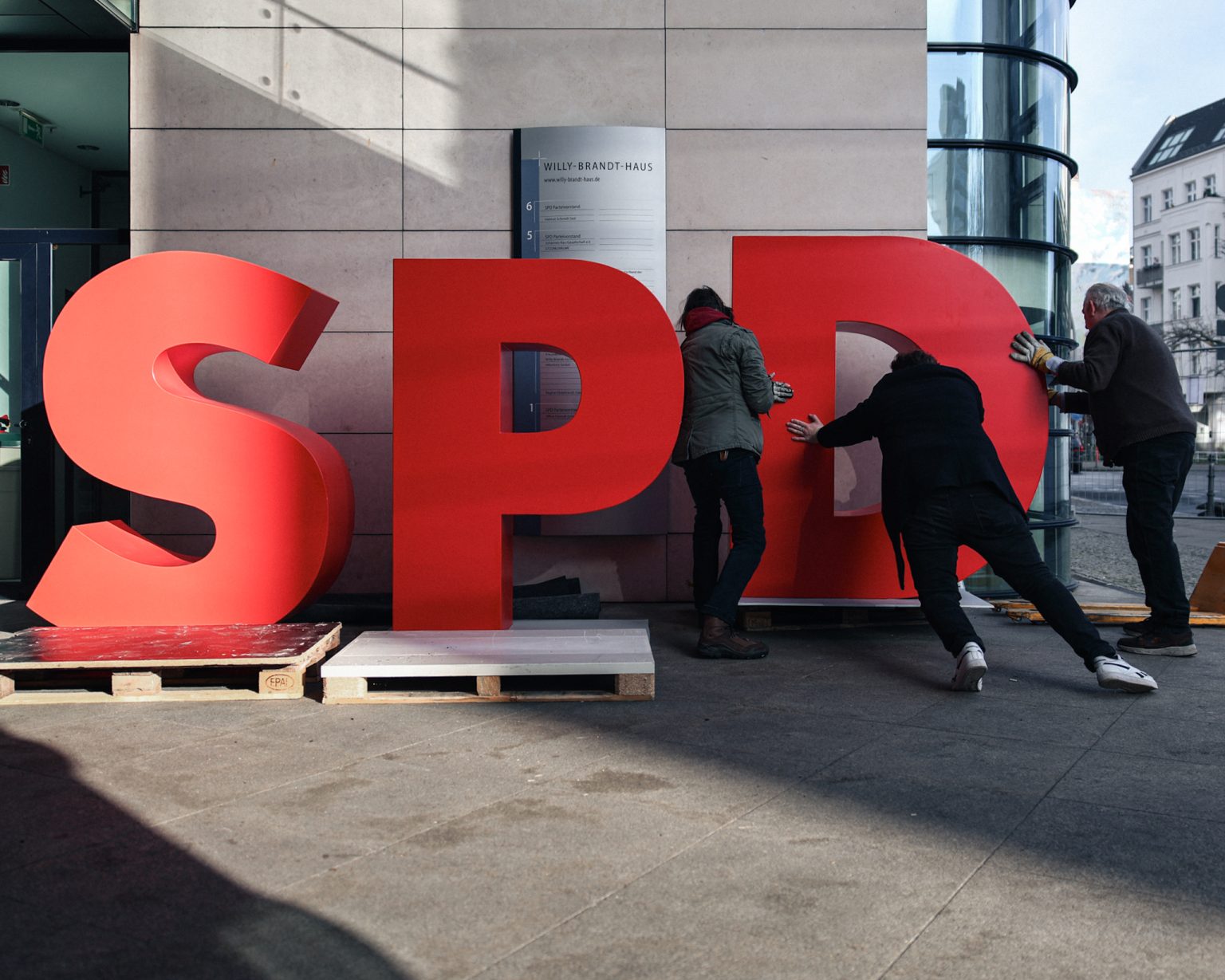
Germany’s Social Democratic Party (SPD) is widely regarded as Europe’s oldest party. It traces its origins to the General German Workers’ Association (ADAV), founded in 1863, which merged in 1875 with the Social Democratic Workers’ Party (SDAP) of August Bebel and Wilhelm Liebknecht. The list of SPD leaders features resonant names: Friedrich Ebert, Kurt Schumacher, Willy Brandt. Even opponents would scarcely deny that the party has earned great distinction over its long history in the fight against poverty and deprivation, advancing social security and workers’ rights and promoting progress against the stifling order of the old class society. Social Democrats were persecuted, arrested and imprisoned in concentration camps. Few parties possess a more dignified tradition.
But a glorious past guarantees no future. The SPD’s decline began, slowly at first, in the 1990s. Within the left-wing political camp, the ‘old aunt SPD’ found itself facing youthful competition that embraced contemporary issues such as environmental protection and sustainability, while projecting a different, more hedonistic way of life: the Greens. While the Social Democrats regularly secured more than 40 per cent of the vote in federal elections during the 1970s, the rise of the Greens pushed them permanently below that symbolic threshold.
The Red–Green government under SPD Chancellor Gerhard Schröder marked one of the party’s high points. The upheavals followed swiftly. New left-wing movements broke away, including what is now the Left Party, after the Social Democrats under Schröder were forced to implement the necessary social reforms of ‘Agenda 2010’. The real downward slide, however, began after Schröder was voted out of office in 2005.
As a long-standing junior partner to Angela Merkel’s CDU in successive grand coalitions, the party lost both profile and voters year after year.

End of an Era
In the most recent federal election in 2025, the Social Democrats managed just 16.4 per cent of the vote, and their decline shows no sign of abating. In the state election in Baden-Württemberg at the beginning of March, the SPD secured only 5.5 per cent, narrowly clearing the five-per-cent threshold required to enter the state parliament. In Rhineland-Palatinate last weekend, the party received 25.9 per cent. That may sound markedly better than the result two weeks earlier, but appearances deceive.
For 35 years, the SPD provided the minister-president in Rhineland-Palatinate. That era has now come to an end. The result there should be a cause for concern not least because the state is, in its own way, very typical of Germany. Alongside industrial centres along the Rhine, it is characterised by rural areas and small towns – a region of winemakers and farmers, craftsmen and salaried employees. It is structurally conservative and closely tied to the land, with strong traditions. Anyone who has travelled west from the Rhine valley through the Palatinate Forest and the Hunsrück towards Trier knows how sparsely populated, solitary and wooded Germany can be. It is here that one sees whether a party truly represents broad swathes of society or merely caters to specific milieus.
End of a Catch-All Party
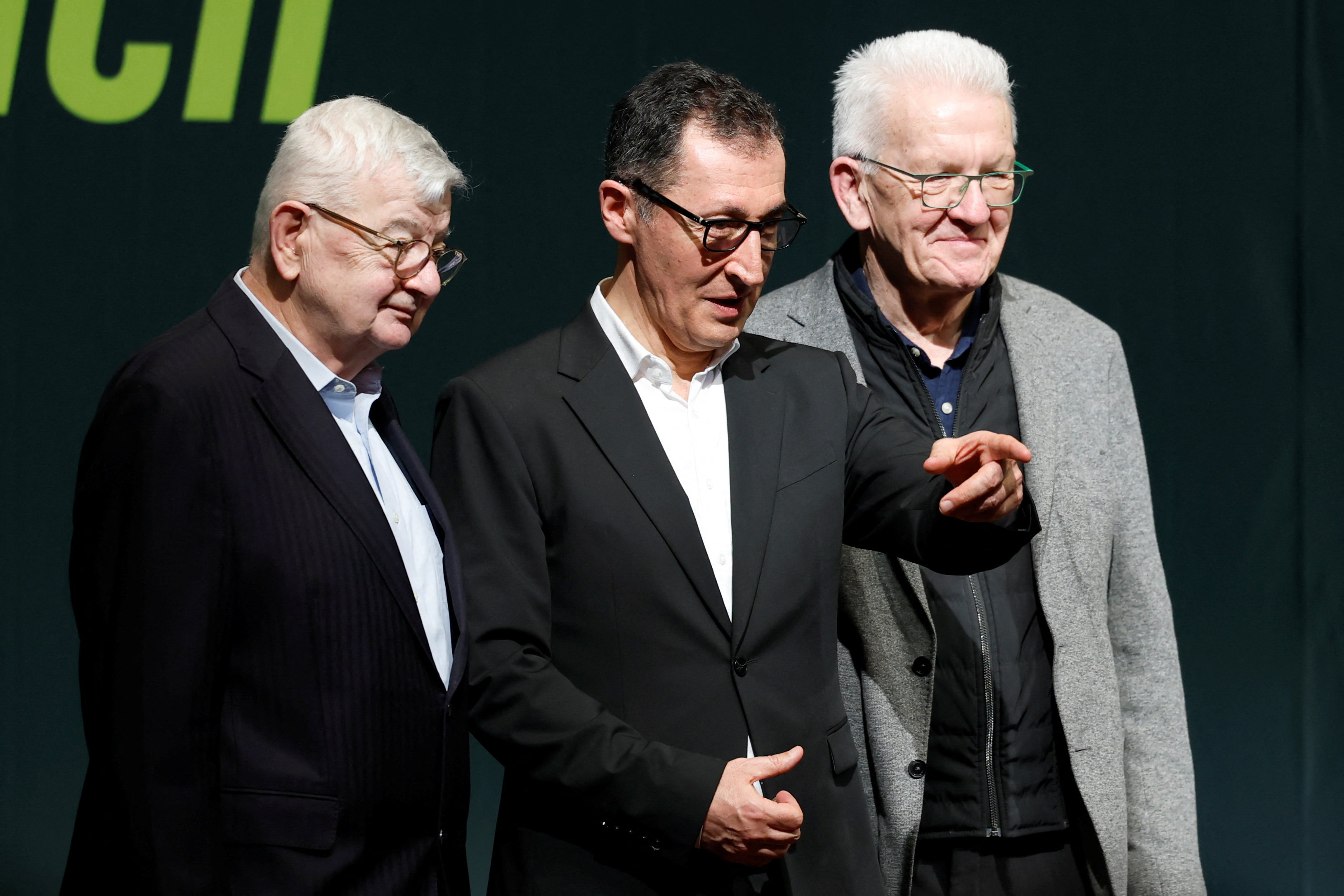
Which brings us to the SPD’s central problem. It is no longer a catch-all party. It has lost its traditional base. The evident despondency of the leadership around Finance Minister Lars Klingbeil and Labour Minister Bärbel Bas suggests that the gravity of the situation is well understood within the party. The difficulty is that no clear way out is visible. The causes are manifold, yet not particularly complex.
First, the obvious point: the SPD’s historic mission has largely been fulfilled. Squalid and overcrowded workers’ quarters have disappeared. People enjoy social insurance, pensions and a five-day working week. In the decades after the war, Germany developed into a middle-class society in which income differences persist but fundamental class antagonisms have largely faded, even if trade union officials continue to argue otherwise.
What remains are social milieus – and they, too, have changed profoundly over the past 50 years. With the decline of the industrial working class and its culture of corner pubs, pigeon-breeding clubs and allotment gardens, the SPD’s traditional electorate has withered away. Whereas the party once achieved more than 57 per cent of the vote in classic Ruhr industrial cities such as Dortmund during the 1970s, it secured barely 25 per cent there in the most recent local elections. In a country without workers, a workers’ party struggles.
Accordingly, the voter base has shifted over the decades. From a party of the proletariat, the SPD has become a party of civil servants and public-sector employees. The typical SPD voter no longer stands at an assembly line but in a classroom. This has been accompanied by an increasing academicisation and a corresponding shift in themes. The focus is no longer on the concerns of ordinary working people but on the left-liberal aspirations of a socially secure, university-educated middle class.
Migration Policy as a Turning Point
This is particularly evident in migration policy. Two examples illustrate the point. In the early 1980s, Martin Neuffer published a book on population growth and the resulting migration pressures. Though largely forgotten today, he was once a prominent Social Democrat. In his book, he addressed clearly the emerging problems of integration and family reunification from foreign, particularly Muslim, cultural backgrounds, warning of parallel societies. His arguments provoked neither outrage nor scandal; his concerns met with broad approval.
Were Neuffer alive today and to publish the same book, he would likely face expulsion proceedings. Such a fate befell another prominent Social Democrat, Thilo Sarrazin. The former Berlin finance senator, member of the executive board of the Deutsche Bundesbank and long-time party member sharply criticised immigration policy in his 2010 bestseller ‘Deutschland schafft sich ab’, warning of social, cultural and economic consequences. Accusations of racism and widespread outrage followed. In 2020, after prolonged disputes, Sarrazin was expelled from the SPD.
A Shift in Mindset and Themes
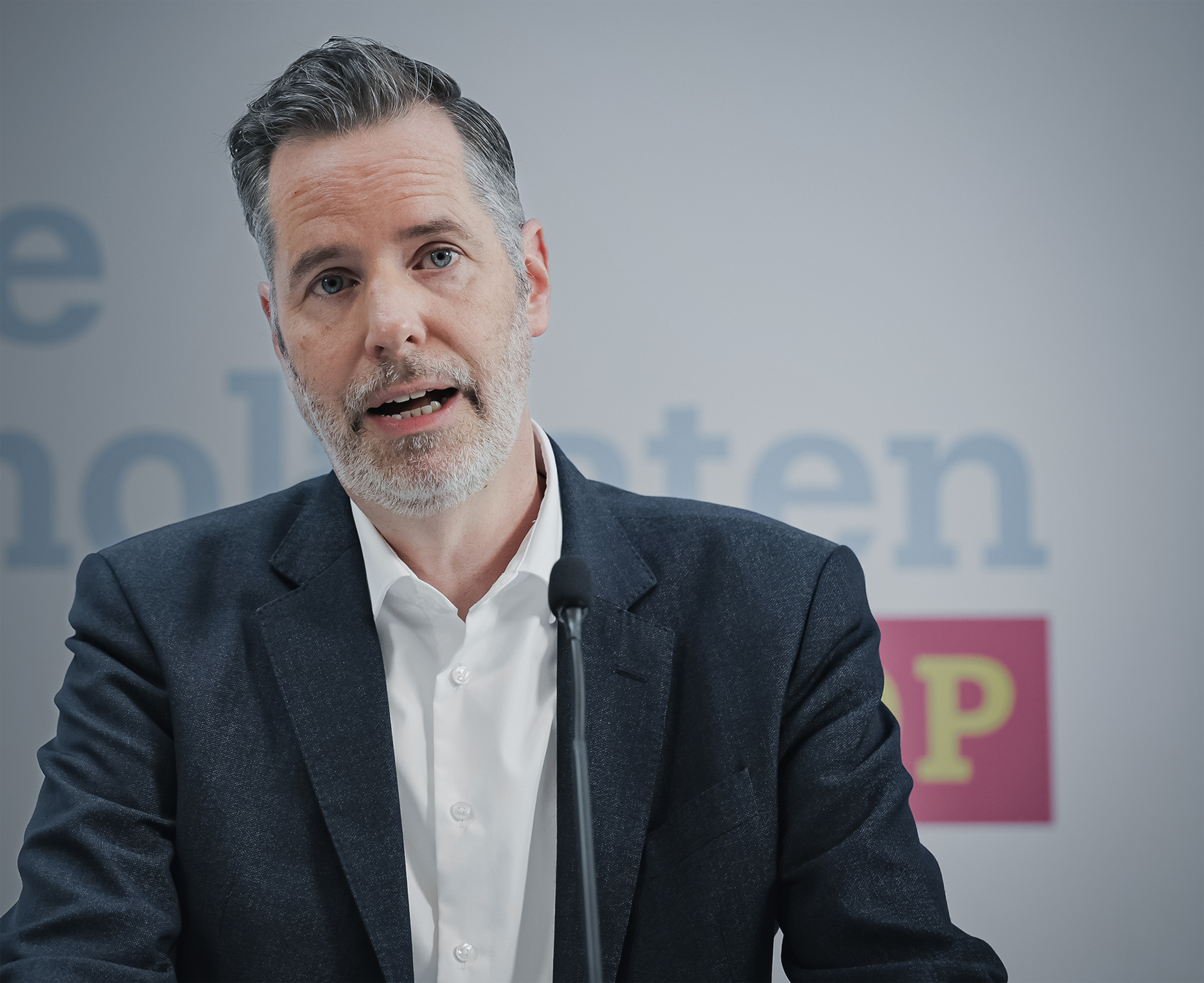
The path from Neuffer to Sarrazin also tells a story about the SPD itself. It illustrates that the party has not simply failed to reach its voters – it has moved away from them. The recent debacle in Rhineland-Palatinate underscores the point. In traditional strongholds such as Ludwigshafen, the SPD lost votes to the Alternative for Germany (AfD), which is increasingly becoming a new workers’ party not only in eastern but also in western Germany.
The SPD is thus fraying on all fronts. Traditional workers and lower-income employees no longer feel represented. Not only its political positions but its entire culture have become alien to them.
Meanwhile, the left-liberal middle class that once helped bring the SPD to power in the 1970s now votes for the Greens or the Left Party, where themes such as identity politics and degrowth are more prominently articulated. At the same time, the party seeks to court migrant voters while downplaying associated challenges.
The SPD’s core problem lies in its shift in mentality. For more than a century, social democracy stood for courage, optimism, progress and the belief in prosperity through hard work. Today, the party appears as a club of left-green public officials advancing deindustrialisation and seeking to reshape Germany into a multicultural society. Instead of focusing on those for whom every rise in fuel prices creates serious financial strain, it subsidises affluent electric car owners and supports the wind and solar industries. It has backed the phase-out of nuclear power, increased the cost of diesel and opposed fracking and genetic engineering. Little remains of the pragmatic optimism that once defined the Social Democrats.
What prevails instead is hesitation and a sentimental longing for an idealised ecological idyll. The days when parties could command more than 40 per cent of voters are certainly gone. Yet there remains a large number of people who work hard every day, whose bank accounts slip into the red at the end of the month, for whom the promise of social mobility has become hollow and who observe with frustration rising crime, the decline of city centres and a deteriorating school system.
European Social Democracy in Crisis
Does the SPD still have time to change course? Or will it fade into irrelevance like Italy’s Partito Socialista Italiano or France’s Parti socialiste, whose presidential candidate received just 1.75 per cent of the vote in the last election?
One option might be to follow the path taken by the Danish or Swedish Social Democrats. Under their leader Mette Frederiksen, Denmark’s Social Democrats pursue a more restrictive immigration policy than their German counterparts. Yet the elections in March 2026 suggest that even this approach may no longer suffice.
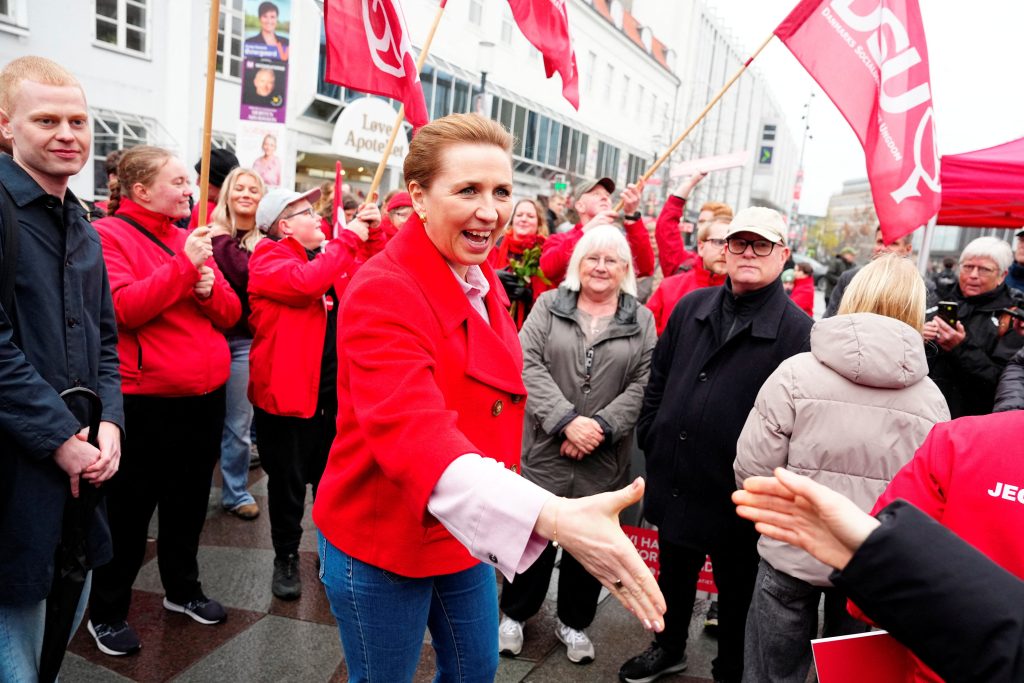
Already in November last year, Denmark’s Social Democrats suffered heavy losses in local elections. The trend has now solidified. Although Frederiksen’s party remains the strongest force in the country, it has again recorded significant losses. The beneficiaries are the green-left Socialist People’s Party, along with the Denmark Democrats and the Danish People’s Party, both conservative.
It is therefore entirely possible that the point of no return has been crossed not only for German social democracy but for social democracy across Europe. Whatever course is taken may prove ineffective. A shift to the right risks strengthening the radical left, while a shift further left is unlikely to yield gains, as that space is already occupied by new, emerging parties.
Perhaps social democracy has simply fulfilled its historic function, and the future of the left belongs to new political movements that reflect the contemporary spirit of the age more convincingly.