
Educated people in imperial China could enter the civil service only by passing extremely demanding examinations. The task of the future mandarin was to write essays or poems about wise and moral government.
To do so, they had to be proficient in calligraphy and know by heart, and cite, a vast number of texts from the Confucian canon. It was their only qualification to govern other people. No practical knowledge, no contact with practical life – they did not need that.
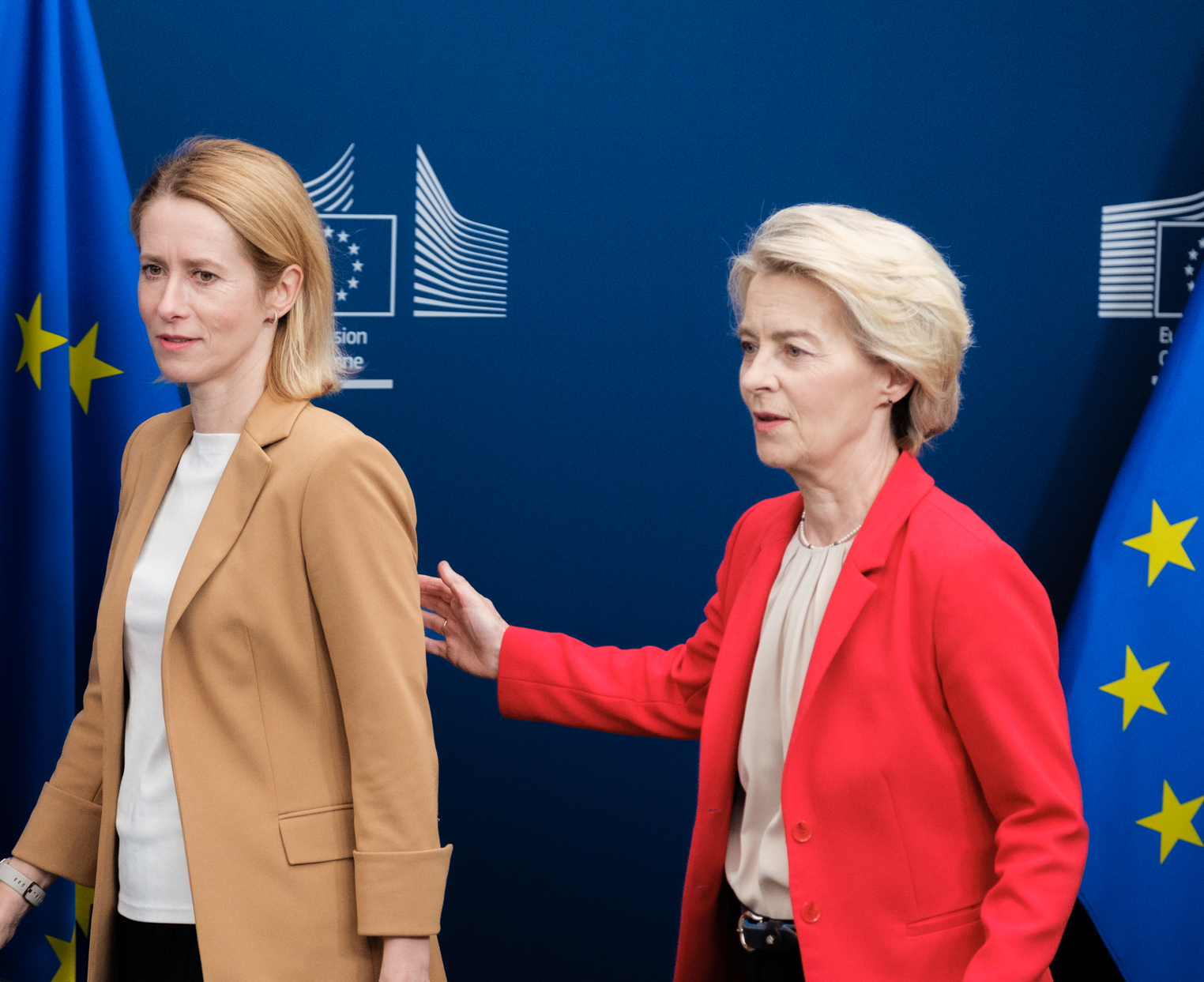
The European mandarins in Brussels today are also going through tough tests.
The vast majority of them have never worked anywhere except in government. The same is true of most career politicians in Western European countries today. The education of the Chinese mandarins was as out of touch with reality as that of today’s graduates of social science faculties in Western universities. They have no career anywhere else except in the burgeoning civil service.
What the mandarins feared most was chaos. They liked to unify and codify. European states in the Middle Ages were able to develop with a fraction of the laws and regulations permanently produced by Chinese bureaucrats.
The mandarins had a very high opinion of themselves. They stood guard against the chaos that threatened constantly and from everywhere. They divided society into four castes according to morality. They were the most moral. Profit-obsessed merchants stood lowest on the Confucian moral and social ladder. Yet below them, completely outside the categorisation, were soldiers devoted to violence.
Officials and Activists
The mandarins considered man to be good by nature and therefore believed the state could refine and educate him. This is reminiscent of today’s progressive ideology that has taken hold in the European Union. If one looks, for example, at the list of Progressive Slovakia MPs and activists, the vast majority are former civil servants or third-sector activists.
Bratislava or Brussels bureaucrats. People who have always been attached to the state in various ways. Most have never been exposed to the market. That is, they have never served anyone on a voluntary basis. They have never competed for customers. They have never sold or produced anything in real terms.
You cannot refuse the ‘services’ of a government bureaucrat. Our lives are governed by hundreds of thousands of pages of laws thanks to their diligent work. The results of their actions are the deindustrialisation of Europe, the severe decline in Europe’s share of world GDP, growing energy poverty and the loss of prospects for young people.
For the mandarins, profit was evil. The desire for profit on the part of a trader or producer is immoral. It is fundamentally contrary to the interests of society and the state and must be curbed as far as possible. Even the state was not allowed to seek to enrich itself. The basis of government policy was political control.
The historian Ray Huang writes that when some areas of China began to prosper as a result of the development of local industry or foreign trade, the government did not encourage their development; on the contrary, it tended to inhibit it in order to prevent a disturbance of the balance that might eventually threaten the political unity of the empire. From the point of view of state power, it seemed easier to keep all areas at the same backward level.
We Are Leaving the Field
The European mandarins, the political and bureaucratic class that rules the EU, are doing today exactly what the mandarins did in China during the Ming dynasty (1368 to 1644). More sophisticated and rigorous business regulations and the policy of so-called carbon neutrality, which is nothing other than a green attack on the freedom and standard of living of Europeans, are leading to the same results as they once did in China.
We are emptying the field and leaving it to other players. In 2004, the Union countries’ share of world nominal GDP was around 25 per cent. In 2025, Europe’s nominal share was only about 14 per cent.
By comparison, the US nominal share of the world economy in 2004 was 28 per cent. In 2025, the United States, with 26 per cent of world nominal GDP, has almost maintained its share of the world’s nominal output.
The gross domestic product per capita of the old European Fifteen (EU-15) in 2004 was about 75 to 80 per cent of US per capita gross domestic product. Today, Western Europeans have only about 65 per cent of the gross domestic product per capita of a US resident. That there is a serious problem is admitted even by the mandarin Mario Draghi.
The current EU is officially trying to uplift underdeveloped regions, including Slovakia, through euro funds. But what will be the outcome of the euro funds?
We can look to Italy, for example. There, euro funds have been in place for a hundred years. In 1925, the then prime minister, Benito Mussolini, started subsidising the south of Italy with money from the richer north. The aim was to make the south and the north of Italy economically equal. The programme continues to this day.
Highways, railways, stations, hospitals and public buildings were built. But Mussolini’s ‘euro funds’ did not create factories. After a hundred years of financial transfers, the south of Italy has only 50 to 60 per cent of the north’s GDP per capita. In 1925, when Mussolini’s programme took off, the ratio was exactly the same. The biggest beneficiaries of this money are the local mafia and the financing bankers.
The State’s Tax Revenues Are Being Drained
Like the West today, imperial China had a problem with an overproduction of formally educated people who were not applicable in real life. The Confucian educated class outnumbered Confucian officials many times over and grew steadily.
At the end of the 19th century, in an empire of 400 million people, there were only 20,000 regular civil servants. Alongside them, however, there were millions of holders of academic titles. The biggest problem for these formally educated men was that, unlike in Europe, where a man could have a career as a lawyer, doctor, merchant, priest or writer, in China there was only one major profession – the civil service.
In the early 20th century, at the end of the imperial era, China was a nation of Confucian scholars eager for civil service. At a time when the West was already switching from coal to oil, the Chinese ploughed their fields with wooden ploughs.
American historian John K. Fairbank mentions an old Chinese proverb: ‘Become a clerk and you get rich.’ In addition to writing treatises and poems about wise and just government, fretting over the immoral profits of merchants and scheming against one another, the mandarins also pursued theft.
Historians estimate that Confucian bureaucratic models of morality and ethics stole an average of 70 to 80 per cent of the state’s tax revenue. Such a high percentage cannot be stolen today. A pensioner will not give you a 50 per cent bribe to pay his pension. But anyone who follows current politics and bureaucracy will recognise the similarities.
Superior in Both Knowledge and Morality
Economist Thomas Sowell writes that the contemporary West is ruled by a class of anointed ones. He describes them as producers of ideas and contrasts them with the producers of goods and services, the productive members of society. It is a new class of parasites.
Just as the Chinese mandarins were convinced that they were superior to us – the immoral profiteers – in both knowledge and morality, the anointed take their views as self-evident truths. If one disagrees with them, one can only be stupid or evil. We do not know what is good for us. They do.
That is why they should decide. The experts, the professionals. Because today’s world is so complex that ordinary people, producers of goods and services, can no longer understand it. Because they work in the civil service, in the media, in academia or in the third sector, they do not bear the consequences of their mistakes.
Thomas Sowell argues that the ‘anointed’ pursue utopian visions and tend to blame failures on a lack of resources or on opponents. Ludwig von Mises, he notes, described such figures as people who seek to rule others when they cannot serve them.
If their ideas are implemented, the result is disasters. For example, Germany’s departure from nuclear power, the destruction of the European car industry, the departure of industry from the EU and high energy prices. A few decades ago, it was nationalisation and planned economies. The anointed ones, like the Chinese mandarins, have a very high opinion of themselves. They feel called to govern others. Why? After all, they studied it at university. And, like the Chinese mandarins, they are convinced of their moral superiority.
Progressive Slovakia, the branch of Brussels in Bratislava, is exactly the party of these people. If Comrade Gustáv Husák were alive today, he would, after a brilliant career as a Slovak civil servant, certainly be a leading member of Progressive Slovakia. Given his linguistic skills, he would certainly have been active in Brussels. He would likely be a political star there. His communist views and his willingness to suppress other views would not need to change a single word.
The anointed ones today fill ministries in Bratislava and Brussels. Their goal is a united European empire, which they will control. But Europe became rich through fragmentation – through competition between states. In a united empire, independent city states such as Venice, Genoa, Florence or the Hanseatic cities of northern Europe, where capitalism could emerge, would never have arisen. It is to that development that we owe our technology and prosperity. In Europe, if you tried to revolt against a ruler and failed, there was somewhere else to go. In the unified Chinese empire, there was nowhere to go.
The mandarins never created anything that stood in opposition to the state. Europe had the Catholic Church, whose centuries-long struggle with political authority contributed significantly to the emergence of European freedoms.
Schumpeter and Marx
Economist Joseph Schumpeter writes that capitalism will fall – not because it fails, but because it succeeds. Karl Marx was wrong. Capitalism will not cause mass poverty. On the contrary, it will shower the world with unprecedented wealth. Marx did not take into account the effects of technological change on living standards.
The economic progress of the West is based on business innovation. This is the product of competition between entrepreneurs. But the success of capitalism, according to Schumpeter, will lead to the bureaucratisation of society and even of business itself. The high standard of living achieved through capitalism will eventually reduce innovation. Risk-taking will decline. Without risk, there is no innovation.
Schumpeter did not overlook the role of intellectuals, the anointed ones. Thanks to the wealth generated by capitalism, their numbers will increase. A smaller number of productive people will support a growing number of unproductive ones. People who have never experienced what it is to serve a customer, and who avoid it, will condemn entrepreneurship.
Schumpeter believed that the fall of capitalism would not necessarily be a tragedy. He predicted a more stable world with less innovation. That, the argument goes, is what is happening in Europe.
Personally, I am convinced that the standard of living that has been achieved may collapse. We are already seeing the consequences of a departure from capitalism in the form of falling living standards. The collapse of capitalism, if allowed, would be a tragedy. One need only look at Chinese history.
The Modern Mandarins
The modern anointed mandarins do not know, and do not wish to know, how innovation arises. They instinctively seek to regulate, control and plan. Without them, we would live in chaos – the very chaos that has generated our technology, our wealth and our longer lives. Nationalisation and central planning have ended in failure. Now, through policies such as the Green Deal, there is an attempt to guide technological development while preserving private property.
The anointed ones believe that investment in science will automatically produce innovation. But it has never worked that way. If it had, the communist Eastern bloc, led by the scientifically powerful USSR, would have won the Cold War.
Technological change is the product of a spontaneous market process. It may come tomorrow, in a hundred years, or never. Central banks can create vast sums of money and channel them into selected technologies. They can generate inflation, reduce living standards and burden future generations with debt. But they cannot create innovation itself.
At the same time, an individual entrepreneur may develop something entirely new, unpredictably and without planning. That is how progress occurs.
For that to happen, entrepreneurs must be free to act and to benefit from their success. Yet regulation reduces the likelihood of such breakthroughs occurring in Europe.
The anointed do not want chaos. Nor did the mandarins in imperial China. Chaos – another word for freedom – disrupted their stability. Max Weber wrote that Confucian bureaucracy would falter if merchants were allowed to move freely. Manufactories and blast furnaces were allowed to decline.
Chinese civilisation reached a technological standstill after earlier achievements and even began to regress. In the late 19th and early 20th centuries, Chinese peasants still used wooden ploughs.
Europe today faces a similar risk. It was once the most innovative continent. If the anointed prevail, future generations may find themselves returning to far more primitive conditions. That should not be allowed.
Hyde Park is a forum for free discussion. Published opinions do not necessarily reflect Statement’s editorial line.