
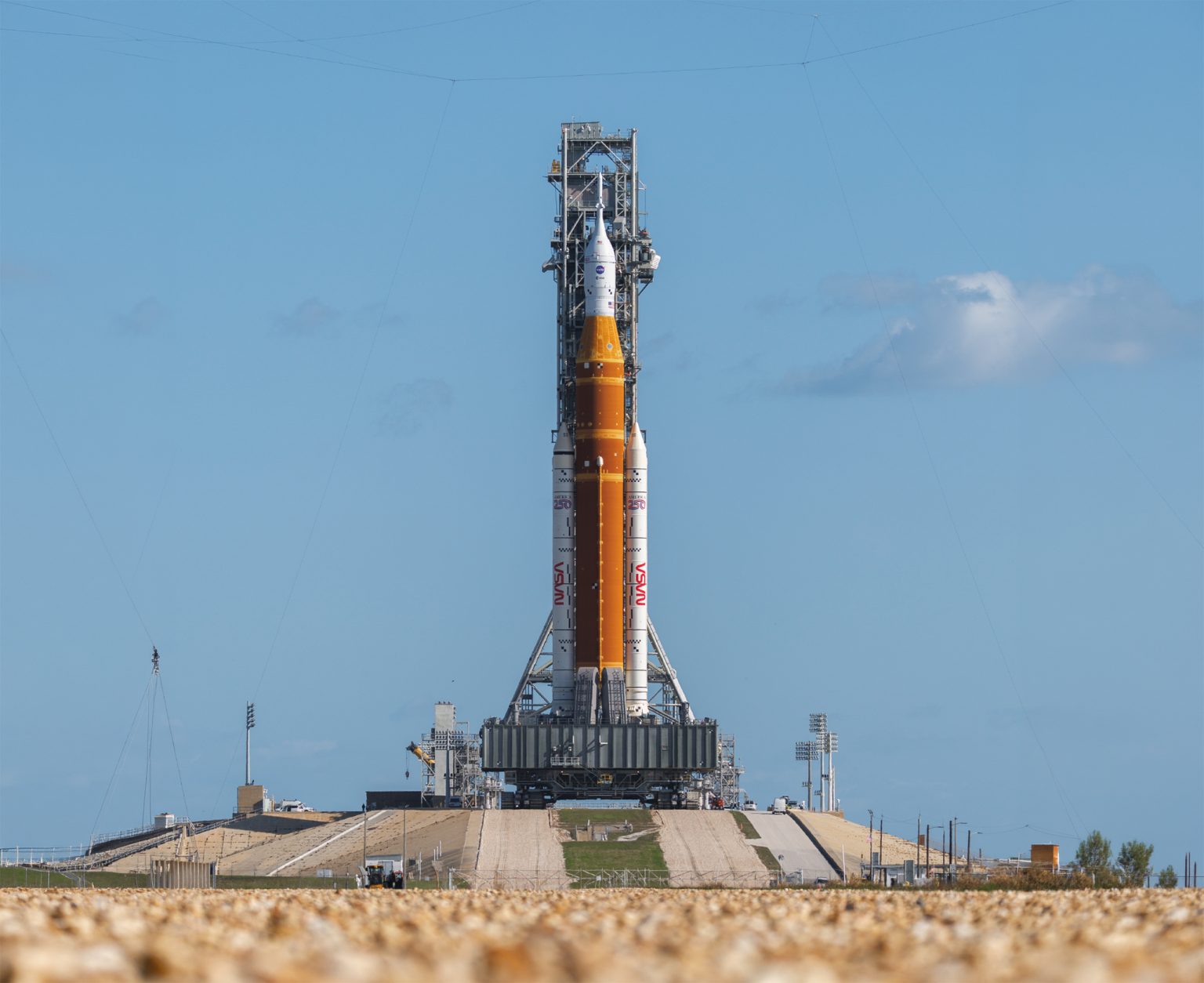
The US National Aeronautics and Space Administration (NASA) has successfully launched the crewed Artemis II mission, marking a major step in its effort to restore a human presence on the Moon.
The programme follows the Apollo missions, which placed astronauts on the lunar surface six times between 1969 and 1972. In total, 12 astronauts have walked on the Moon.
Artemis II had originally been scheduled for earlier this year but was delayed by weather conditions and technical issues, including a previous aborted launch attempt. The Space Launch System rocket carrying the Orion crew capsule ultimately lifted off from the Kennedy Space Center in Florida at around 6.35 p.m. local time (0.35 a.m. CEST on Thursday).
The four-person crew – Americans Reid Wiseman, Victor Glover and Christina Koch, along with Canadian astronaut Jeremy Hansen – was first placed into Earth orbit before continuing towards the Moon. The mission is expected to last around ten days.
Orion had previously completed an uncrewed test flight in November 2022, when it successfully flew around the Moon. Artemis II is the first mission in the programme to carry astronauts, making it a key milestone.
US President Donald Trump had already hailed the mission as a success even before launch.
A permanent presence
NASA's longer-term aim is to establish a sustained human presence on the Moon. Plans for the Artemis programme envisage a phased approach to building a permanent foothold over the coming years.
The first phase involves expanding the use of rover-type vehicles and developing life-support systems. The second step foresees the construction of a semi-habitable structure for astronauts, which could later be expanded into a more permanent lunar base.
NASA Administrator Jared Isaacman described the mission as the opening act for future exploration, including the construction of a base to support the enduring presence NASA is trying to establish on the surface.
At the same time, Isaacman has expressed scepticism about the planned Gateway orbital station, instead favouring a greater focus on a base directly on the Moon.
The programme, which has required tens of billions of dollars in investment, includes plans for further missions – Artemis III through V – later this decade, with the aim of increasing the pace of exploration.
NASA is also exploring longer-term projects related to future missions to Mars, including advanced propulsion technologies.
New technologies and competition
NASA continues to rely on Boeing's Space Launch System for Artemis missions, while also working with commercial partners. SpaceX, led by Elon Musk, is a key partner, having developed reusable rocket technology and completed multiple successful missions.
Musk has said that SpaceX's Starship rocket could carry its humanoid robot Optimus to Mars, while also playing a role in future lunar missions. Although delays have affected some of the company's plans, NASA has opened new contracts for launch systems and lunar landers.
Isaacman, who is widely seen as close to Musk, has suggested that cooperation could help accelerate plans for lunar infrastructure, including potential industrial activity on the Moon.
Beyond the Moon
While the Artemis programme is focused on the Moon, it is also intended as a stepping stone towards missions to Mars. NASA has emphasised that its efforts are aimed at preparing for deeper space exploration.
Musk, who previously described the Moon as a 'distraction', has more recently acknowledged its role as an intermediate stage. At the same time, SpaceX is expanding its satellite network, including plans for space-based data infrastructure.
NASA's own messaging reflects this broader ambition. The Artemis programme is not seen as an end point, but as preparation for what lies beyond.

The mission profile
For now, however, Artemis II remains a test mission. The Orion spacecraft will not land on the lunar surface but will perform a flyby of the Moon.
The spacecraft will follow a so-called free-return trajectory, looping once around the Moon before returning to Earth under the influence of gravity. Rather than entering orbit, it will pass at an altitude of about 7,000 kilometres.
At its closest approach, the crew will have around three hours to observe the far side of the Moon and will temporarily lose contact with mission control in Houston.
The mission has also drawn attention to the composition of its crew. Glover has been described as the first black astronaut to travel to lunar space, while Koch is set to become the first woman to do so, although neither will land during this mission.
Glover previously served as pilot on the first operational crewed Dragon mission to the International Space Station.