Is banning Ye a necessary stand against extremism or an overreach that risks curbing free speech? His offensive remarks have drawn condemnation, but his apology and past raise difficult questions about forgiveness and the limits of public censure.
The British government has barred the American musician Kanye West from entering the country later this year. He needed an Electronic Travel Authorisation (ETA) to appear at the Wireless festival in London, where he was due to headline.
The annual rap and hip-hop festival usually runs for several days, attracting around 50,000 people every day. Having already lost sponsorship from PepsiCo over booking West, now known as Ye, the blocking of his visa has led to the entire festival being cancelled and all ticket owners refunded.
The decision to bar him was made because the Home Office felt his presence would not be conducive to the public good. This is in reaction to inflammatory comments made by Ye in recent years, which have included antisemitism, racism and support for Adolf Hitler. In May 2025 he released a song called Heil Hitler and has sold swastika t-shirts in his online store.
Earlier this year, he apologised for these comments and has since played several concerts in the United States.
In banning him, the United Kingdom has made a statement that it considers him beyond the pale. But this is a step too far. Ye’s apology, so far, appears to be sincere, which means that forgiveness is warranted. What is more, he has a history of mental illness, and therefore, his behaviour should not necessarily be held against him.
Certainly, his statements were tasteless and offensive. Some of his social media posts targeting Jews did not merely flirt with inflammatory rhetoric but invoked violence in disturbing, if abstract, terms. Open expressions of support for Hitler or the Nazi party go beyond the boundaries of provocation, even in the world of art. They amount to an endorsement of an ideology responsible for the systematic murder of six million Jews and the persecution and murder of millions of others. In many countries, including Germany, such statements are not only socially ostracised but can constitute criminal offences punishable by prosecution and imprisonment.
That is not the case in the United States, however, where the First Amendment protects freedom of speech, even when it is unpleasant. The cornerstone of this is the Brandenburg test, used by the Supreme Court to judge when inflammatory speech crosses the line into illegality. It holds that speech is only illegal when it is both intended to and likely to lead to imminent lawless action.
Under this test, Ye’s comments are considered free speech. That is not the case in Britain, which has a wide range of laws governing speech and convicts large numbers of people each year for what they say. Although most such convictions involve matters such as former couples harassing one another online, the minority of cases involving politics have rightly drawn criticism of British law for restricting what may and may not be said, even when no physical harm is likely to result.
Melvin Benn, the managing director of Festival Republic, the parent company of Wireless, offered a free speech defence of the decision to invite Ye. Describing himself as a deeply committed anti-fascist and noting that he had lived on an Israeli kibbutz in the 1970s, he characterised Ye’s prior comments as ‘abhorrent’. Yet he also said that Ye should be offered ‘forgiveness’.
Citing an unnamed family member who suffers from mental illness, Benn said that he had had to forgive ‘many episodes of despicable behaviour’ from that person, comparing him to Ye.
He also pointed out that Ye’s music is freely available on radio and streaming platforms, so inviting him to perform it live would make little difference. The song ‘Heil Hitler’ is not available on streaming platforms. Ye himself has said he would be ‘grateful’ to meet British Jews and to ‘listen’, adding that he hoped to ‘show change through my actions’.
Considering the corrosive effect of cancel culture on public norms, a high-profile example of forgiveness would have been a valuable opportunity to demonstrate that a corner had been turned on wokeness.
Nonetheless, the Board of Deputies, which represents many British Jews, argued that Ye having called himself a Nazi meant that the ban should proceed. It also criticised the Wireless Festival because it would financially benefit from Ye performing.
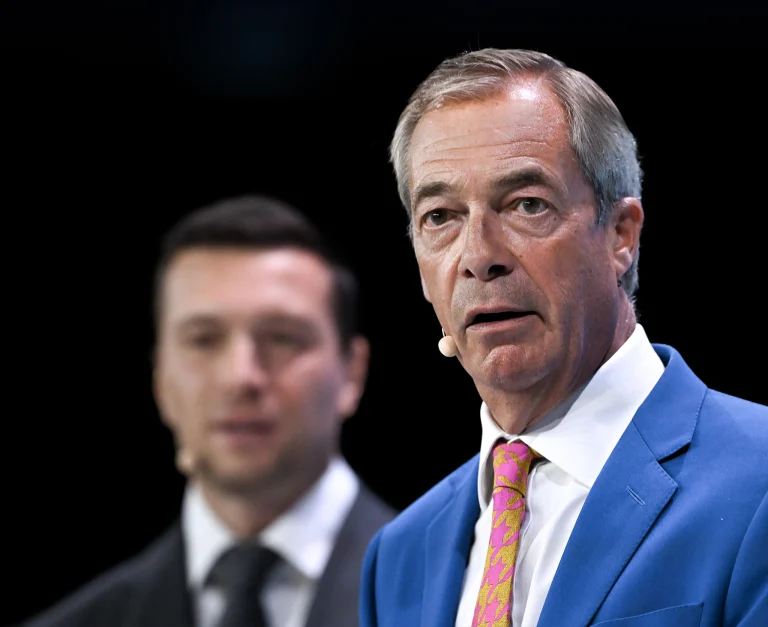
The prime minister, Keir Starmer, has backed the ban. He is supported in this by the Conservative Party, the nominal political opposition. Reform UK, the party leading the polls, has been the only exception. Although Nigel Farage, the party’s leader, understandably said that he personally would not buy a ticket and that Ye’s prior comments were ‘vile’, he argued that banning people because of their views is a ‘dangerous path to go down’.
He is right to be concerned, as such bans have previously been used against political figures. The Dutch politician Geert Wilders was barred from entering the United Kingdom in 2009 because of his comments on Islam. Earlier this year, the Dutch political commentator Eva Vlaardingerbroek was likewise refused admission on the same grounds that her presence was not ‘conducive to the public good’.
This amounts to the British government deciding which political speech may and may not be heard – a slippery slope for a democracy.
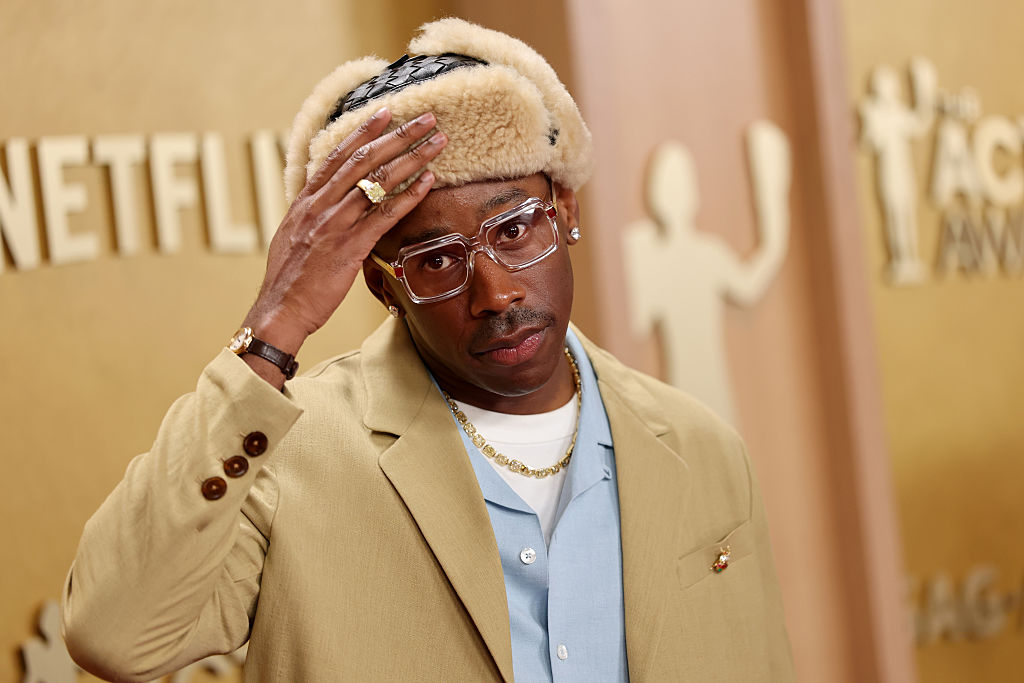
Musician Tyler, The Creator was banned from entering the UK. Photo: Amy Sussman/Getty Images
The dangers of state overreach
These powers have also been used on other musicians. In 2015, the American rapper Tyler, the Creator revealed that he had been banned from entering the United Kingdom because of lyrics in old albums that were described as homophobic, leading to the cancellation of several performances. He argued against this, saying that it threatened artistic expression.
These cases demonstrate how such unrestrained powers can be abused. They can easily be used to bar the entry of people whose political views are disapproved of, or be manipulated by activists seeking to punish people for attitudes they dislike. Without a standard test to evaluate cases, like that used in the United States on free speech issues, these decisions can end up driven more by emotion than principle.
They also reflect power imbalances. Wilders could be barred in 2009 because he was a relatively fringe figure in Dutch politics. Without his views changing, he has become a much more important figure and no longer faces the threat of being refused entry.
No case demonstrates this more than the visit of Syrian leader Ahmed al-Sharaa to London last week. Despite being a former jihadist who once had an American bounty on his head, his victory in the Syrian Civil War has led to him being accepted by the international community.
It’s obviously absurd that he is welcome in London while a rapper with a history of mental illness is not.
For a moral principle to be sustainable, it has to be uniformly applicable. Inconsistent enforcement and moral panic reveal that Britain's approach to free speech is no such thing. Although there should be restrictions around direct incitement to violence, curtailing speech only serves to delegitimise politics.
Instead of bans, offensive speech should be met with more free speech, not less.
Welcome to the comments section of the Štandard daily. Please take note of our guidelines, comments are moderated by us. You can contact the moderators at support@statement.com.
Participate in the discussion
Comments are available to subscribers only. If you'd like to join the discussion, choose a subscription starting at €6.72 per month.
All comments 0
Register
Comments are available to registered users only. If you'd like to join the discussion, register here.