
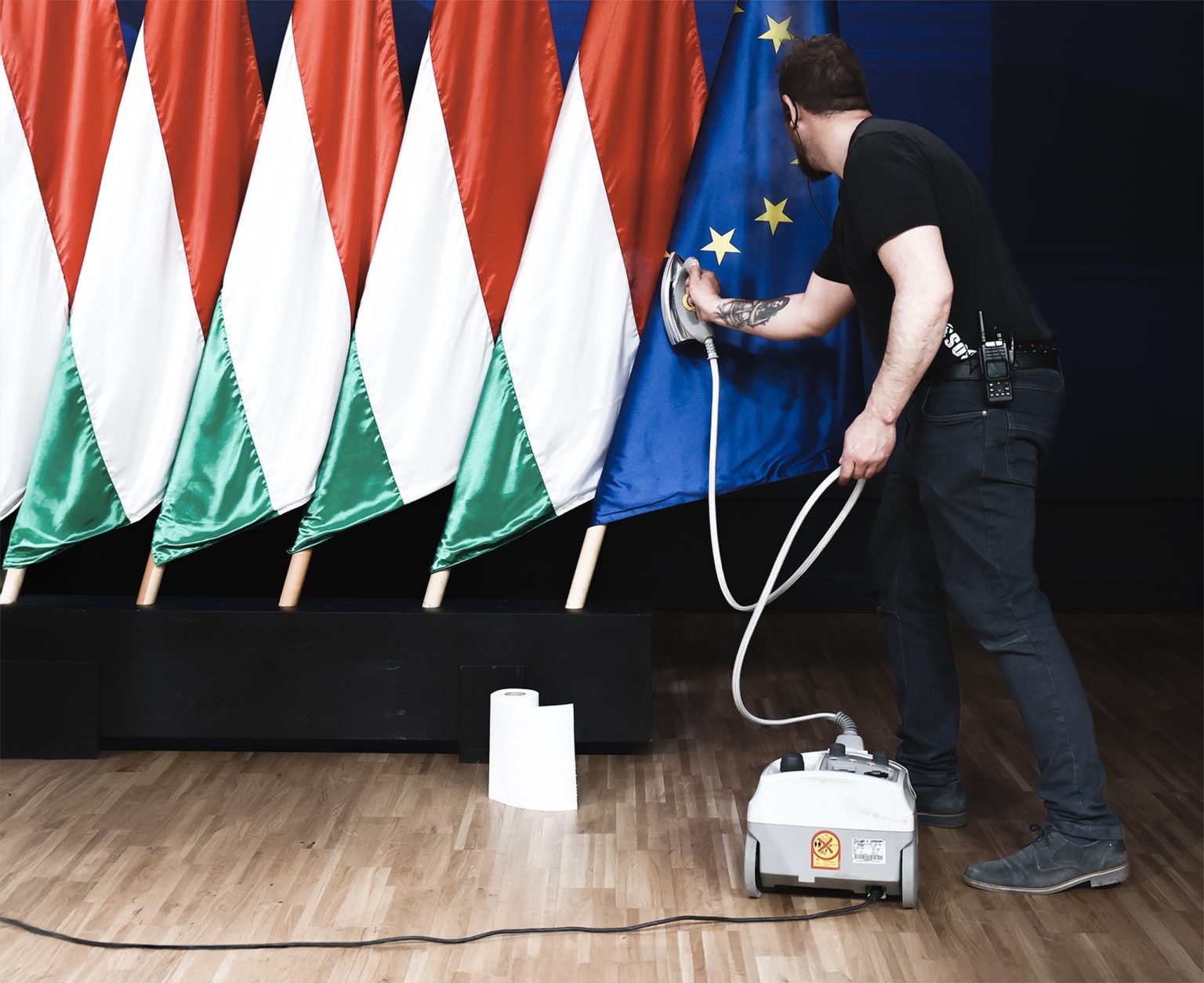
The new prime minister promised Hungarians that he would be a kind of new Orban – one who would unblock billions of euros in loans from Brussels for Hungary and for Ukraine, yet remain Orban in substance: on migration, on climate and on the non-activist approach to Ukraine, as well as on many other nationalist issues.
It is a rational approach that puts its own population first, but one that does not align with the Komsomol-style, ideologically rigid mindset at the center of power in the EU.
Brussels appears pleased with what it sees as its spectacular victory in Hungary, even as the program on which Magyar won the election, and which the Hungarian people backed, is seen there as radically hostile to all its values, that is, the ideals it is obsessed with. Magyar must therefore clean out the pigsty without the Hungarians noticing and without being seen as a traitor before Orban returns to power.
Strong support for the new Hungarian leader is unlikely to last if he turns his back on his nation and his voters, especially if a strong opponent is waiting in the wings.
How to Suppress Democratic Elections
Hungarian elections have often been framed as a duel between Orban and anti-Orban, but in reality they pit a corrupt Orban against a new, more sympathetic version who has yet to be corrupted. In domestic politics, Orban has been weakened by corruption and by his control of state institutions – a powerful temptation for leaders who remain in power for a disproportionately long time while holding a constitutional majority. Hungarians have had enough of that.
At the same time, Hungarians expect him to continue Orban’s policies centered on sovereignty, opposition to migration and his approach to Ukraine.
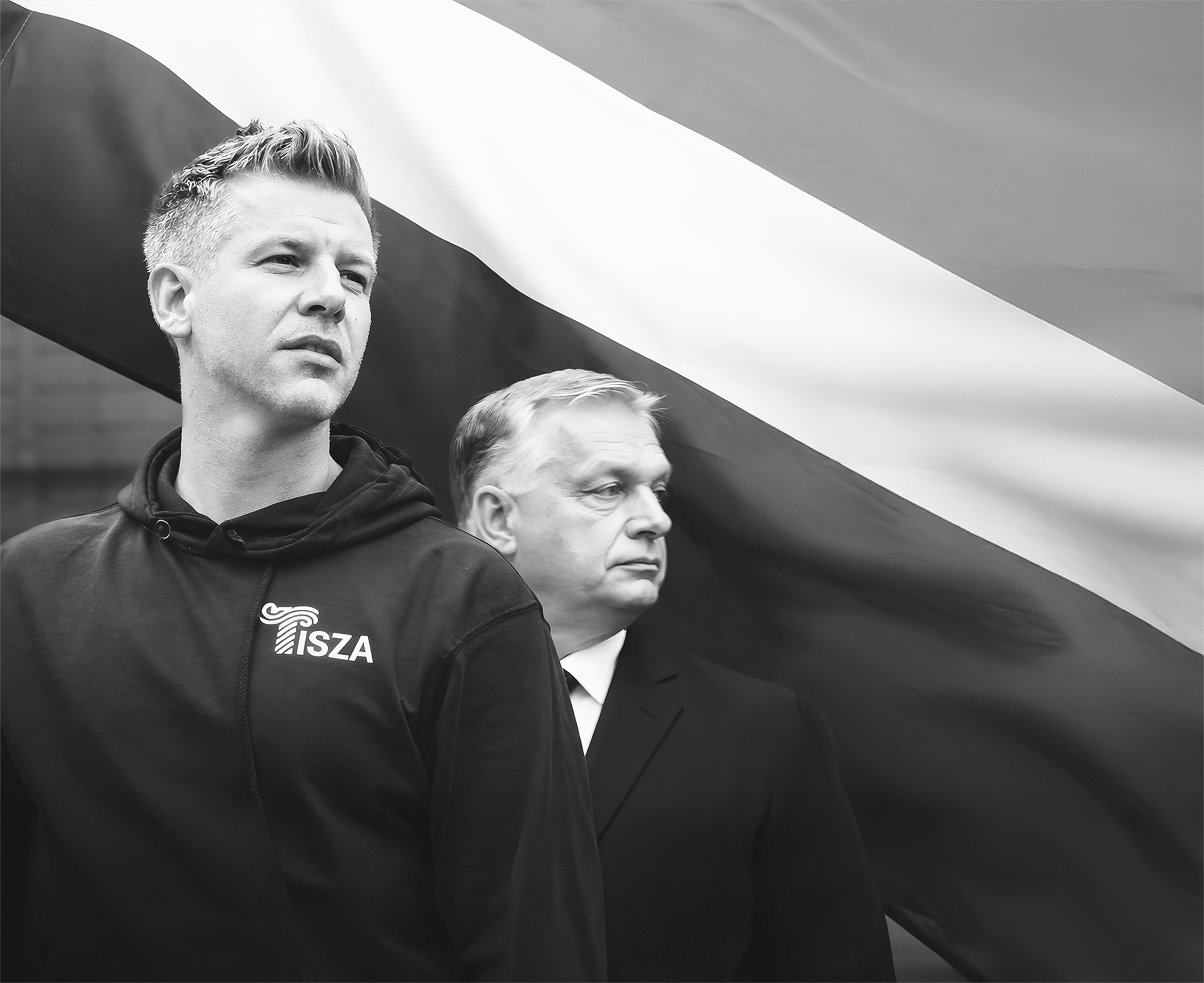
The methods used by European countries to influence domestic elections are also unprecedented. The tapping of the foreign minister, whose role depends on discretion, amounted to a direct intervention in the elections, particularly given that domestic actors in Hungary are prepared to work with such wiretaps under the cover of “independent journalism”.
Disregard for democracy and democratic processes on the part of Brussels has been evident in Hungary since the first days after Magyar’s victory.
It is no secret that Brussels “bribed” the Hungarian electorate even before the elections by declaring that funds and a war loan totalling €35bn would only be released if Hungarians made the “right” choices.
The elections were, according to Magyar, a “referendum on the withheld European money” and on “bringing it home”.
The example of Poland is clear: after the new government of Donald Tusk took office, Brussels lifted the blockade and released the withheld European funds. Not because Tusk restored the rule of law – he did not try very hard to do so – but simply because he defeated an arch-enemy.
According to the Financial Times, Brussels has this time linked the release of loans and funds to 27 conditions presented to Magyar by the control center. The “braking of European policies”, the current euphemism for authoritarian governance and an Orwellian notion of unity in which dissent is not tolerated, must be brought to an end in Hungary, and euro leaders have the means to enforce this.
The elections exceeded Brussels’ expectations, and those expectations are now focused on Magyar. European Commission President Ursula von der Leyen said on Monday that the EU would begin working with the government as soon as possible to deliver rapid and long-awaited progress for the Hungarian people. According to the Financial Times, an unnamed senior European official said the message from Brussels was that it would deliver if Hungary delivered.
The terms of reference include legitimate demands to which member states have committed themselves, such as participation in a European Public Prosecutor’s Office. They also include the LGBT agenda, the climate-driven dismantling of domestic industry and, most importantly, unblocking the loan to Ukraine.
Two EU diplomats have indicated that Magyar is expected to unblock the €90bn loan and override Budapest’s veto on the next round of sanctions against Russia. These are seen as key indicators of whether the incoming prime minister will seek to restore relations with the European Union. Holding an independent position and acting in line with national interests – something member states are entitled to under the founding treaties – is now framed as “breaking relations”.
This condition is likely to prove a stumbling block, and it remains unclear how Magyar will implement it, given that he said during the campaign that he would not join the package for Ukraine because it was not Hungary’s war.
That may be why the Financial Times, citing European diplomats, notes that the use of repressive methods may differ this time from the approach taken a few years ago in Poland, when Kaczynski’s “anti-European government” was replaced by the pro-European Donald Tusk.
At the time, the European Commission released funds previously withheld over “rule of law violations” at lightning speed, but without anything changing. What mattered was that the election was won by Tusk, who was seen as aligned with Brussels. He later took control of public television with the help of the police, going further than his predecessors, yet this did not prompt criticism from Brussels over the rule of law.
The European Commission trusted Tusk, as he was a known quantity and it knew what to expect from him. Brussels, however, has no experience with the new Hungarian prime minister, so it is approaching him more cautiously and, for the time being, treats talk of restoring democracy – that is, of suppressing Hungarian interests – as conditional, while continuing to exert pressure through European funds and loans.
Ukraine Is an Even Earlier Precedent
Magyar’s current situation, an attempt to square the circle, may recall not only Poland in recent years but also Ukraine in 2019. The latter elected a “pro-Russian” president tied to the “Russian oligarchy”, namely Volodymyr Zelensky, who adopted elements of Viktor Yanukovych’s agenda and promised agreements with Russia as well as an end to the war in the Donbas.
He thus campaigned with rhetoric now often described as pro-Russian, and those who use it are sometimes labelled Putin’s trolls.
We know how this developed. Zelensky was not fully able to implement his agenda, as Western institutions played a significant role in shaping Ukraine’s course. The West did not view Ukraine simply as a fully independent actor, but as a partner expected to align closely with its strategic objectives. Ukraine was positioned as a firm opponent of Russia, regardless of its own considerations, and was expected to play a key role within the Western alliance. Whether this approach would serve Ukraine’s long-term interests remained an open question.
In the case of Peter Magyar, the situation is less clearly defined than it was under Orban. Yet in terms of Brussels’ expectations of the next Hungarian prime minister, a familiar dynamic may apply: be careful what you wish for, because you might get it, though perhaps not in the way you expect.