
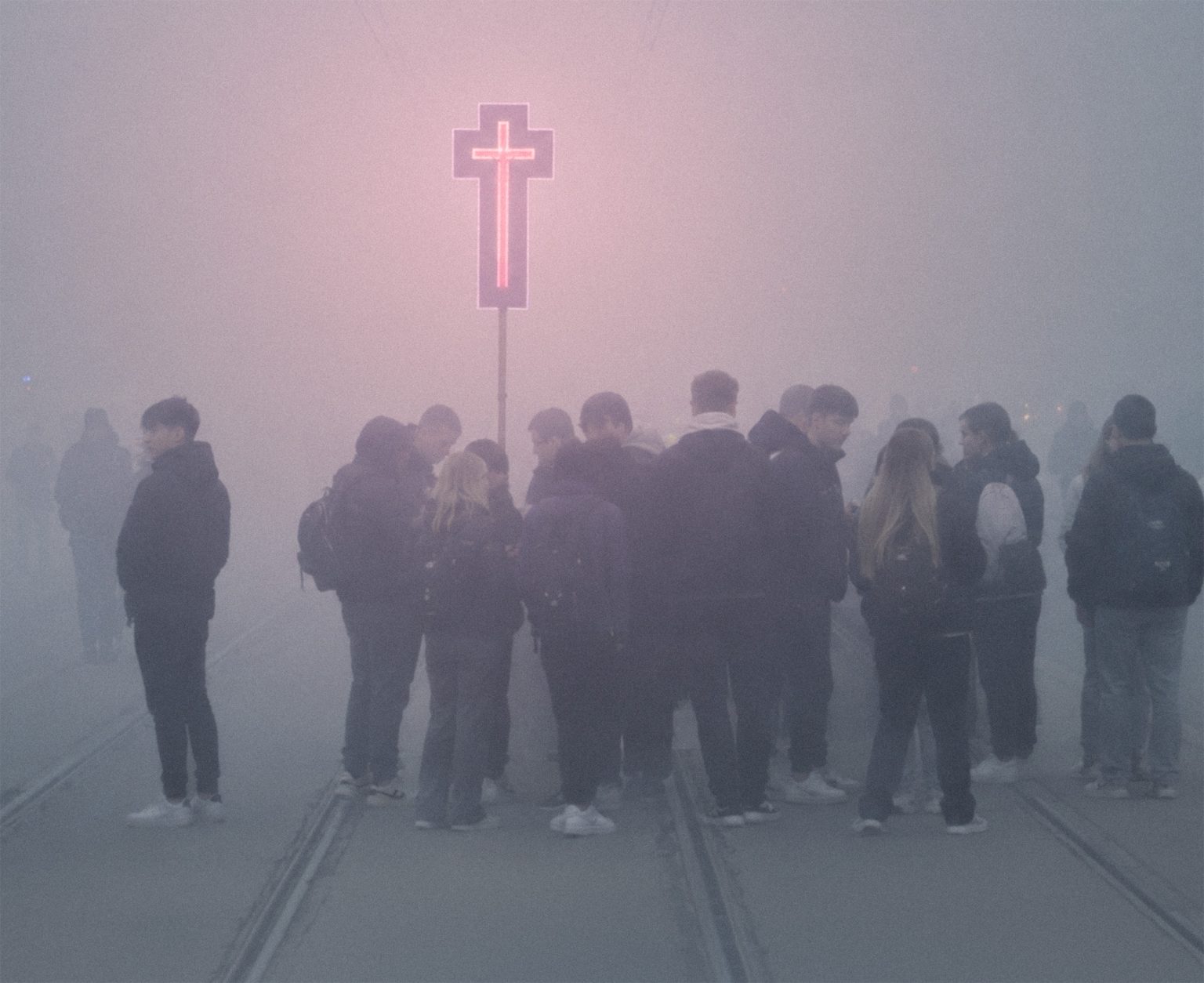
Nearly half of Generation Z would rather live in the past than in the present or the future. According to an NBC News Decision Desk Poll, 47% of young people aged 18 to 29 would “jump into a time machine”.
One-third would choose a period less than 50 years ago, while another 14% would go further back in history. Only 38% prefer the present and only 15% the future.
The figures are no coincidence. They are a warning sign of the discontent of a generation that grew up with the promise of endless progress, but instead inherited anxiety, emptiness and digital chaos.
The Technology That Left Us Alienated
In interviews, young people point directly to the culprits: smartphones, social networks and constant online connectivity. Survey participants talk about losing the ability to look others in the eye, as well as the endless flow of irrelevant nonsense that fills their heads and distracts them from the real world.
It is not just screen fatigue. It is a deeper realization that something fundamental has been lost.
Before the smartphone era, people lived more slowly. Conversations happened face to face, friendships were built in real time and community existed in physical form, not just as an avatar on a social network.
Today, everything is mediated by an algorithm. Love is reduced to likes, and a person’s worth to the number of Instagram followers. Generation Z is discovering firsthand that maximum connectivity has brought maximum loneliness.
Nostalgia for the 1990s is not a superficial longing for cassette tapes and scrunchies. It is a longing for a time when technology served man, not the other way around, when children ran around outside, parents did not care about notifications and evenings did not belong to mobile phones.
Young people instinctively feel that something has gone wrong in the digital revolution.

Progressive Paradox
Until recently, Generation Z presented itself as the flagship of progressivism, the generation that would finally discard tradition, faith and the natural order. Reality, however, tells a different story. The more society has pushed extreme individualism, fluid identity and the rejection of boundaries, the stronger the backlash has become. Among young men in particular, there is a growing desire for order, hierarchy and responsibility.
This is no accident. It is a pattern. When fixed points such as family, authority and moral norms break down, people start looking for something to hold on to. Empty slogans about self-expression and unlimited freedom cannot replace meaning.
The result is a vacuum that progressivism cannot fill. Instead, it brings even more chaos: gender experiments, the breakdown of the family and a culture in which everything is relativized, except one’s own comfort.
Many young people now see that a world without roots does not bring freedom, but confusion. That is why they are turning back. Not to a “perfect” past age, but to the principles that once held society together.

Loss of Stability and Natural Relationships
Behind the nostalgia is a deeper call for lost stability. Young men increasingly reject the caricature of toxic masculinity that has been foisted upon them, but at the same time they do not want to be weak and directionless. They yearn for a strength they can control and direct toward responsibility: to be protectors, providers and leaders within the family. Not dictators, but men who carry the burden.
Young women, meanwhile, quietly yearn for the security and safety that modernity cannot give them. A culture that glorifies non-commitment and a caricature of romance without fertility and lasting bonds leaves them empty.
Marriage is not an instrument of oppression, but a natural framework in which masculine strength and feminine tenderness complement each other. When this complementary order is denied, a gulf between the sexes opens up, fraught with suspicion and disappointment.
Technology accelerates this disintegration. Instead of deep relationships, it offers shallow ones. Instead of patience and perseverance, it offers instant gratification. Instead of real community, it offers virtual bubbles. It is therefore not surprising that 62% of young people expect to have a worse life than their parents.

A Return to Solid Foundations
This nostalgia is not an escape. It is a reaction to civilizational decay. A society that has denied the distinction between man and woman, weakened the family and replaced moral rules with personal feeling has created a generation hungry for truth. Not for a new ideology, but for an order that respects human nature.
The real answer does not lie in further technological progress or in progressive dogma. It lies in restoring what has worked for centuries: strong families, clear roles, responsible men, protected women and communities built on trust, not algorithms. It lies in the renewal of a culture in which freedom is not the absence of boundaries, but the ability to do good, to accept obligations and to build something lasting.
Generation Z is beginning to name this decay. Often clumsily, sometimes radically, but at its core, this is a yearning for meaning. Young people see the emptiness of a world that promised everything and delivered little. They see that without a solid foundation, the ship of society drifts.

Hope in Restoration
This phenomenon is not a cause for pessimism, but for hope. It shows that human nature cannot be deceived forever. Reality has a way of asserting itself. When the progressive illusion crumbles, there is room for something deeper and truer.
The future will not belong to those who offer another digital escape or a continuation of the anthropological revolution. It will belong to those who can restore a natural order in which technology serves rather than rules, the family is the center, man and woman stand together and responsibility triumphs over self-centeredness.
Generation Z has the chance to become not the pinnacle of progressivism, but its greatest opponent. Not by escaping to the past, but by returning to principles that have survived for centuries because they are rooted in human nature. Time will tell whether the longing for the past remains mere nostalgia or is transformed into the courage to build a better future on solid foundations.
One thing is certain: a world without stability, without real relationships and without order has no future. Young people are beginning to understand this.
Nearly half of Generation Z would rather live in the past than in the present or the future. According to an NBC News Decision Desk Poll, as many as 47 percent of young people ages 18 to 29 would "jump into a time machine."
One-third would choose a period less than 50 years ago, while another 14 percent would go even further back in history. Only 38 percent prefer the present and only 15 percent the future.
These numbers are not random. They are an exclamation point on the discontent of a generation that grew up with the promise of endless progress, but instead received anxiety, emptiness and digital chaos.
The technology that has alienated us
In interviews, young people point the finger directly at the culprits: smartphones, social networks and constant online connectivity. Survey participants talk about the loss of the ability to look others in the eye, as well as the endless flow of irrelevant nonsense that fills their heads and distracts them from the real world.
It's not just screen fatigue. It's a deeper realization that something fundamental has been lost.
Before the smartphone era, people lived slower. Conversations happened face-to-face, friendships were built in real time, community had a body, not just an avatar on a social network.
Today, everything is mediated by an algorithm. Love is reduced to likes and a person's worth to the number of Facebook friends or Instagram followers. Generation Z is experiencing firsthand that maximum connectivity has brought maximum loneliness.
Nostalgia for the 90s is not a superficial longing for cassette tapes and shushes. It's a longing for a world in which technology served man, not the other way around. In which children ran around outside, parents didn't care about notifications and evenings didn't belong to mobile phones. The young instinctively feel that something has failed in this digital revolution.
Progressive paradox
Until recently, Generation Z presented itself as the flagship of progressivism. The generation that would definitely throw away tradition, faith and the natural order. Reality, however, tells a different story. The more society has pushed extreme individualism, fluid identity and rejection of boundaries, the stronger the backlash. Especially among young men, there is a growing desire for order, hierarchy and responsibility.
This is no accident. It is a regularity. When the fixed points, the family, the authority, the moral norms break down, one starts looking for support. Empty slogans about self-expression and unlimited freedom cannot replace meaning.
The result is a vacuum that progressive culture cannot fill. Instead, it offers even more chaos: gender experiments, the breakdown of the family and a culture where everything is relativised - except one's own comfort.
Many young people today see that a world without roots does not bring freedom, but confusion. That is why they are turning back. Not to the "perfect" past age, but to the principles that once held society together.
Loss of stability and natural relationships
Behind the nostalgia is a deeper call for lost stability. Young men increasingly reject the caricature of toxic masculinity that has been foisted upon them, but at the same time they do not want to be weak and directionless. They yearn for a strength they can control and direct toward responsibility, to be protectors, providers, leaders of the family. Not dictators, but those who carry the burden.
Young women, on the other hand, quietly yearn for the security and safety that modernity cannot give them. A culture that glorifies non-commitment and a caricature of romance without fertility and commitment leaves them empty.
Marriage is not an instrument of oppression, but a natural framework in which masculine strength and feminine tenderness complement each other. When this complementary order is denied, a gulf between the sexes is created, fraught with suspicion and disappointment.
Technology accelerates this disintegration. Instead of deep relationships, it offers shallow ones. Instead of patience and perseverance, it offers instant gratification. Instead of real community, it offers virtual bubbles. It is not surprising, therefore, that 62 percent of young people expect a life worse than their parents had.

A return to solid foundations
This nostalgia is not an escape. It is a reaction to the decay of civilization. A society that has denied the distinction between man and woman, weakened the family and replaced moral rules with personal feeling has created a generation hungry for truth. Not for a new ideology, but for an order that respects human nature.
The real answer does not lie in further technological progress or in progressive dogmas. It lies in restoring what has worked for centuries: strong families, clear roles, responsible men, protected women and communities built on trust, not algorithms. It lies in the renewal of a culture in which freedom is not the absence of boundaries, but the ability to do good, to make commitments and to build something lasting.
Generation Z is beginning to name this decay. Often clumsily, sometimes radically, but at its core it is a yearning for meaning. They see the emptiness of a world that promised everything and delivered little. He sees that without a solid foundation, the ship of society is drifting.

Hope in Restoration
This phenomenon is not a cause for pessimism, but for hope. It shows that man cannot be deceived in the long run. Reality always speaks. When the progressive illusion crumbles, there is room for something deeper and truer.
The future will not belong to those who offer another digital escape or a continuation of the anthropological revolution. It will belong to those who can restore a natural order where technology serves rather than rules, where the family is the centre, where man and woman stand together and where responsibility triumphs over self-centredness.
Generation Z has the chance to become not the pinnacle of progressivism, but its greatest overachiever. Not an escape to the past, but a return to principles that have survived centuries because they are rooted in human nature. Time will tell whether the longing for the past will remain mere nostalgia or whether it will be transformed into the courage to build a better future on solid foundations.
One thing is certain: a world without stability, without real relationships and without order has no future. The young are beginning to understand this.