A UNICEF study ranks Germany poorly on child well-being. The findings raise uncomfortable questions about whether one of Europe’s richest countries gives every child a fair start, even if the report’s design has important limits.
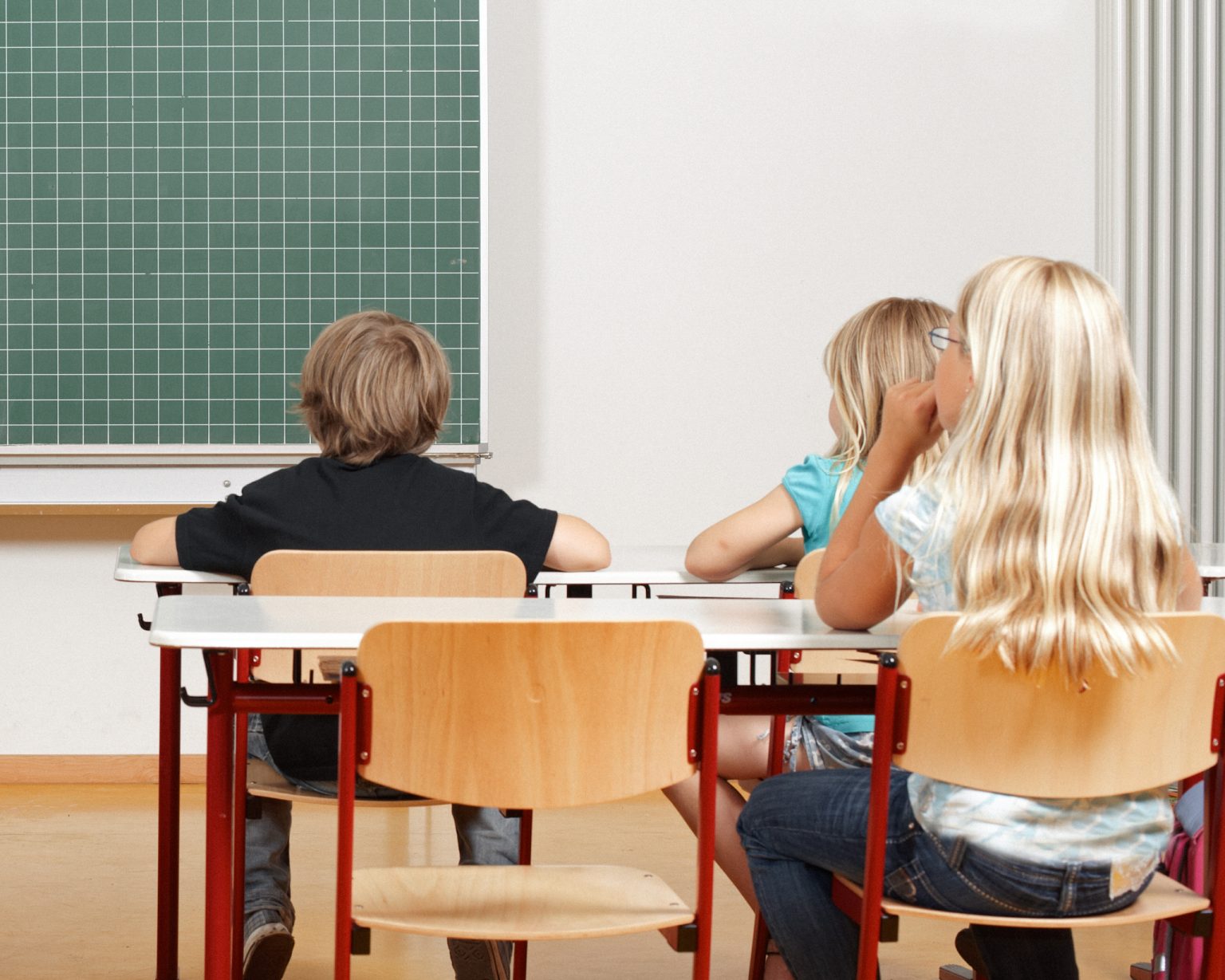
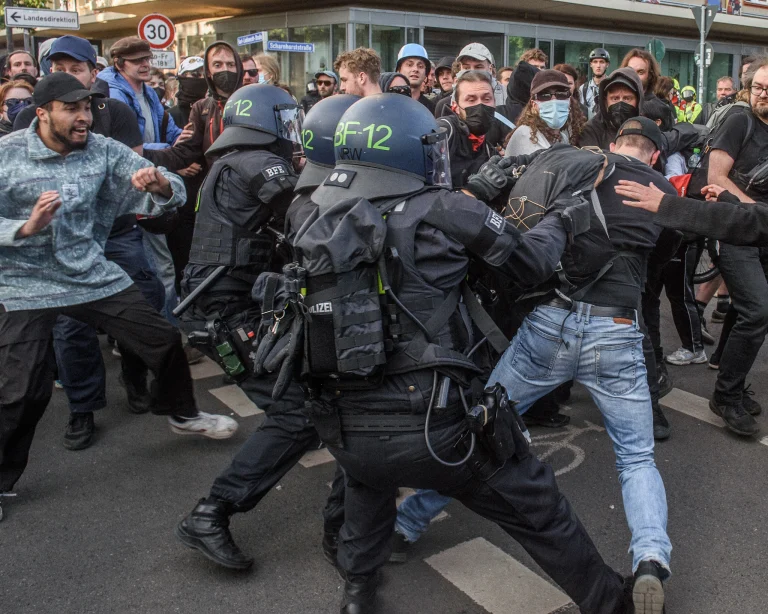
Germany’s poor ranking raises an uncomfortable question: why does one of Europe’s richest countries fail to give every child a fair start? Photo: thelinke/Getty Images
|
Germany came only 25th out of 37 wealthy countries in a UNICEF ranking of child well-being worldwide. Romania, Slovenia and Croatia all placed far ahead of Germany, one of the richest countries in the world.
With gross domestic product (GDP) of $4.69 tn in 2024, Germany had the highest GDP of all the countries included in the study. In per capita terms, at $56,104, it ranked sixth among the countries examined.
The report is uncomfortable reading for Germany and raises the question of why children should fare worse in such a wealthy society than in much poorer ones.
Germany performs particularly poorly in the area where the country’s future is decided: young people’s skills. It ranks 15th for physical health, 21st for mental well-being and only 34th for skills.
The figures show that national wealth can coincide with strong outcomes, but does not by itself determine the development of children’s skills. Germany is far richer than Slovenia, with GDP per capita of $56,104 compared with $34,301. Yet Slovenia ranks second in this category, while Germany comes only 34th. Ireland, meanwhile, is the richest country in the study by GDP per capita at $112,895 and ranks first.
The Study Design in Detail
UNICEF measures child well-being across three broad dimensions. The first is physical health, measured by the mortality rate among children aged five to 14 and the share of overweight children and young people aged five to 19.
The second dimension is mental well-being. The indicators here are high life satisfaction at age 15 and the suicide rate among 15- to 19-year-olds.
The third is skills or competencies. These are measured by basic proficiency in reading and mathematics at age 15, as well as by whether young people say they find it easy to make friends at school.
UNICEF lists six criteria for the indicators it uses. The data should be robust, relevant, widely available, current, internationally comparable and sufficiently meaningful.
The study design shows both the strengths and the limits of the findings. UNICEF does not look at childhood as an idyllic whole, but at measurable conditions for a successful life. Yet self-reported life satisfaction or the ability to make friends can only provide snapshots in dynamic areas of life.
Core Areas of Well-Being
UNICEF considers this approach legitimate and treats health, psychological stability and education as core areas of well-being. Anyone who cannot read, calculate or participate socially starts adult life at a serious disadvantage. The report does not merely ask how well children are doing on average, but whether prosperity reaches them and whether background determines opportunity. Income inequality, child poverty, resources in households, schools and neighborhoods, and the pressures created by economic strain all feed into the study.
For Germany, the verdict is sobering above all because of education. The relevant data came from the Organisation for Economic Co-operation and Development’s (OECD) 2022 Programme for International Student Assessment (PISA). The assessment shows that performance in Germany in mathematics, reading and science has once again fallen sharply. The OECD describes the decline across its member countries as historically steep.
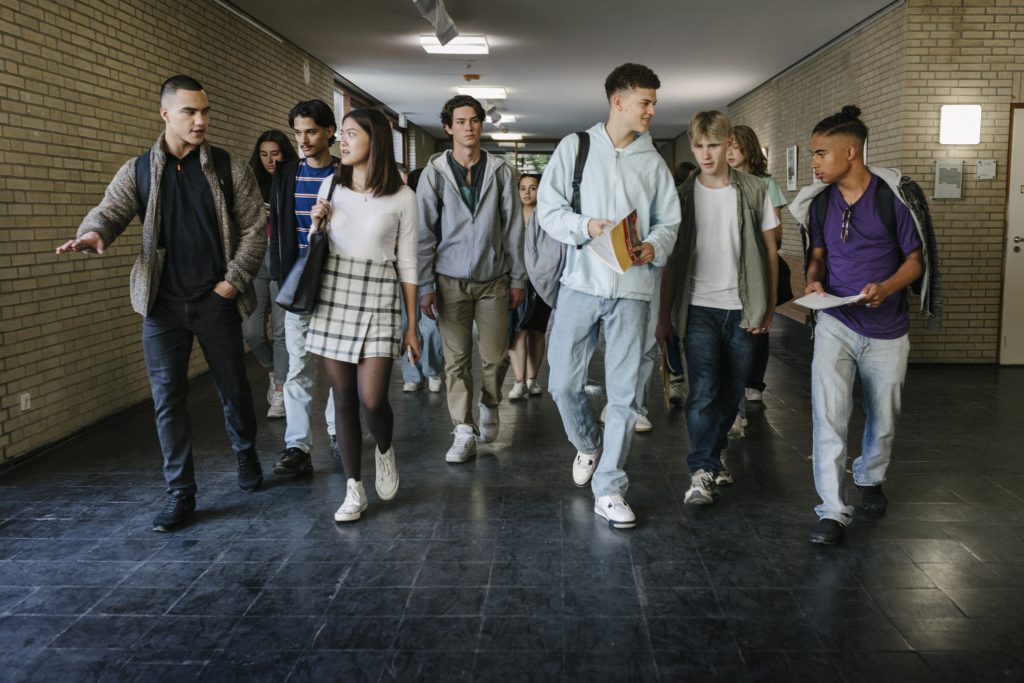
Behind the ranking lies a quieter question: who receives enough stability, confidence and support to find their place? Photo: Willie B. Thomas via Getty Images
For Germany, the decisive issue is not only the drop in performance after school closures during Covid, but also the social inequality reflected in the results.
According to the OECD’s findings, socioeconomically disadvantaged pupils have significantly lower chances of achieving basic proficiency. Where strong families support children, they develop better. The measure of social background also shows that families in middle-class milieus are more stable.
The issue is not only what the data show, but what conclusions are drawn from them.
The Child Poverty Thesis
Another UNICEF analysis of Germany and the European Union concluded in 2025 that 23% of children in Germany are at risk of poverty or social exclusion. Strictly speaking, however, this is not child poverty, but family poverty: the analysis concerns the poverty of the household in which children grow up, since children themselves do not generate income.
Despite its economic strength, Germany ranks in the lower third of Europe on this measure. Material deprivation and households with very low work intensity are particularly problematic. The data suggest that state social transfers do not strengthen these families or their children.
Germany’s poor performance accordingly does not result from a single deficit, but from a whole causal chain that reinforces itself and in which several weaknesses overlap. Children from poorer families have less material security, more often live in worse housing conditions, have less access to supportive learning environments and face more everyday stress at home.
Economic insecurity affects children’s everyday lives through households, neighborhoods and schools. It influences relationships, nutrition, leisure, learning and psychological stability.
Disadvantage is not only a question of the parents’ bank balance. It results from a social environment in which children have less support, less calm, less trust and less room for maneuver. The data practically cry out for targeted family support that changes the milieu, rather than simply pouring more money into it.
Incomplete International Data
The ranking does not amount to a comprehensive portrait of childhood in Germany. The six indicators used can make important trends visible, but they cannot replace a full analysis.
The report assesses children’s mental well-being through life satisfaction and suicide rates. That falls far short of a complete picture. Anxiety disorders, loneliness, family conflict, digital overload and access to therapeutic help appear only indirectly, if at all.
Children’s physical health is measured by child mortality and obesity rates. Both are important indicators, but they leave chronic illness, disability, gaps in care and regional differences largely outside the ranking.
UNICEF itself points out that even rich countries have significant data gaps, including in internationally comparable data on mental health, children outside school and data collected directly from children. At that point, the study’s explanatory value is limited at best.
Problematic Weighting
The equal weighting of the three dimensions is also a normative decision. Physical health, mental well-being and skills count equally in the ranking. At first glance that looks balanced, but it can shift political interpretations.
Germany’s position is dragged down by its weak score on skills. Anyone who gave greater weight to health would arrive at a less gloomy picture. Anyone who gave greater weight to education would reach an even harsher verdict. The ranking is therefore not an objective truth, but a defensible measurement model with limited explanatory value.
Another critical point concerns genuine comparability between countries. International rankings depend on placing very different countries in a single order. Differences in data quality, school systems, migration histories, welfare states and culture are not captured, or can be captured only to a very limited extent.
Whether young people find it easy to make friends may be considered an important question, but in some cultures it is regarded as irrelevant. The indicator also rests on subjective self-assessment. Where, then, is the metric that can deliver genuine comparability between countries?
PISA and Its Limits
PISA data measure the skills of 15-year-olds in a particular test format. They say a great deal about basic abilities, but very little about creativity, vocational education, political education or practical skills. Germany’s strength in its dual training system, combining theory and practice, does not appear in this logic at all.
Yet it would be too easy to dismiss Germany’s poor performance as a mere effect of an unreliable measurement method. Social background has a very strong influence in Germany on whether and to what extent young people can develop their potential. At the same time, most do not grow up in material neglect.
Other wealthy countries, however, seem better able to cushion the gap between poorer and wealthier households. The implication is clear: social inequality plays a central role. The UNICEF ranking should therefore be read as a warning.
Yet treating inequality as the main cause already went too far in many interpretations of the PISA results. Plenty of children grow up safe, healthy and supported. Others experience Germany’s prosperity only to a limited degree in their everyday lives. That is hardly a new finding.
More Government as the Default Answer
The ranking compresses different stages of development and inequality into a single number. It is crude, but not arbitrary. UNICEF recommends not only more money, but a fairer distribution of resources across households, schools and neighborhoods. That means support with housing costs, better local infrastructure, access to healthy food, leisure opportunities and school meals, more fairly equipped schools and an education policy that does not reinforce social separation.
The report also emphasizes psychosocial support, good working conditions for parents, early childhood support and participation in political processes, up to and including the demand that children’s rights be enshrined in the constitution. Whether any of that helps improve mathematical skills is another question.
The real message of the UNICEF report is not that children in Germany are generally badly off, but that too many remain below their potential. For a country that defines itself through education, achievement and social balance, that is a serious finding.
In its proposed solutions, however, UNICEF recites exactly what is currently politically fashionable in Germany: more government, much more government, still more government.
Yet the study can also be read differently. Where strong families support children and social structures are stable, child well-being is high.
Welcome to the comments section of the Štandard daily. Please take note of our guidelines, comments are moderated by us. You can contact the moderators at support@statement.com.
Participate in the discussion
Comments are available to subscribers only. If you'd like to join the discussion, choose a subscription starting at €6.72 per month.
All comments 0
Register
Comments are available to registered users only. If you'd like to join the discussion, register here.