At first glance, the argument seems reasonable. Nobody wants poisoned owls or rotting foxes scattered across the countryside.
The problem is that Germany increasingly appears to care more about protecting animals that might accidentally eat a rat than about protecting people from the rats themselves.
For most of human history, rats have not exactly been viewed as misunderstood victims. They have been associated with some of the deadliest epidemics Europe has ever experienced. The Black Death killed tens of millions of Europeans. Historians continue to debate the precise role played by rats, but nobody has ever suggested that Europe's great mistake was insufficient compassion toward them.
Yet somehow, in 2026, Germany is debating whether ordinary people should be allowed to use rat poison at all. Increasingly onerous government regulation means only "experts" are allowed to do tasks that our parents did normally.
The Battle of Berlin
The absurdity of it all became clearer when I came across reports from Berlin's Neukölln district. Authorities had launched an effort to combat a rat infestation around Reuterplatz. This involved traps and poison.
Then something remarkable happened.
People began sabotaging the anti-rat operation. According to reports, traps were dug up. Poison stations were damaged. Pest-control workers faced harassment. The campaign against rats became more controversial than the rats themselves.
Think about that for a moment.
Berlin is struggling with housing shortages, infrastructure problems, rising cost of living, soaring crime and a bureaucracy that can make obtaining a permit feel like running a marathon. Yet somewhere in the city are people who looked at a rat infestation and concluded that the rodents were ones who needed help. This is not merely a Berlin story. It is symbolic of something much larger.
These days if the Rat-Catcher of Hamelin appeared, not only would Germany lack the gold and children to offer him in payment, it would also refuse him a permit to work on wildlife welfare grounds.
Germany's Strange Relationship with Wildlife
In Hamburg in April of this year, a wolf attacked a woman inside a shopping mall, injuring her face when she tried to free the locked-in animal. The wolf was later released into the wild because, according to authorities, a "lethal taking out" was not a favored option. Witnesses came to the aid of the accused wolf and testified that the wild animal had only jumped on her and accidentally hit her with its paw.
This story perfectly captures modern Germany's wildlife philosophy. The wolf is not merely a wolf, a deadly predator. It is a protected species, a conservation success story and, increasingly, a creature that enjoys a level of public sympathy normally reserved for celebrities.
One can almost imagine the court proceedings.
"Your honor, my client is a wild predator."
"Does he have character witnesses?"
"Several."
"Case dismissed."
The wolf walks free. The injured human or livestock receives a lesson in coexistence. The costs of the rewilding of the wolf in Germany are to date in the millions per year.
The Whale That Captured a Nation
Germany's compassion does not stop with wolves.
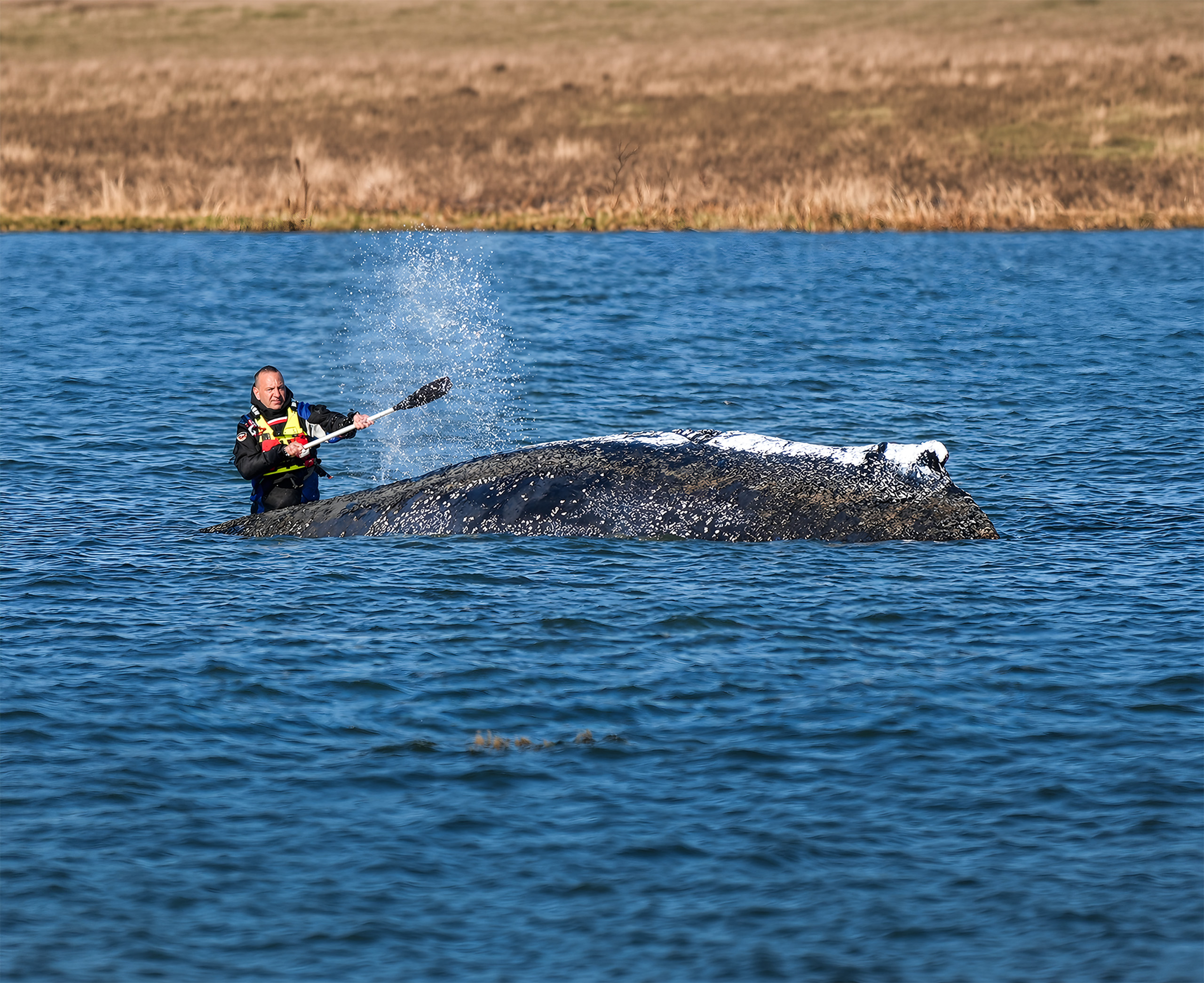
When a stranded whale appears in distress, the country mobilizes with remarkable speed. Experts are summoned. Rescue operations are organized. Television stations provide constant updates. Entire communities become emotionally invested in the fate of a marine mammal they have never previously heard of.
The whale becomes a national cause. That is what happened with Timmy the whale, who repeatedly beached himself in Northern Germany.
The same country that struggles to build airports and train stations on schedule can somehow assemble a task force for a confused dying sea creature within hours. It can fly in a Peruvian spiritual author to sing to the whale.
This is not necessarily a bad thing. Compassion is a virtue. Concern for animals is admirable. The problem arises when compassion becomes detached from common sense.
A society that treats a whale, a wolf and a rat as variations of the same moral dilemma eventually loses the ability to distinguish between wildlife conservation, public health and basic human concerns.