Pope Leo’s EWTN Appointment Is a Rapprochement Rather Than a Rebuke
Pope Leo’s appointment of the EWTN News chief to a senior Vatican role was taken by some as a rebuke of his predecessor’s dislike for the organization. But rapprochement is the more accurate reading.
Maria Montserrat Alvarado brings EWTN’s global Catholic media experience to the Vatican’s communications leadership. Photo: Guglielmo Mangiapane/Reuters
|
Eyebrows were raised recently when Pope Leo XIV appointed Maria Montserrat Alvarado, President and Chief Operating Officer of EWTN News, as the new head of the Vatican’s Dicastery for Communication, due to take up the post this coming November.
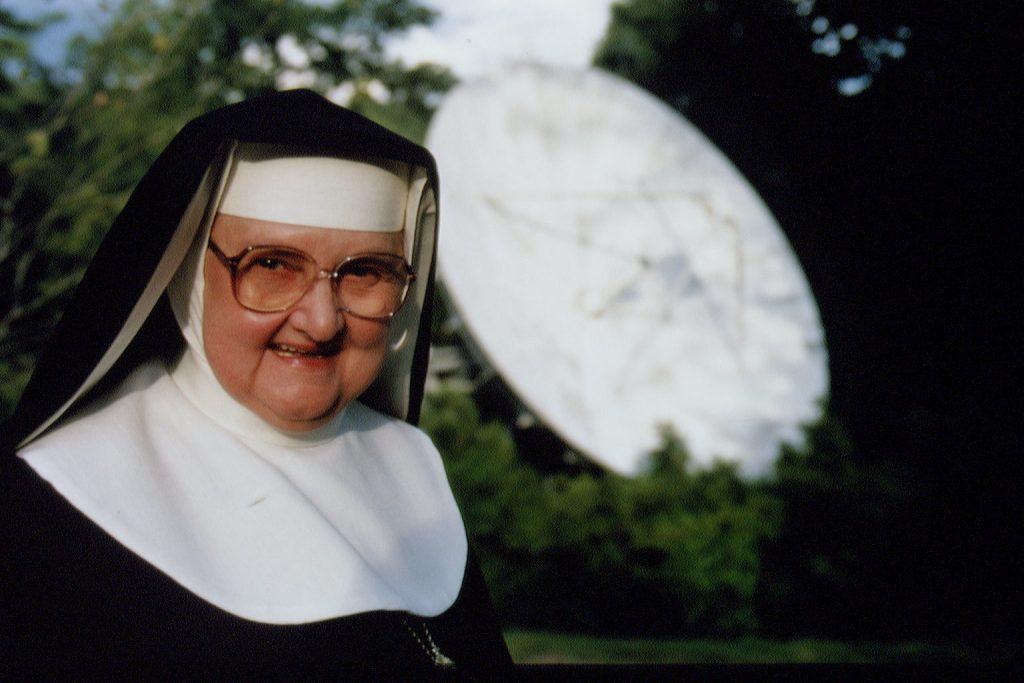
Eternal Word Television Network (EWTN) was launched by the American cloistered nun, Mother Angelica, in 1981, and has expanded since then to provide extensive religious programming and digital news.
The puzzlement was born of the fact that Pope Leo’s predecessor, Pope Francis, was famously regarded as being ambivalent towards the American Catholic news network at best, hostile at worst.
Despite this, it’s best to understand the development as a rapprochement rather than as a rebuke, an interpretation lent legitimacy by the American pope’s cautious and considered approach to matters of Church unity, in contrast to Pope Francis’s off-the-cuff and frequently forceful style of communication.
Francis, EWTN and a Strained Relationship
Given those characteristics, a clash between Pope Francis and EWTN was all but guaranteed from the beginning. Relations reached a particularly low point in 2021 when it was widely reported that the Argentine pontiff spoke of a “large Catholic television channel that has no hesitation in continually speaking ill of the Pope”, further describing it as “the work of the devil”.
“I personally deserve attacks and insults because I am a sinner, but the Church does not deserve them”, Francis said on that occasion, adding: “They are the work of the devil. I have also said this to some of them.”
He did not name EWTN, but Vatican-watchers filled in the blanks themselves, having observed souring relations between the then-pope and American Catholic media in particular for some time.
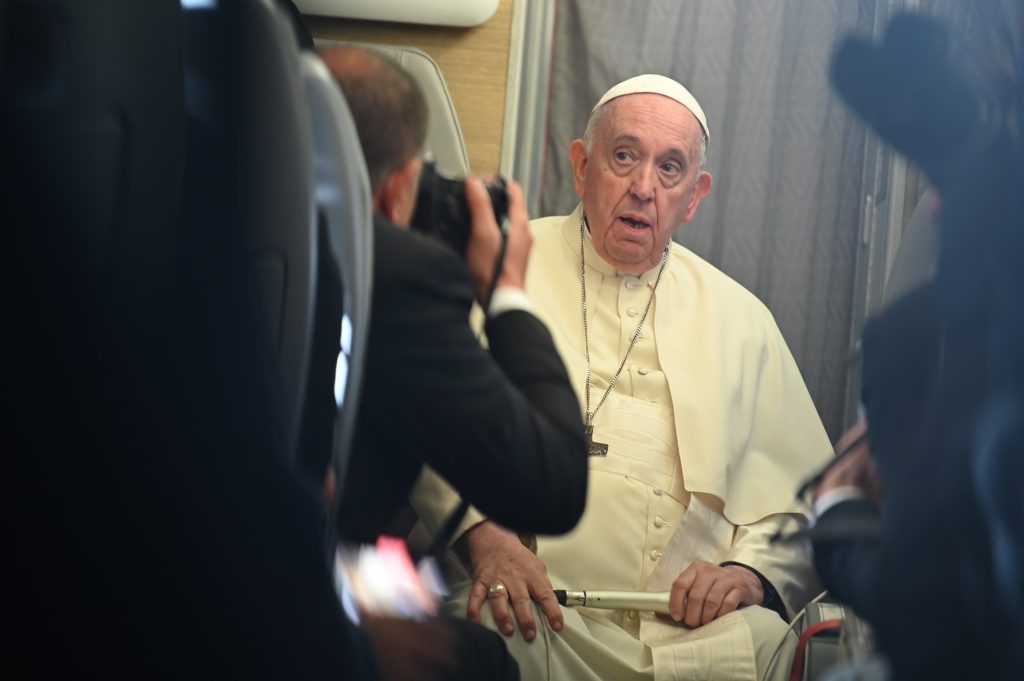
Pope Francis speaks to journalists on his flight back from Canada in July 2022, during a papacy often marked by direct and sometimes contentious public remarks. Photo: Johannes Neudecker/dpa/picture alliance via Getty Images
If Pope Francis was criticized at times for an approach to communications that resulted in doctrinal confusion among the laity and further afield, EWTN was – and remains in some quarters – criticized for a perceived lack of deference to Church authority, the hierarchy and the papacy very much included.
EWTN’s Clashes With the Hierarchy
That perception is born of the fiery nature of some of its broadcast commentators, a trend that started with EWTN founder, Mother Angelica, who not infrequently expressed her deep disapproval of liturgical reform and ecclesial developments. Most famously, and most representative of the divide between EWTN and the post-Vatican II Church, was the dispute that arose between Mother Angelica and Cardinal Roger Mahony of Los Angeles over the Eucharist.
Cardinal Mahony issued in 1997 a pastoral letter, Gather Faithfully Together: A Guide for Sunday Mass, which was intended to rejuvenate the faithful’s participation in the Mass and the Eucharistic celebration by emphasizing the importance of the communal dimensions of both.
The document was perceived by Mother Angelica to divert attention away from a core tenet of Catholicism, which is the real presence of Christ in the Eucharist. In other words, that following consecration the bread and the wine truly become the body and blood of Jesus Christ.
In discussing the letter and the changes Cardinal Mahony proposed therein, Mother Angelica called into question the cardinal’s belief in that central Catholic doctrine, arguing that he emphasized the bread and wine, the meal aspect, over and above the presence of Christ in them.
“In fact, the cardinal of California is teaching that it (the elements of Holy Communion) is bread and wine before the Eucharist and after the Eucharist. I am afraid my obedience in that diocese would be absolutely zero. And I hope everybody else’s in that diocese is zero”, Religion News Service reported Mother Angelica as saying in one of her broadcasts on the matter.
Mother Angelica, founder of EWTN. Source: William Campbell/Sygma via Getty Images
Foreshadowing future trouble, Cardinal Mahony fired back, describing the accusations as “absolutely preposterous”, and demanding public clarification and comment. An apology later came from Mother Angelica, but it did not signify a concession to Mahony’s view of the liturgy, as expressed in the pastoral letter.
While it was the most famous spat between EWTN and the Church hierarchy, it was certainly not the only one, even into the present day. EWTN host, Fox News presenter and, incidentally, Mother Angelica biographer Raymond Arroyo became one of Pope Francis’s most vocal critics over the course of his papacy, to the point that many eyes turned to him when Francis took aim at those he considered to be doing the “work of the devil”.
A Rapprochement Rather Than a Rebuke
Nevertheless, for the vast majority of the world’s practicing Catholics, EWTN is simply a media network meeting a variety of needs, from broadcasting the liturgy and various devotions to covering Church and secular affairs from an orthodox perspective. They are not aware of the personality struggles taking place at any given time, and it is likely this that Pope Leo had in mind when he selected Alvarado as the new Vatican communications chief.
The Dicastery for Communication is responsible for overseeing the entirety of the Vatican’s communications and is supposed to do so in a way that serves the Church’s central mission of evangelization.
There is reason to believe that Alvarado is well suited to aid that mission, having served as President and Chief Operating Officer of EWTN News since 2023. She will also be the first woman to serve in a senior Church role, a fact that cannot have escaped Pope Leo’s notice and may help answer critics who want to see more women in senior Church roles.
Which is why the appointment is best understood as a rapprochement rather than a rebuke.
Pope Leo has given every indication that, far from rejecting the pastoral direction set by his predecessor, he embraces it. But the key difference lies in their personalities. Whereas Pope Francis alienated many among the faithful with what seemed to them to be an abrasive and confrontational view of tradition, Leo seems keen to remind the Church that tradition remains a valuable part of its inheritance too.
Placeholder For Topreaded Placeholder For Topreaded
Placeholder
Placeholder
Placeholder For Topreaded Placeholder For Topreaded
Placeholder
Placeholder
Placeholder For Topreaded Placeholder For Topreaded
Placeholder
Placeholder
Placeholder For Topreaded Placeholder For Topreaded
Placeholder
Placeholder
Placeholder For Topreaded Placeholder For Topreaded
Here is placeholder for Article excerpt Here is placeholder for Article excerpt Here is placeholder for Article excerpt Here is placeholder for Article excerpt
Here is placeholder for Article excerpt Here is placeholder for Article excerpt Here is placeholder for Article excerpt Here is placeholder for Article excerpt
Here is placeholder for Article excerpt Here is placeholder for Article excerpt Here is placeholder for Article excerpt Here is placeholder for Article excerpt
Welcome to the comments section of the Štandard daily. Please take note of our guidelines, comments are moderated by us. You can contact the moderators at [email protected].
Participate in the discussion
Comments are available to subscribers only. If you'd like to join the discussion, choose a subscription starting at €6.72 per month.
All comments 0
Register
Comments are available to registered users only. If you'd like to join the discussion, register here.