La Sagrada Família is a Lesson Spain Needs to Learn
Antoni Gaudí's towering masterwork, the basilica of La Sagrada Família, is nearing completion 144 years after work began. Its message may be more relevant today than at any point in its history, as the society around it grows ever more secular.
Pope Leo XIV inaugurated the newly completed Tower of Jesus Christ at Barcelona’s Sagrada Família, marking the centenary of Antoni Gaudí’s death. Photo: Dan Kitwood/Getty Images
|
Primer l'amor, després la tècnica. First love, then technique. So said Venerable Antoni Gaudí, the saintly architect behind Barcelona’s staggering Sagrada Família basilica, an ongoing masterwork that has testified to that philosophy for over 140 years.
It is an entirely Catholic sentiment, and a lesson for a Spain and a Europe that seem to be stumbling forward blindly, citing vague “values” that represent little more than the impoverishment of the faithful convictions that built the continent and its wonderful countries over the centuries.
View of La Sagrada Família with the Tower of Jesus Christ on the day of its inauguration during Pope Leo XIV’s apostolic journey to Barcelona on 10 June. The pope used his homily at Mass to remind attendees of the presence of God in the project. Photo: Michele Spatari/Reuters
Pope Leo's Apostolic Visit to Spain
Pope Leo XIV was this week carrying out an apostolic journey to that very country, Spain, part of which saw him celebrating Mass in the basilica and blessing its recently completed Tower of Jesus Christ, which makes it the tallest church in the world.
First love, though, then technique. In his homily on Wednesday evening, Pope Leo reminded those in attendance, including Spain’s King Felipe VI and Prime Minister Pedro Sánchez, that the beginning and end of the basilica, and of life more generally, is Jesus Christ:
“This church is a single building made of many stones. A house that grows steadily over the years following a single plan. We are all the living stones of this edifice, which has Christ as its foundation and crowning glory, its beginning and end”, the pope said.
“Much more than a monument, the Basilica of the Sagrada Familia remains a work in progress today, reminding us that the Christian life is always a journey, because it is a project that God is carrying out.”
It is a journey that Spain, like so much of Europe, is in mortal danger of forgetting about. Sánchez, in welcoming Pope Leo to Spain last weekend, said that it was an honor to receive him “in a diverse, open country deeply committed to coexistence, social justice and the defense of human dignity”.
Bemused critics of the socialist prime minister and his government wondered which aspects of human dignity Spain is defending in allowing abortion on request up to 14 weeks into the pregnancy, and up to 22 weeks in other circumstances involving “severe fetal defects”, as they are known.
For context, that could mean an unborn child diagnosed with Down syndrome could be aborted up to the 22-week mark, not simply children who are diagnosed as having a fatal abnormality, horrific as that also is.
I wonder which aspect of human dignity Spain is upholding there.
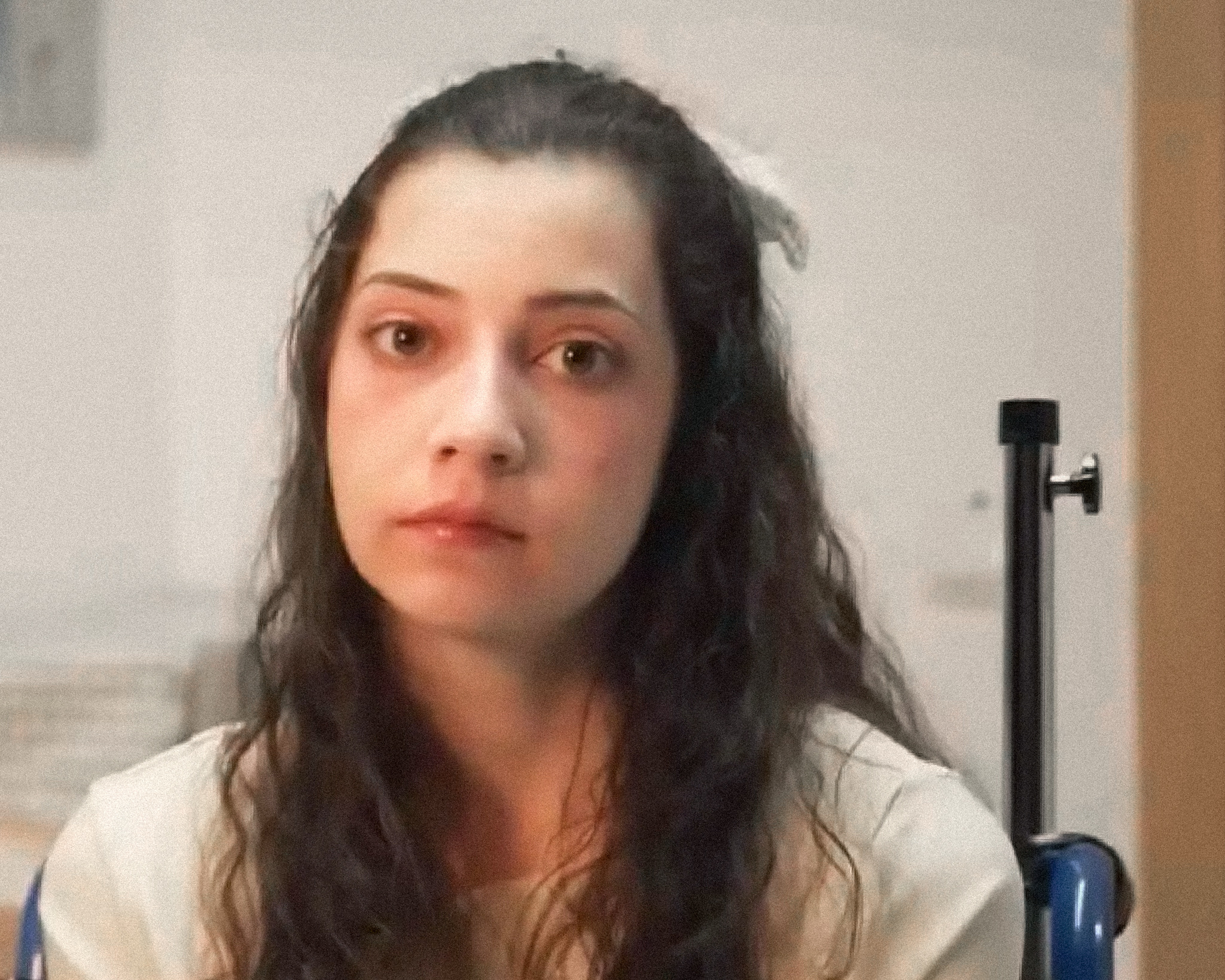
Or I wonder which aspect of human dignity Spain was upholding in the case of Noelia Castillo Ramos, a physically and mentally wounded young woman aged 25 who was killed by euthanasia after multiple sexual assaults and suicide attempts in her brief life. Her father mounted legal challenges against the procedure, but they were ultimately rejected by the courts at every level.
Similarly, it must be the socialist party’s commitment to social justice that saw its headquarters raided by the police just two weeks ago as part of a long-running investigation into alleged corruption.
Alleged, of course. But that corruption exists in Spain, as in every country, cannot be denied, just as the bloody offenses against human dignity of abortion and euthanasia cannot be covered over. And yet the modern secular liberal European politician loves nothing more than attempting to cover them with rhetoric, much as Sánchez did in his, one might say, prideful welcome of the pope to Spanish soil.
Which is why the soaring towers of Sagrada Família are so important, now more than ever.
“The beauty of this church inspires us to learn ever more from our Master and Lord the art of living according to his Gospel”, Pope Leo said during his homily at the basilica.
He encouraged the assembled Spaniards, and viewers all over the world, to allow the tallest church in the world to “guide the steps of the People of God who make their pilgrimage in this land of Catalonia”, with “the Cross illuminating their path, like a lamp burning brightly as we await the return of the Bridegroom”.
Who knows whether or not Sánchez, as a representative of the politicians shaping modern European societies, was listening to the pope’s words, but that they were offered to him and his country is the important thing.
A Reminder of Faith and Beauty for a Secular Society
Sagrada Família stands in the center of bustling Barcelona as a reminder of two things in particular: the importance of keeping an eye to the horizon, both temporal and eternal, and the enduring power of religion – the Church – to generate beauty, unity and worship.
My wife and I visited Barcelona on our honeymoon almost five years ago and were blessed to visit Sagrada Família during our time there. While a visitor could swan through, in and out, relatively quickly, we spent at least four hours there, drinking in its soaring beauty and indirectly the holiness of its Catalan creator.
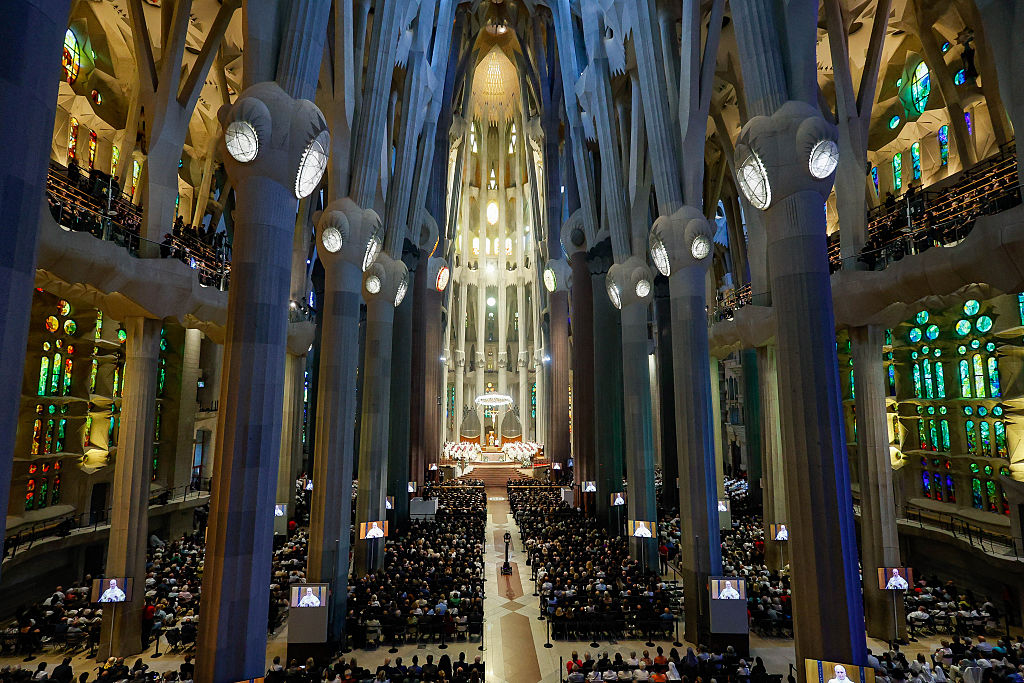
Inspired by nature, to stand within the basilica, bathed in the rich, multi-varied light filtering through the stained glass windows, is akin to standing within a forest, but one built with human hands. When experienced according to the architect’s own understanding of the world and our place in it, which is hard not to do as his presence endures, one understands that the role of man is to imitate the original Creator and to contribute to his creation. It is evangelization by beauty and evangelization by personal witness – two things highlighted as indispensable by the late Pope Benedict XVI.
Pope Leo XIV presides at Mass at the Sagrada Família in Barcelona, Spain, on 10 June. The basilica is noted for its vibrant stained glass windows and tree-like columns that branch out toward the top. Photo: Kike Rincon/Europa Press/Pool via Getty Images
“The only really effective apologia for Christianity comes down to two arguments, namely, the saints the Church has produced and the art which has grown in her womb”, the German pontiff said. In Sagrada Família, both have been set in stone in the midst of an increasingly secular society.
In Gaudí’s basilica, the passing Spanish state – and the European Union – are offered a reminder of that which endures, and that which truly unifies and inspires. Let those who have eyes to see, see.