“Those who no longer want to live must not be left alone”
In an interview with Statement, Catholic moral theologian Franz-Josef Bormann discusses the fundamental problems arising from the right to a self-determined death established by Germany’s Federal Constitutional Court and explains how the Church should respond in its own institutions.
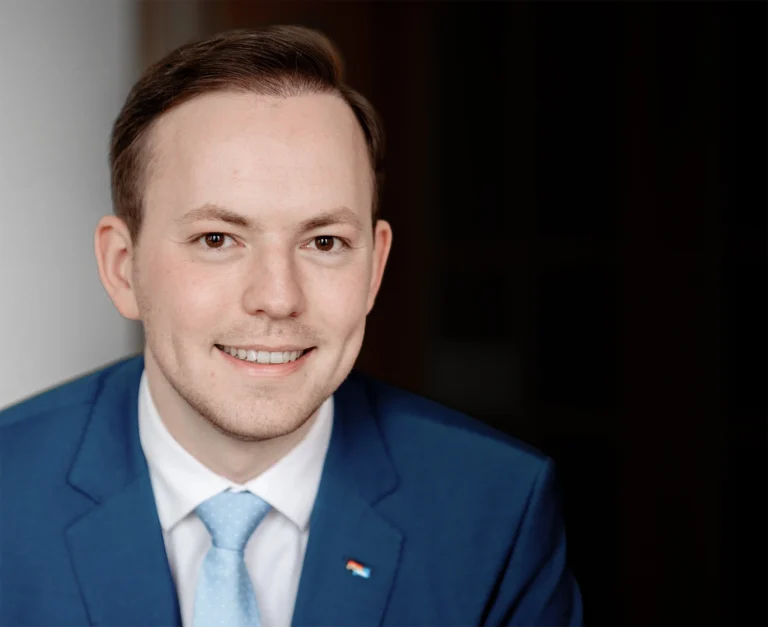
Catholic moral theologian Franz-Josef Bormann discusses assisted suicide, human dignity and the responsibilities of Church-run institutions. Photo: private
|
Personal autonomy at the end of life has limits, according to Catholic moral theologian Franz-Josef Bormann. Speaking to Statement, he discusses the distinction between a wish to die and suicidality, the responsibilities of Catholic institutions and the need to combine care for people in distress with a clear refusal to facilitate assisted suicide.
The conversation follows the publication of two important Church documents that initially received little attention, even within Catholic circles. On 16 October 2025, the Diocesan Ethics Council of Caritas in the Archdiocese of Paderborn issued recommendations for Catholic institutions and services. On 6 March 2026, the German Bishops’ Conference followed with Walking the Path of Life, its guidelines on suicide prevention and the handling of suicidal wishes in Catholic-run institutions.
Bormann recently explained the significance of both papers in an article for Communio. He has held the chair of moral theology at the University of Tübingen since 2008 and previously served on both the German Medical Association’s Central Ethics Committee and the German Ethics Council. He is also a co-editor of Communio and executive editor of the Journal of Medical Ethics.
Professor Bormann, in 2020 the Federal Constitutional Court formulated a “right to a self-determined death”. Why is that ruling problematic?
Franz-Josef Bormann: The first problem is that it is a uniquely radical ruling by international standards. The Federal Constitutional Court derived a right to a self-determined death from a combination of human dignity and the general right of personality. Similar conclusions have been reached in other countries, but the German court went much further.
It ruled that this right must not be subject to any substantive restrictions. It therefore makes no difference whether a person has a terminal illness, is suffering severely or is close to death with only a limited time left to live. The only decisive factor is whether a person acting freely and responsibly expresses a wish to die. According to the ruling, the legislature may not make access to assisted suicide dependent on substantive conditions.
That distinguishes Germany from other countries. Even the Benelux states, some of which permit not only assisted suicide but also killing on request, impose certain substantive criteria. In Germany, by contrast, the right applies regardless of illness, age, proximity to death or the extent of a person’s suffering.
Do you also see a dynamic leading towards killing on request?
If the decisive basis for this right is the free and responsible choice of the person who wishes to die, together with the freedom of the person providing assistance, the question arises as to why the same reasoning should apply only to assisted suicide. That is precisely why legal scholars have long been debating whether Section 216 of the German Criminal Code, which makes killing on request a criminal offense, can still be upheld.
Autonomy and the Limits of Control
Let us stay with the term “self-determined death”. How much self-determination can there be in dying?
Two fundamentally different ideas collide here. According to the traditional view, death is something beyond our control that befalls us and must be endured. It comes upon us and escapes our control. In that respect, dying resembles being born. We are born without being asked.
Modern medicine has, of course, changed many things. In hospitals today, people often die under medical supervision. We have to consider how long life-sustaining treatment remains appropriate. Patient autonomy plays an important role here. But it does not follow that the idea that death ultimately lies beyond our control has become obsolete.
Diametrically opposed to that is the idea that death should be made entirely dependent on human self-determination. Supporters of such a concept ask why a person should have to submit at the end of life to an uncontrollable process of decline.
I consider that problematic. In suicide, a life whose natural course has not yet reached its end is brought to a violent conclusion. Yet the violent nature of the act is often concealed by talk of a clean, controlled and self-determined death.
Is this a form of the modern obsession with control?
People who have led highly self-determined lives, who have been successful and are accustomed to controlling events, often regard the loss of control at the end of life as beneath their dignity. Needing care, being dependent and growing frail are then no longer seen as part of human life, but as unacceptable burdens.
Can the idea that life is not entirely at our disposal still be explained today?
We must remember that life is not entirely at our disposal from the very beginning, not only at its end. We enter life without being asked.
Modern bioethics is strongly shaped by the motto “from chance to choice”. In other words, away from chance and towards choice. Death is now being drawn into the same framework. It is to be transformed from an event beyond our control into something that can be planned.
The issue is no longer merely the ability to kill oneself. It is also the idea of a gentle, controlled and clinically clean death. Whether that idea is realistic is another matter.
The Long Argument Against Suicide
Suicide is not a modern phenomenon. Antiquity already offered differing assessments. What is the Christian response?
Christians did not reinvent the wheel here. A strong tradition critical of suicide already existed in pre-Christian philosophy. Socrates, Plato and many later schools shared the conviction that suicide undertaken to avoid the ordinary burdens of old age was morally impermissible.
There were, of course, opposing views. The Stoic position was more nuanced. Under certain circumstances, the Stoic sage could take his own life if he no longer had any opportunity to live virtuously. But even the Stoics did not regard this as a general license to commit suicide.
For Christianity, the decisive point was that life was understood as a good gift from God. That fundamentally life-affirming outlook already came from Jewish culture.
Christian tradition then combined philosophical and religious arguments. In the Middle Ages, Thomas Aquinas summarized three classic arguments. First, suicide contradicts a person’s natural self-love. Second, it violates the social dimension of human existence. A person is part of a community and bears responsibility toward it. Third, there is the religious argument that a person who commits suicide assumes a right that belongs to the Creator alone.
Catholic institutions are expected to support people who express a wish to die, but not to facilitate assisted suicide. How can that dual approach work in practice?
First, we must distinguish between a wish to die and suicidality. People in care homes or hospitals repeatedly express a wish to die. That does not automatically amount to suicidality. They are often saying that they cannot go on living under their present circumstances. The wish may be an expression of pain, loneliness, fear, distress or other distressing symptoms. The task of staff is then to respond to it appropriately and professionally. What is this person trying to tell us? What needs to change? What forms of palliative, nursing, pastoral or psychosocial support are available?
In many cases, the wish to die then serves its communicative purpose. It has been heard, understood and addressed, and it loses its urgency. But there are also cases in which a wish to die develops into persistent suicidality. Difficult questions then arise about how to respond to that wish in a particular case and what courses of action are available.
That is precisely where the German Bishops’ Conference’s new guidelines are important. On the one hand, they emphasize the need for professional suicide prevention. On the other, they call on Catholic institutions to make clear in residential contracts, mission statements and internal rules that their staff do not provide assistance with suicide and that people providing such assistance may not organize it within Catholic institutions.
No Suicide Is Entirely Private
Why does the location matter so much? Could it not be argued that a suicide takes place in the resident’s private room?
That is an illusion. Every suicide has wider social consequences. It does not affect only the person who dies. It leaves its mark on families, staff and fellow residents. Particularly in a care home, the death of a resident is an event that affects the entire institution. If an assisted suicide takes place two rooms away, it shapes the atmosphere throughout the home.
It is therefore unrealistic to regard assisted suicide as a purely private matter. A Catholic institution cannot both serve as a place where life is protected and permit assisted suicide on its premises. That would also show a lack of consideration for other residents and for staff who are expected to embody a Christian culture of dying.
Legal limits must, of course, be observed. As long as a resident is fit to be transported, I consider it reasonable for an assisted suicide to be organized outside the Catholic institution.
Does that require a different concept of autonomy, one that considers freedom, relationships, vulnerability and responsibility together?
Christian thought has always considered the individual and social dimensions of human nature together. Today, we speak of “relational autonomy”. Long before the emergence of the modern concept of autonomy, the Christian tradition also engaged in sustained reflection on personal mortality. One need only think of the ars moriendi, the art of dying. The aim was to prepare for one’s own death so that it could truly become one’s own death, not through technical control, but through reconciliation, order and spiritual clarification.
When a natural death is complicated by pain or severe symptoms, modern palliative medicine allows us to ease those burdens.
It is interesting that the major figures in modern thinking on autonomy, such as Kant, rejected suicide. Kant recognized that one cannot, on the one hand, emphasize human dignity and the intrinsic value of the person while, on the other, destroying one’s own life through violence. I cannot protect my freedom by destroying it. I cannot preserve my dignity by denying that I am an end in myself and deliberately annihilating myself.
We should therefore not surrender the concept of dignity to those who believe that a dignified death consists of killing on request or assisted suicide.
Relearning the Ars Moriendi
Our culture has largely forgotten how to confront death. What consequences does that have?
What is taboo becomes unspeakable. What becomes unspeakable becomes a source of fear. In the past, there were cultural forms that integrated death into life: memento mori, prayers for a good death and families accompanying the dying. Today, dying is often left to professionals.
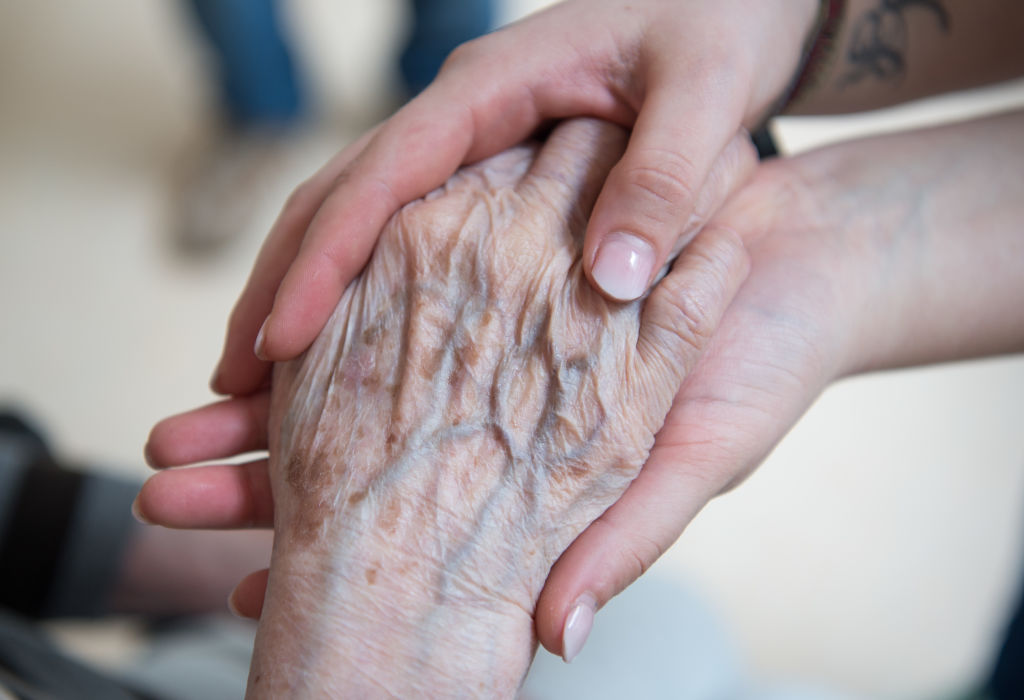
To die in someone’s arms, not at their hands. Photo: Christophe Gateau/picture alliance via Getty Images
Mortality has generally receded from view. The hospice movement and palliative medicine have initiated an important countertrend. Nevertheless, the taboo surrounding death remains strong in a culture that prizes utility and achievement. We need to return dying and death to the ordinary course of life.
Catholic providers are coming under pressure. Do they have reason to fear that they may one day be forced to tolerate assisted suicide?
There are social and political forces that also call freedom of conscience in healthcare into question. Some take the view that anyone licensed to practice medicine must also be prepared to participate in abortion or assisted dying.
Attitudes toward such developments also vary greatly among Catholic providers. Some institutions have done a great deal in recent years to develop a Christian culture of dying, ethical counseling and palliative expertise. For them, the Bishops’ Conference guidelines are a confirmation.
Others have done little to develop such ethical processes or have advocated a misguided form of permissiveness. Some institutional managers are slow to act because clear rules create work. Legal objections are sometimes used as a pretext.
The bishops’ message is therefore directed not only at society, but also at the Church’s own providers. It requires them to act. Catholic institutions must make clear what they stand for. Particularly in a pluralistic society, they must be places where life is protected.
What, then, is the essence of the Catholic response?
The Catholic response is not to leave people who wish to die alone. Quite the opposite. Those who no longer want to live must not be left alone. Standing by them does not mean organizing their suicide. It means taking their distress seriously, relieving their pain, recognizing their loneliness, staying with them in their fear and helping them experience their dignity.
That is the dual obligation: closeness to the suffering person and a clear rejection of assisted suicide. The two belong together. Only in that way can a Catholic institution remain credible.
Welcome to the comments section of the Štandard daily. Please take note of our guidelines, comments are moderated by us. You can contact the moderators at support@statement.com.
Participate in the discussion
Comments are available to subscribers only. If you'd like to join the discussion, choose a subscription starting at €6.72 per month.
All comments 0
Register
Comments are available to registered users only. If you'd like to join the discussion, register here.