Leaked Records Put Peter Thiel's Elite Network in the Spotlight
Peter Thiel is becoming the object of considerable scrutiny as a result of his position at the heart of an intersection between technology, government and religion.
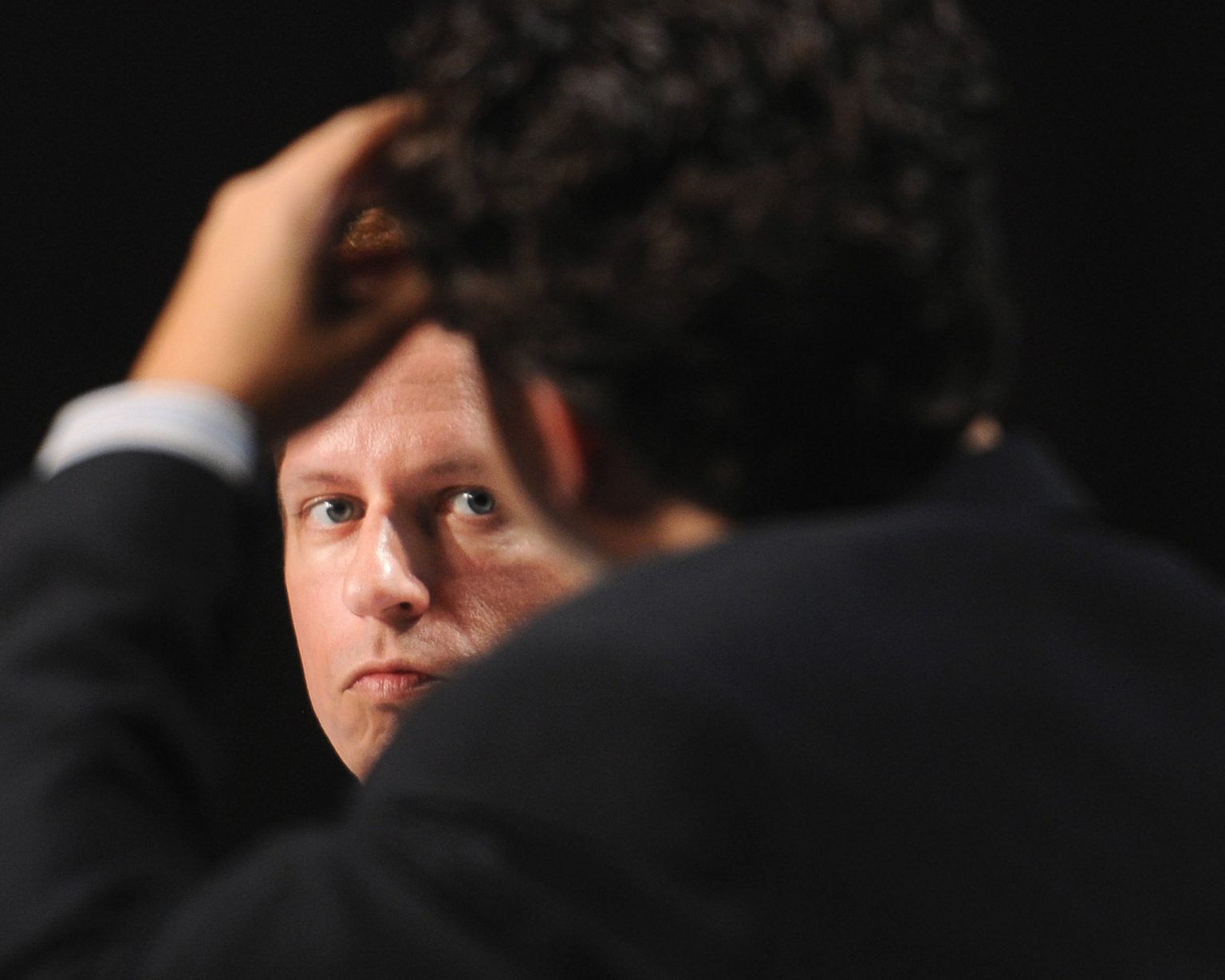
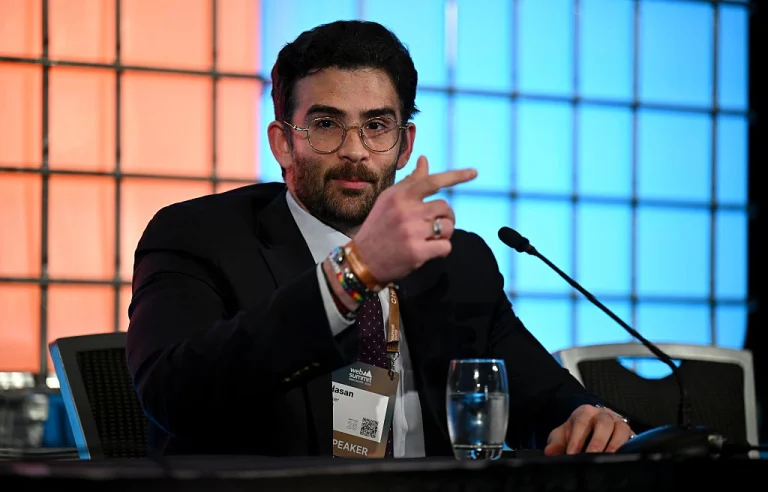
Peter Thiel, co-founder of Dialog, an invitation-only elite network whose retreats have included sessions on AI, World War III and sex. Photo: Araya Diaz/Getty Images for TechCrunch
|
Newly disclosed details of a Peter Thiel-founded “secret society” have ignited widespread speculation about the nature and intentions of the network ahead of its next retreat in Dublin, Ireland, this August.
The controversy arises even as Thiel’s projects, most notably data integration company Palantir, face intensified scrutiny, including from states and their agencies, as a result of surveillance and strategic concerns.
Tech outlet WIRED published details this week of a trove of internal records accessed by Swiss “hacktivist” Maia Arson Crimew, the contents of which were verified by the US publication.
The records pertained to the private, invitation-only group, Dialog, which was co-founded by Thiel and entrepreneur Auren Hoffman in 2006. It brings together hand-picked elites from across the globe, working in government, tech, the arts and academia in an exclusive network, as well as in-person at frequent retreats.
A registration list provided to WIRED for this year’s Irish retreat reveals some of the programmes the 200-plus attendees will be engaged in. Among the off-the-record sessions planned are “Money (Does?) Buy Happiness”, “How’s Your Sex Life?”, “Navigating WWIII” and “Battlefield Technologies”.
According to WIRED, other moderated talks will include “Build-a-Cult” and “Build-a-Party”.
Among the 222 guests, 87 of whom are understood to be first-time attendees, are such influential guests as US Treasury Secretary Scott Bessent, NATO Europe Commander General Alexus Grynkewich and Senator Ted Cruz, chairman of the US Senate Commerce, Science, and Transportation Committee.
WIRED found that none of the registrants made use of their government email addresses in correspondence with the organization, placing their emails outside of freedom of information laws or public record laws.
On the sign-up form, registrants were asked questions about their predictions for the future, and the answers reveal a shared preoccupation with artificial intelligence, optimization and the effect they will have on a wide range of human activities including work, education, war and politics.
However, the information accessed in the breach was not limited to attendees of the upcoming retreat. Names of alleged longer-term members were also revealed, covering a dizzying variety of countries, positions and areas of expertise.
Chairman of the Christian Democratic Union (CDU) of Germany and former health minister Jens Spahn is included on the list, but declined to attend this year's event despite receiving an invitation. British MP Tom Tugendhat and Russian chess grandmaster and political dissident Garry Kasparov are also included on the list found by Crimew.
Former American Director of National Intelligence Tulsi Gabbard, son-in-law of US President Donald Trump Jared Kushner and a number of US political figures aside from those already mentioned are listed, including Democrats Senator Cory Booker and Representative Jim Himes.
Other prominent names of alleged members include founder and CEO of SpaceX and Tesla Elon Musk, US Army Secretary Dan Driscoll, Vice President of the European Commission Kaja Kallas, Youtube CEO Neal Mohan, Harvard Professor and author Steven Pinker, music mogul Scooter Braun, Peter Thiel's Palantir co-founder Joe Lonsdale, former Ambassador of Pakistan to the US Ali Siddiqui and Japanese Minister for Digital Transformation Taro Kono.
The secretive group has prompted questions about the nexus of government, technology and business, and left-wing groups in Ireland have called for the August retreat to be canceled.
It is not the first time concerns have coalesced around one of Thiel's ventures, as many of his investments and political interests have attracted growing scrutiny in recent years.
Thiel's Interest in the Antichrist and the Apocalypse
Thiel has long been interested in the concept of the antichrist and in Christian apocalypticism, leading to several publications and lectures on the matter, including a series he delivered in Rome, in the vicinity of the Vatican, earlier this year.
He expresses concern about technological advances unmoored from a moral or spiritual grounding, arguing that if that divorce happens, it could result in a perverse technological utopia that dehumanizes people and offers them false hope and false salvation.
Despite the ostensibly Christian vision, critics have argued that Thiel’s technological contributions, such as Palantir Technologies which he co-founded in 2003, are directly contributing to the centralization of power and an unrivaled system of control and surveillance.
Others have pointed out that the name "Palantir" itself is a reference to the crystal balls of the same name in JRR Tolkien’s Lord of the Rings, which grant the ability to observe events taking place in far-flung corners of the world and communicate through a network of similar objects, at the risk of corruption.
That risk is ultimately realized in Tolkien's story, where the technology becomes an instrument of evil.
As a result of these issues, as well as broader disagreements with the politics of the Palantir bosses, states and state agencies are turning against the technology company in favor of seeking out and supporting domestic capacity.
An activist wearing a Donald Trump mask gestures beside a Trojan horse during a protest against the planned nationwide use of Palantir software in Berlin last year. Photo: Fabrizio Bensch/Reuters
France’s internal intelligence agency announced this week that it intends to end its engagement with Palantir over surveillance and US tech dependency fears.
This comes in the wake of last week’s restrictions placed on US artificial intelligence giant Anthropic by the Trump administration. The administration reportedly feared that foreign military intelligence agencies could make use of the company’s latest models in unintended ways after potential vulnerabilities were raised – worries that the developer itself downplayed.
Instead, France intends to develop domestic data and AI capacities, such as the Paris-based Mistral.
Similarly, the UK’s Tech Secretary Liz Kendall has indicated that Palantir could be cut off from its British contracts, including with the country’s National Health Service (NHS) because of its work with US immigration authorities and the Israeli military.
The Dialog leak then comes at a time of renewed suspicion about surveillance technologies, artificial intelligence and their impact on democratic governance and human dignity, an intersection that Peter Thiel sits at the heart of.
Welcome to the comments section of the Štandard daily. Please take note of our guidelines, comments are moderated by us. You can contact the moderators at support@statement.com.
Participate in the discussion
Comments are available to subscribers only. If you'd like to join the discussion, choose a subscription starting at €6.72 per month.
All comments 0
Register
Comments are available to registered users only. If you'd like to join the discussion, register here.