Art can reveal to human beings the true, the good and the beautiful. A culture of ugliness, by contrast, darkens all three. In time, it becomes toxic. At the ARC conference in London, Sabin Howard shows what a return to beauty might look like and why it is not nostalgia.
At the Alliance for Responsible Citizenship (ARC) conference in London, culture repeatedly emerges as one of the central themes. It is inseparable from civic life. Just as the anti-culture of modernity and postmodernity seems to have made it its mission to destroy everything that shows human beings the true, the good and the beautiful, our own age also offers countermodels. The ARC is looking for ways to achieve such a turnaround.
That naturally includes politics and the question of a change in how governments act. It also requires a shift in social and family policy, economic policy and energy policy. Yet music, poetry and the visual arts keep coming back into focus.
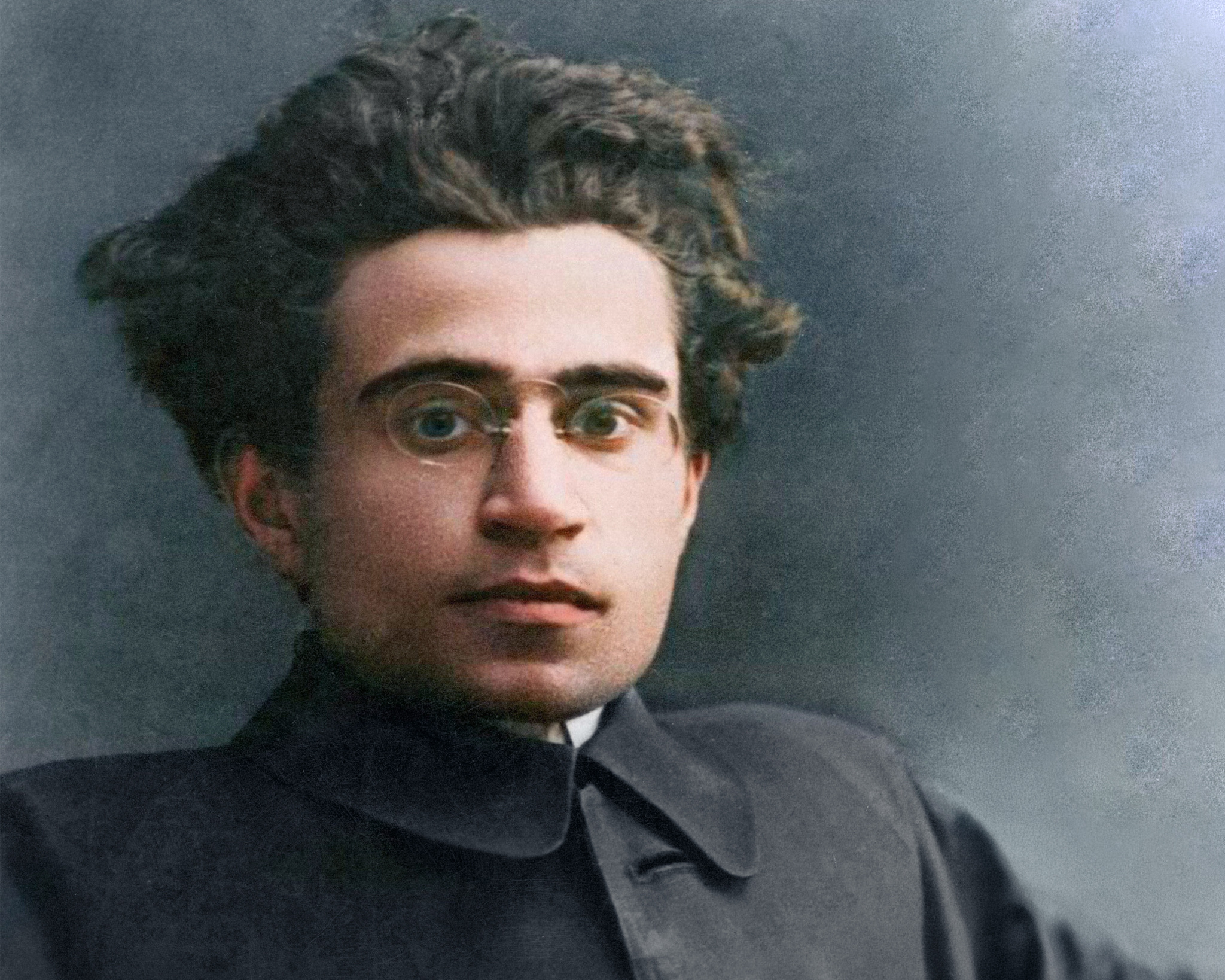
At first glance, these things may seem unrelated. The inner connection, however, is much deeper than one might think. The Italian communist Antonio Gramsci already knew that whoever controls culture controls politics.
From the beginning, the conference’s opening melody has been Fanfare for the Common Man. Aaron Copland composed the piece, which became known worldwide through Emerson, Lake & Palmer’s recording. Artists also appear throughout the program.
At the start of ARC 2026, one of them was the pianist Ignat Solzhenitsyn, who, alongside a personal statement, performed a piece at the grand piano. Sabin Howard spoke in the same conference session. Howard is a well-known American figurative sculptor in the modern classical tradition. He grew up in New York City and Turin, studied at the Philadelphia College of Art and earned a Master of Fine Arts (MFA) from the New York Academy of Art. He became known above all for A Soldier’s Journey, the large bronze group at the National World War I Memorial in Washington, DC.
He began his contribution with an anecdote. In 1982, at the age of 19, he had given up his job. Although he could not draw, he wanted to attend art school. On a recommendation, he bought the book Drawing on the Right Side of the Brain, which helped him learn classical drawing. After 90 days, he went to art school with a portfolio of 90 drawings and was accepted.
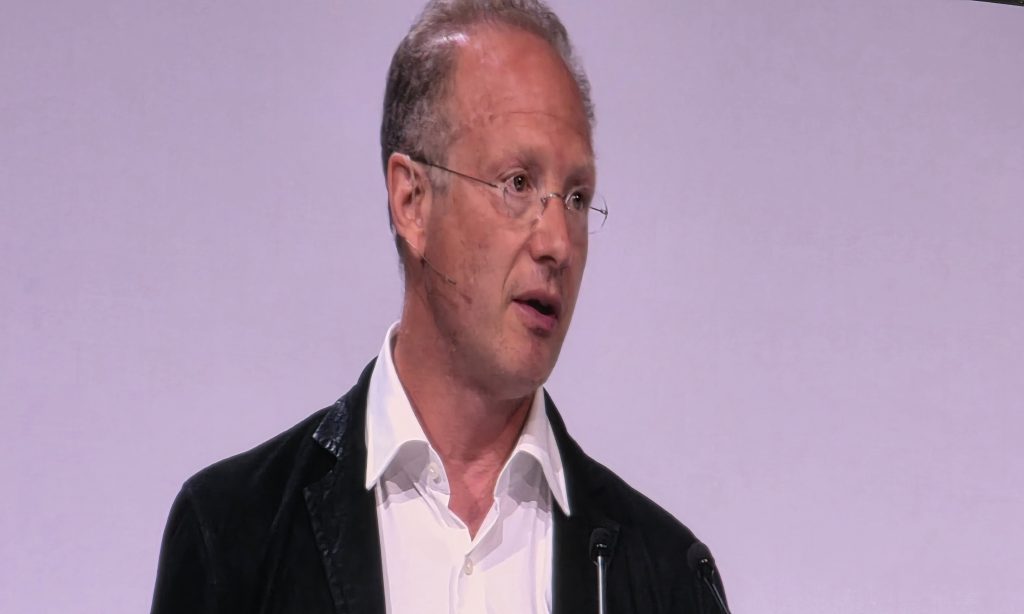
Sabin Howard speaks at the ARC Conference in London. Photo: Peter Winnemöller
Man Is Made in the Image of God
Sabin Howard’s central message is that a culture that understands man as made in the image of God creates art, monuments and institutions that testify to his dignity. Classical figurative art stands in that tradition. It takes the body seriously because man himself must be taken seriously. It seeks measure, proportion, light, posture and expression because they reveal more than mere form: the spiritual purpose of man.
Howard showed several examples of this. A culture that rejects God, beauty and truth, he argued, also loses sight of man.
Howard is polarizing when it comes to modern art. Not every provocative object is automatically meaningful simply because it stands in a gallery. Nor does every act of destruction deserve to be called profound. When art disfigures man, mocks the sacred or systematically replaces beauty with shock, waste and cynicism, then junk may be a harsh judgment. Yet who has not stood in museums of modern art and found himself defeated by sheer meaninglessness?
For Howard, the return to an art of truth, goodness and beauty is not a nostalgic escape, but a necessary renewal. Against an art that merely seeks to provoke, destroy or degrade, Howard sets the memory of who we are.
The true, the good and the beautiful cannot be separated from one another. Where art is truthful, it points to order. Where it is good, it elevates man. Where it is beautiful, it makes visible that creation is not meaningless. Great art is therefore more than self-expression. It is service to a higher reality.
With two of his works, Howard showed how he puts these ideas into practice. A Soldier’s Journey, the first of the two, is a monumental bronze relief and forms the heart of the National World War I Memorial in Washington, DC. It stands in the former Pershing Park, near the National Mall and Pennsylvania Avenue. The work comprises 38 figures over a length of about 58 feet (17.7 m). It depicts the experience of an American soldier from farewell to war, injury and return.
The memorial project was commissioned by the United States World War I Centennial Commission. The overall site was designed by the architect Joseph Weishaar, while Howard created the sculpture. The work was unveiled in September 2024 as the final major element of the memorial.
In Howard’s thinking, A Soldier’s Journey is not merely a war memorial. It visibly restores man to his dignity. The figures do not speak of history in abstract terms. They embody it. Farewell, combat, injury, psychological collapse and homecoming are shown realistically.
The shell-shocked soldier stands at the center because he reveals what happens when man is torn out of order, home, faith and meaning. His contorted body is not only a sign of psychological trauma, but also a spiritual image. Modern man stands alone amid devastation, and he must recognize again that he is not made of chance and chaos, but is a creature of God.
For Howard, the bronze group is also a countermodel to the degrading art of destruction. It does not shock for the sake of emptiness. It unsettles the viewer in order to remind him. The real physicality of the veterans, the classical form, the narrative movement and the pathos of the figures all serve one purpose. The viewer is meant to recognize himself in the soldier’s journey.
War can break man, but it cannot erase his divine origin. When a nation erects such images, it professes that sacrifice, memory, beauty and truth belong together, and that a people has a future only when it knows what man is.
Howard closed his contribution by presenting his latest project, the Grand Liberty Arch. On 11 March 2025, he said, he and his wife set out west toward Salt Lake City with their belongings, without a commission or any official body behind them, but with the conviction that the project had to be realized.
According to Howard, the arch is intended to become America’s largest figurative monument and to celebrate American history with pride on the 250th birthday of the United States.
Howard sees the Grand Liberty Arch as a monumental symbol of freedom. Fifty-six intertwined figures, about 60 feet (18.3 m) long and 36 feet (11 m) high, are meant to form a portal into a new paradigm.
For him, the real protagonist is not a single historical figure, but the viewer himself. He is on a hero’s journey into the future, sustained by the idea that freedom and human dignity can endure only if man is understood as a creature of God.
Placeholder For Topreaded Placeholder For Topreaded
Placeholder
Placeholder
Placeholder For Topreaded Placeholder For Topreaded
Placeholder
Placeholder
Placeholder For Topreaded Placeholder For Topreaded
Placeholder
Placeholder
Placeholder For Topreaded Placeholder For Topreaded
Placeholder
Placeholder
Placeholder For Topreaded Placeholder For Topreaded
Here is placeholder for Article excerpt Here is placeholder for Article excerpt Here is placeholder for Article excerpt Here is placeholder for Article excerpt
Here is placeholder for Article excerpt Here is placeholder for Article excerpt Here is placeholder for Article excerpt Here is placeholder for Article excerpt
Here is placeholder for Article excerpt Here is placeholder for Article excerpt Here is placeholder for Article excerpt Here is placeholder for Article excerpt
Welcome to the comments section of the Štandard daily. Please take note of our guidelines, comments are moderated by us. You can contact the moderators at [email protected].
Participate in the discussion
Comments are available to subscribers only. If you'd like to join the discussion, choose a subscription starting at €6.72 per month.
All comments 0
Register
Comments are available to registered users only. If you'd like to join the discussion, register here.