Vague Rules, Unchecked Power: Brussels' Authoritarian Drift
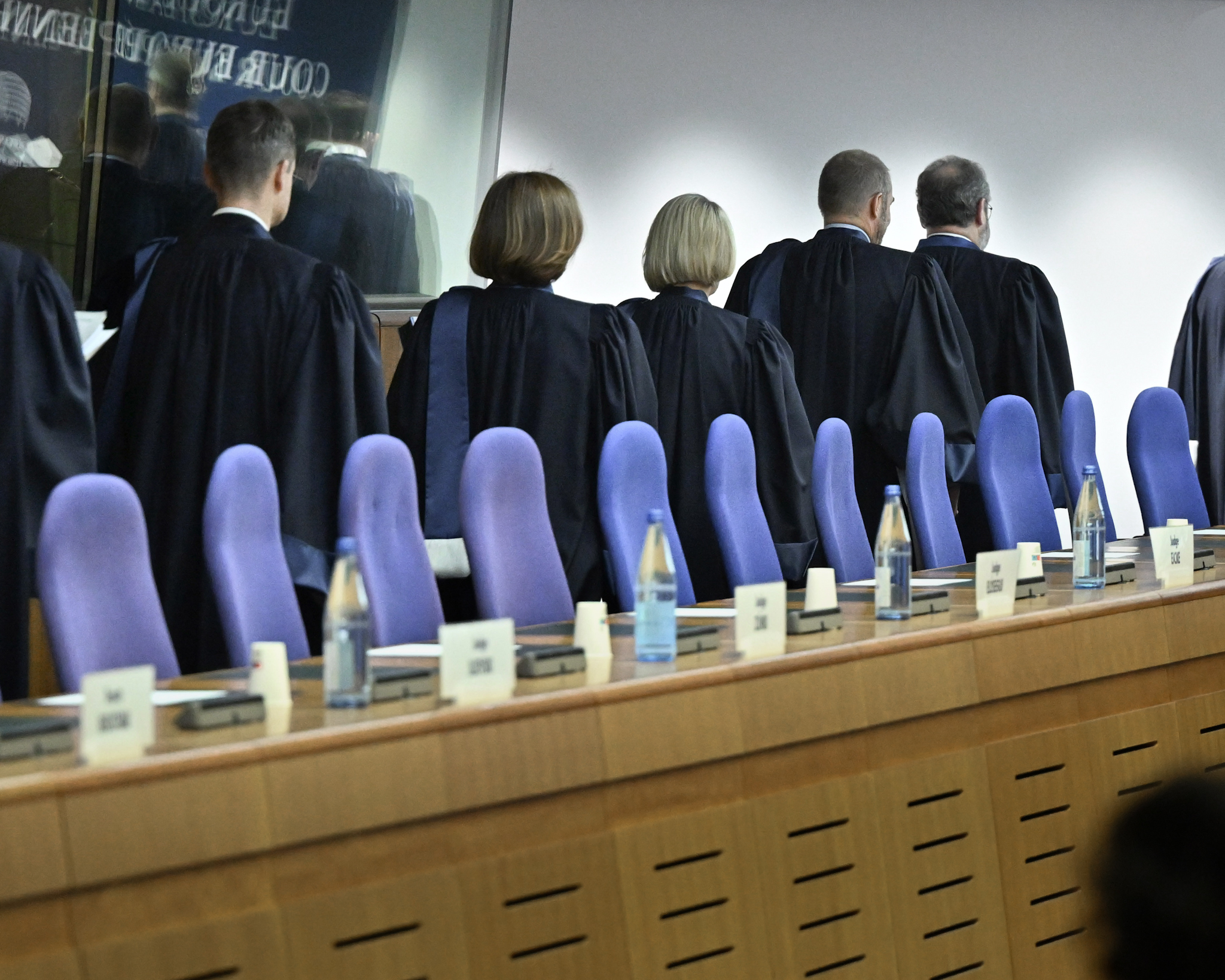
Extensive previous experience of how these institutions operate suggests, and indeed demands, the assumption that the court will not proceed according to the law, but rather ideologically, and according to Brussels' own unwritten "laws". It is therefore important that the last free nations of Europe, including Slovakia, become involved in this process.
Brussels' vagueness is rarely accidental, and the DSA is no exception. Even during the push to enact the law, critics warned it would amount to censorship on an unprecedented scale, enforced through vague rules designed to leave the door open for an overly broad interpretation.
That same tendency extends to the bureaucracy's habit of expanding definitions far beyond even the worst-case scenarios, since the interpretation of Orwellian terms such as peace, war, freedom and energy security is left to the discretion of their creators.
A "Safe Space" Built on Silencing Dissent
On paper, the DSA appears to pursue a noble goal: curbing the spread of false information or "hate speech", the kind of controversial content EU officials typically claim to be protecting citizens from. In reality, the censors simply want to ban anything that does not ideologically fit Brussels' disinformation narratives, whether on COVID-19, the war in Ukraine, vaccinations or restrictions on the spread of truthful information about the consequences of the rainbow agenda.
The DSA reportedly aims to build a "safe space" online, one where citizens can browse freely without ever encountering "false" information, with the truth itself determined by a verified ideological clique.
Its main targets are the largest platforms: Meta (Facebook), X (Twitter), the App Store, Apple, TikTok and Google, all of which are required to identify, analyze and assess systemic risks related to illegal content, including what the law terms "gender-based violence", in practice the dissemination of LGBTQ+ propaganda.
Meta CEO Mark Zuckerberg already described this dynamic to the US Congress: faced with similar sanctions, platforms preemptively remove anything that might be suspicious, true or not, choking off free discussion.
That failed approach is now being imported into Europe on a far larger and more dangerous scale. Companies that violate the DSA face fines of up to 6% of global revenue, and repeat offenders risk being banned from operating in Europe altogether.
Controversial Terms and Definitions
The DSA suffers from ambiguous definitions, some of which are even mutually exclusive, a problem particularly striking in the case of the term "gender". The regulation refers to "any actual or foreseeable negative effects in relation to gender-based violence", yet officials in Brussels do not really know what "gender" and "gender-based violence" actually mean. This modern construct has as many definitions as there are countries in Europe, each with its own legal system.
Anyone who does not know what the term actually means will be breaking the rule regularly, with no way of avoiding it, and will face sanctions as a result. For example, you might incorrectly refer to a man as a man, even though the person in question does not feel like a man that day. For the censors in Brussels, this will of course constitute a "foreseeable negative effect". By posting such a comment online, you will be deemed to have committed a hateful attack against the person concerned and against anyone else in the same position.
"Illegal content" is defined just as vaguely, an Orwellian sleight of hand broad enough to encompass almost anything that contradicts Brussels' ideologies. Dressed up as "unlawful discriminatory content", any criticism of those ideologies will effectively be banned, a particular threat to traditional religions that conflict with modern Brussels delusions on a number of sensitive issues, and a powerful new weapon for progressive NGOs eager to harass their opponents.
Censorship and content control will rest in the hands of ideologically indoctrinated Brussels cadres, who will police the purity of opinions according to personal impressions and the radical value system that prevails in the corridors of Brussels institutions.
The DSA is, in effect, a tool for controlling political opinion across Europe, wielded by a small number of authoritarian bureaucrats convinced they are the guardians of the purity of the public and political sphere, a sect that has deliberately built its new instrument of control on vague and broad concepts in order to secure unchecked opportunities for manipulation.
How Tight Will Brussels Pull the Noose on Free Speech?
European courts are now setting precedents that will define just how far digital regulators can reach in the name of "protecting citizens' fundamental rights", starting with an unresolved question: how will media outlets be protected when they criticize ideologies Brussels itself calls delusional, yet enshrines as human rights?
The answer may begin with X. Back in 2023, the European Commission opened its first formal proceedings against the platform, formerly known as Twitter, over alleged violations of the Digital Services Act in risk management, content moderation and the fight against information manipulation.
The General Court of the EU will assess whether the European Commission acted in accordance with the law when it first exercised its new powers, or whether it interpreted the law too broadly. Since this involves a new model of centralized oversight of large online platforms, it is a fundamental issue for the future freedom of European citizens. The case will also address the extent to which an ideologically driven Commission can impose sanctions based on interpretations not explicitly stated in the text of the regulation itself, a possibility already anticipated at the very core of the new legislation.
The rule of law rests on a basic premise, one that holds well beyond the European Union: no sanction should be imposed unless the legal obligation behind it was clear, predictable and understandable in advance. That is exactly why defenders of what remains of European democracy cannot afford to sit back and let judges rule by their own "legal principles" alone. They need to watch this process closely, and speak up, before Brussels tightens the noose for good.
The Brussels censors are equally unconcerned with other principles of the rule of law, including restrictions on the right to defense, limitations on access to case files and evidence or insufficient opportunity to comment on certain Commission findings. These issues, too, will be central to the current dispute, which will determine what safeguards affected parties have against EU censors in future proceedings under the DSA.
Where Does the Slovak Government Stand?
Beyond the immediate case, the proceedings raise broader questions about the EU itself: how far Brussels' powers should extend, how to balance digital regulation against fundamental rights, and whether businesses can count on legal certainty and due process under the basic principles of the rule of law.
Given that one of the central campaign promises of the current Slovak government is to protect citizens from the unchecked powers of an undemocratic European superstate, both the government and the Ministry of Justice have good reason to intervene in this case themselves.
Three cases are now before the courts: X Internet and X Holdings v Commission, X.AI Holdings v Commission and Musk v Commission.
Slovakia had the option of joining the proceedings before the General Court of the EU as an intervenor, by 25 June at the latest, yet nothing suggests the government or relevant ministries took any concrete steps to do so. Statement asked the government directly whether it had intervened in any of the three disputes above, but received no response by the deadline.
Other member states have not hesitated to use this option. As many as 16, including Germany, France, the Netherlands, Sweden, Ireland and Spain, intervened in the European Commission's case against Hungary (C‑769/22), convinced the outcome mattered for the EU's future.
The DSA presents the government with a similar opportunity: to show whether its public criticism of the excessive centralization of power in Brussels is merely a rhetorical stance or whether it is willing to back this up with concrete action, for example by making use of one of the few procedural tools available to influence the direction of European regulation.
By failing to act, Slovakia is forfeiting the opportunity to influence a precedent that could define the DSA's censorship powers for years to come.
Even setting aside the interests of citizens entirely, self-preservation alone should have been motive enough. Sooner or later, part of the coalition's own agenda will land outside the "safe zone" too.