What good, after all, would such heroic vigilance do if the banned information could still slip through and circulate freely? Cast your mind back to the World War II occupation, when things were done properly. Anyone who found leaflets daring to cast doubt on the heroic German advance on the Eastern Front, and who compounded the crime by sharing them with acquaintances, risked facing a firing squad.
There is, of course, no place for executions in today's enlightened, democratic Europe. But even German democracy must defend itself, by whatever gentler means remain available, against disinformation that dares to question the West's heroic struggle on the Eastern Front, the manifold benefits of mass migration, the sacred necessity of combating climate change or anything else that simply must never, under any circumstances, be doubted.
Even so, bloggers who spread prohibited information today, generously supported by their followers' financial contributions, face no more than five years in prison, and under mitigating circumstances, they may get off with as little as three months. One does wonder how our democracy has managed to limp along under such crushing "leniency".
Mitigating circumstances, naturally, ought to be doled out sparingly, reserved only for cases where the dissemination of prohibited information poses no genuine threat to democracy. Conveniently, the laws under which bloggers are tried draw no distinction between true and false information, nor between safe and dangerous information.
They punish, clearly and transparently, the dissemination of any information from a prohibited source, be it the flat Earth theory, Russia’s peacefulness, corruption in the Zelensky regime or next week’s weather forecast, all treated with equal gravity. As the EU’s decision so helpfully clarifies, it is prohibited “for operators to broadcast or to enable, facilitate or otherwise contribute to broadcast, any content by the legal persons, entities or bodies listed” on the sanctions list.
One can just picture it: a court throwing the book at someone who dares to disseminate dangerous information about European-Ukrainian corruption, since such information so clearly undermines the heroic struggle against Russian imperialism, while extending a warm, understanding smile toward a false but harmless report about a flat Earth or an equally harmless, and indeed true, weather forecast.
It would hardly be surprising if some weather enthusiast, who innocently stumbled onto a banned source, walked away with nothing more than a suspended sentence from a suitably sympathetic judge. And of course, it bears repeating that in today's democratic Europe, no political trials take place, and therefore, unlike in the dark totalitarian past, there are currently no political prisoners here.
Nothing to See Here, Just Ordinary Trade Law
The bloggers in question are being tried for violating the German Foreign Trade Act, which punishes “anyone who infringes a prohibition on broadcasting, transmitting, disseminating or providing services laid down in a directly applicable legal act of the European Communities or of the European Union, which is published in the Official Journal of the European Communities or of the European Union and serves to implement an economic sanction adopted by the Council in the field of the Common Foreign and Security Policy”.
Rest assured, this has nothing to do with restricting freedom of expression, no matter what Russian propaganda might have you believe. It is, of course, a purely economic offense. The bloggers were providing a prohibited service, and though not a single euro changed hands, the fact that they welcomed voluntary contributions from their followers was apparently enough to seal their fate. According to the Saarland prosecutor and the Luxembourg court, this makes them website operators, deserving the same criminal liability as, for instance, a company shipping banned goods to Russia. It is simply an illegal business operation, and one that a European constitutional state, naturally, knows exactly how to handle.
The Unsung Heroes Who Saved Us All
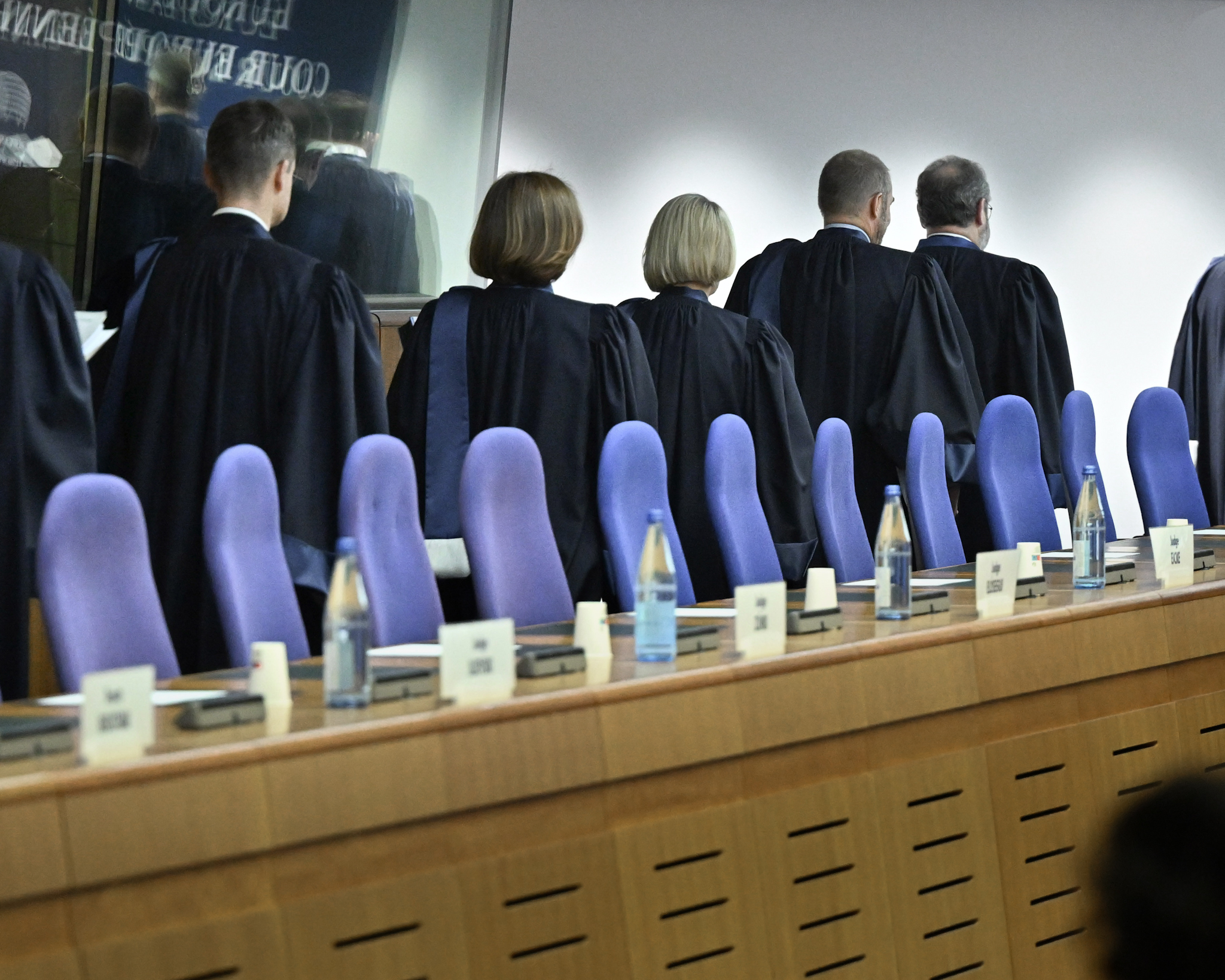
It is worth pausing here to credit Saarland prosecutor Andreas Hammer, who brought the case against the bloggers, and to note the caution shown by the court itself, which had its own reservations about the lawsuit. Despite the prosecutor's objections, the court chose to refer the matter to the Court of Justice of the European Union, a decision that ultimately paid off.
The European Court ruled wisely, siding not only with the Saarland court by deeming its question admissible, but also with the local prosecutor, whose interpretation of the law it endorsed. By elevating the matter to the European level, the court has fixed the legal interpretation in a way that strengthens our defenses against Russian interference. Thanks to this ruling from Luxembourg, Europe finds itself a little safer.
In closing, allow me to reassure readers that nothing in this commentary draws on any branch of Russia Today or any other expressly sanctioned source. Alas, I cannot make that claim with a clear conscience. As a patriot fully committed to European security, I make it a point never to consult these sources, which unfortunately means I have no way of confirming that nothing mentioned here happens to overlap with something published on a banned website.
Should any European intelligence officers or diplomats, diligently monitoring these forbidden channels on our behalf, happen to spot such an overlap, I humbly beg their leniency, and I offer the relevant authorities my most sincere and unwavering loyalty.