
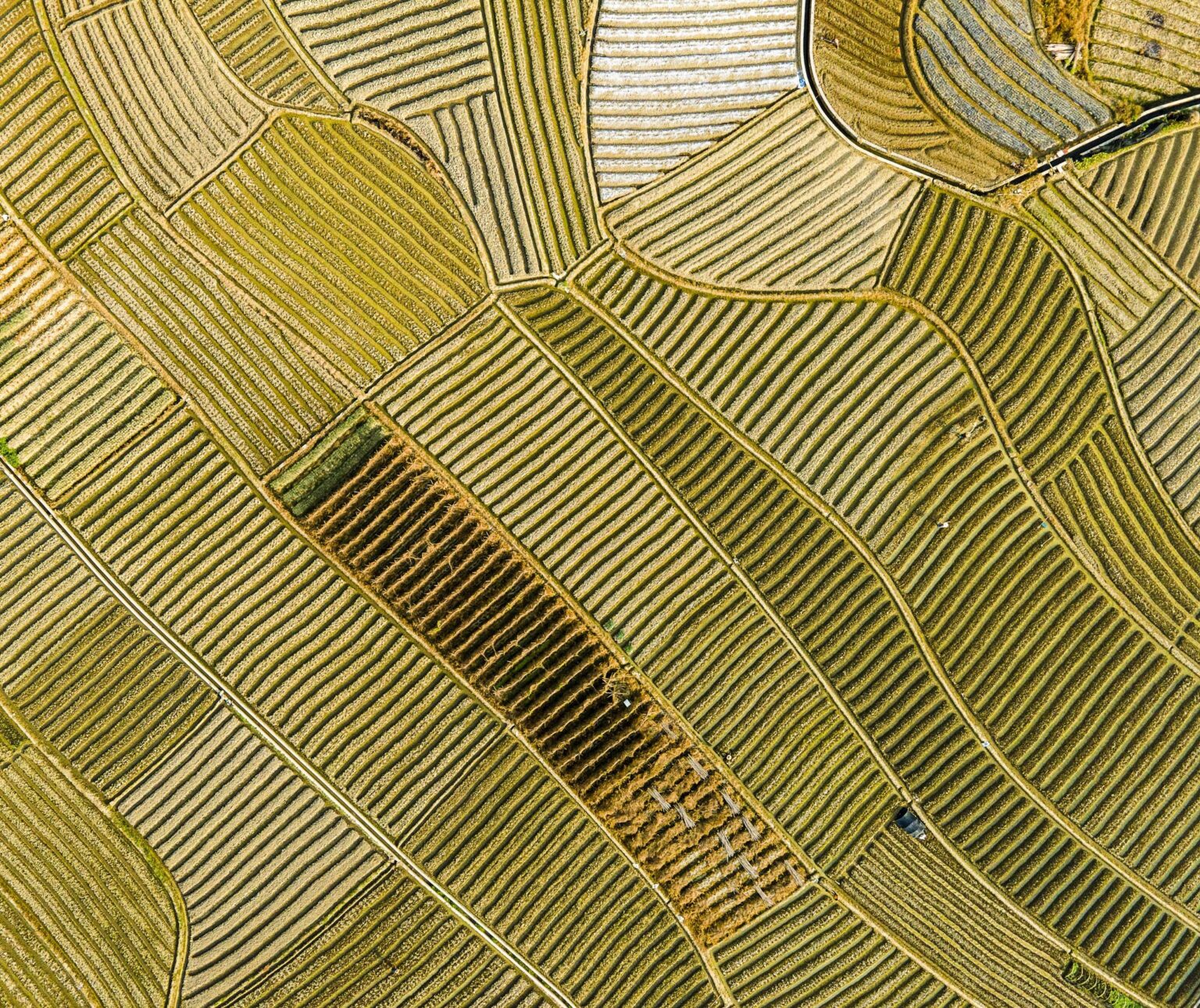
Globalisation is affecting the very soil we live on, as international investors—Chinese companies, Gulf state monarchies, Western funds—are buying up farmland worldwide. Whereas governments of second and third world countries welcome the influx of money, critics see a threat: the loss of nations’ control over their harvests and their food sovereignty. As farmlands turn into global commodities, will nations preserve control over their own food production—or are they shortsightedly trading away their agricultural independence?
The Scale of the Sale
According to estimates, since 2000 transnational land deals brought over 50 million hectares worldwide into foreign hands—nearly three times France’s arable land. Chinese corporations gained control over 6.5 million hectares around the world from 2011–2020. Gulf states, like Saudi Arabia and Qatar, seeking food security, have acquired over 2.5 million hectares of land in Africa since 2000. First-world countries face this too: in the U.S., 18.5 million hectares are already in foreign hands, with 1 million hectares added per year. Concentration happens domestically, too: Funds chasing considerable returns on investment buy up U.S. farmland left and right. Bill Gates, now America’s biggest farmland baron, holds over 100,000 hectares alone, dwarfing some smaller countries’ estates, while there is little indication his appetite has been satiated.
Feeding Mouths or Feeding Markets?
Critics warn that foreign land ownership weakens nations’ resilience, as it threatens their populations’ food supplies in the long run. Yet its advocates highlight the economic benefits— Sub-Saharan Africa’s agri-GDP, for example, grew over 4% per year from 2015 to 2020, partly fueled by such foreign investments. But when foreign owners prioritise export crops like soybeans or palm oil over domestic staples, feeding distant markets first, where does this leave the local population?
Globally, 60% of acquired land grows crops for export, a number which is projected to rise to 70% by 2030. In Indonesia, foreign agribusinesses secured 1.2 million hectares, while indigenous communities faced worsening food insecurity and environmental degradation. In Ukraine, where foreigners already control an estimated 2.8 million hectares of farmland, 50 million tons of grain were exported in 2022, even as 20% of rural households faced food insecurity. Now, Ukraine’s sell-off really gets going, thanks to a “liberalisation of the farm-land sales market“.
In addition, large-scale acquisitions drive farmland prices up, making it harder for locals to buy or keep land. Furthermore, agriculture is water-intensive. Who will ensure that water—already scarce in Africa—remains available first and foremost to the local population? The issue, therefore, goes beyond economics—it’s about self-sufficiency and resilience against price spikes, geopolitical shifts, or natural catastrophes. As is so often the case, Africa is particularly at risk, due to weak governance and corrupt elites.
Erecting Fences
Can the process of farmland globalisation be kept in check? Debt drives nations to look to the market for alleviation—Zambia, for example, owes China over $4 billion, an estimated third of its GDP, giving China strong leverage. Corruption is a catalyst: In Indonesia, a palm oil conglomerate illegally acquired 36,000 hectares of protected forest through bribery, leading to a record $3.7 billion corruption fine in 2023. Yet, there are pockets of resistance, and the number keeps growing: In 2008/2009, a South Korean bid for 1.3 million hectares of Madagascarian farmland sparked unrest among farmers, which ultimately killed the deal; Brazil limits foreign land ownership to 25% per region, protecting its soybean industry from external takeover; Australia mandates government approval for foreign agricultural land purchases over AU$15 million; and in 2018, New Zealand tightened rules on foreign purchases of sensitive land, including farmland, demanding proof that it would benefit the nation.
The above examples show that countries aware of the risks can act to preserve their lands as a vital national asset, not a global commodity. Bans, caps, and quotas can be effective—but they flow from public pressure, and require resolute governments. Nations must then weigh short-term benefits against a future where they can’t even tend their own fields. Nations must realise that they must make provisions for times of crisis. The alternative could be the emergence of a new colonialism, where global corporations exploit entire nations, viewing them as nothing more than fields to be tilled, thereby supplying the first-world, while ignoring local needs.
Statement
The prospect of a concentration of farmland in global corporations’ hands may be worrying. Yet free markets have often proven to be effective. Trade relations stabilise nations, while the consolidation of capital can modernise production, allocate resources more efficiently, bring higher food security, and lower prices. Local populations may also profit from infrastructure investments, job creation, and windfalls from exports. Governments must however enact regulation to protect their national food sovereignty and ensure their people also benefit from foreign investment. This is a matter of asserting long-term national interest, while encouraging international cooperation; in this pursuit, shaping a legal framework for global agriculture markets is of the utmost importance.