
The shock of 6 May still lingers. In a country whose political culture resembles Newton’s cradle, the failure of a chancellor candidate in the first round came as a jolt. Not only Friedrich Merz but a political system as a whole has lost its sovereign equilibrium. Though his CDU/CSU-SPD alliance commanded a nominal majority, the secret ballot delivered 310 votes—six short of the necessary 316. That Merz secured the chancellorship in the second round did little to mend the damage already done.
What Merz encountered was not just parliamentary mutiny. It was the logical endpoint of a political isolation strategy set in motion before he even took office. At the heart of it lies the institutional quarantining of the AfD. The centre-right is now forbidden, both by party resolution and by institutional threat, from contemplating any cooperation with the AfD—a constraint whose severity was dramatically escalated by the recent classification of the party as a 'proven right-wing extremist organisation' by Germany’s domestic intelligence agency, the Bundesamt für Verfassungsschutz.
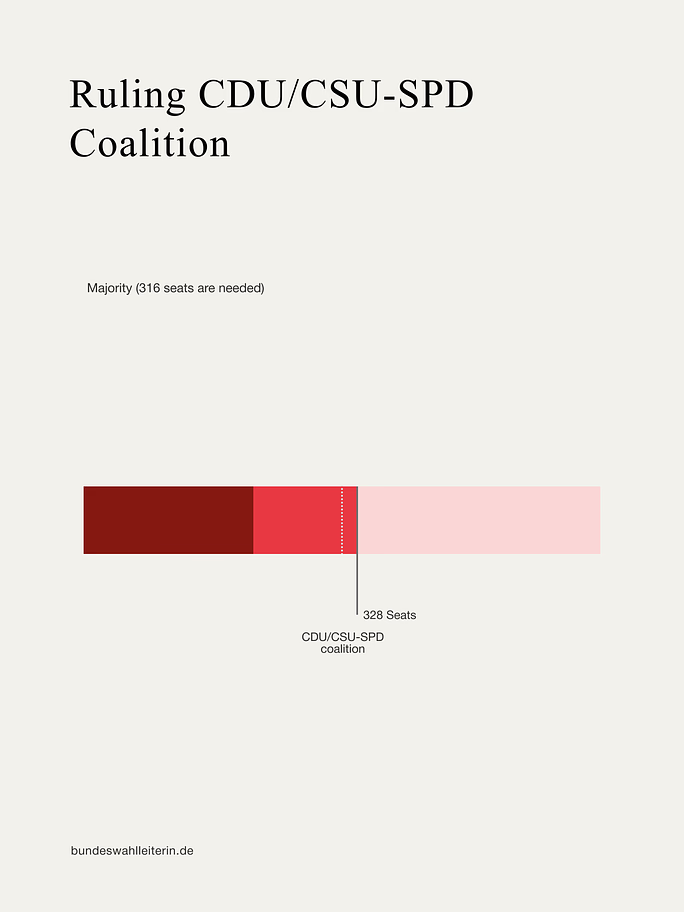
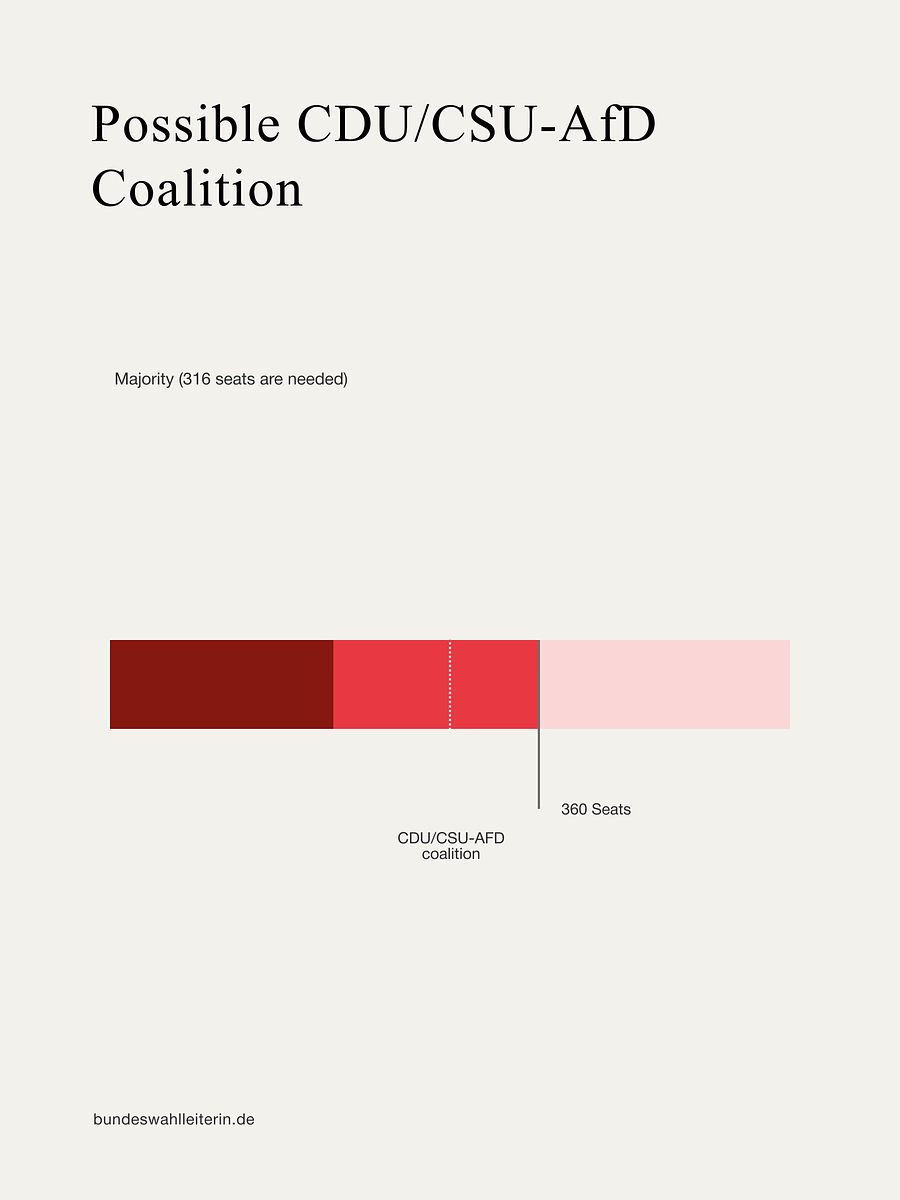
The Centre Cannot Shift
In short: Merz failed in part because he was denied SPD votes. But he also failed because the state had already denied him an alternative parliamentary path. His party, tethered to the so-called Brandmauer, is now constitutionally bound to reject any AfD support, even passive. The very architecture of the Bundestag has been reshaped to make centre-right governance possible only through entanglement with the centre-left.
Though the move to classify the AfD as 'extremist' is presented as a defence of democracy, its implications stretch far beyond liberal platitudes. Rather than a principled triumph of constitutional order, the classification is also a carefully calibrated act of political containment—a final ploy by outgoing interior minister Nancy Faeser of the Social Democrats, designed to impose institutional constraints on her conservative successors.


