
The social fabric that once sustained community life has largely unravelled, leaving many men struggling with stagnant wages, fraying family structures, and a gnawing sense of cultural irrelevance.
In towns stripped of industry where union jobs have been shipped overseas, a generation of working men grapples with economic precarity, opioid addiction, and the consequences of a political class that, despite its rhetoric, has done little to improve their prospects.
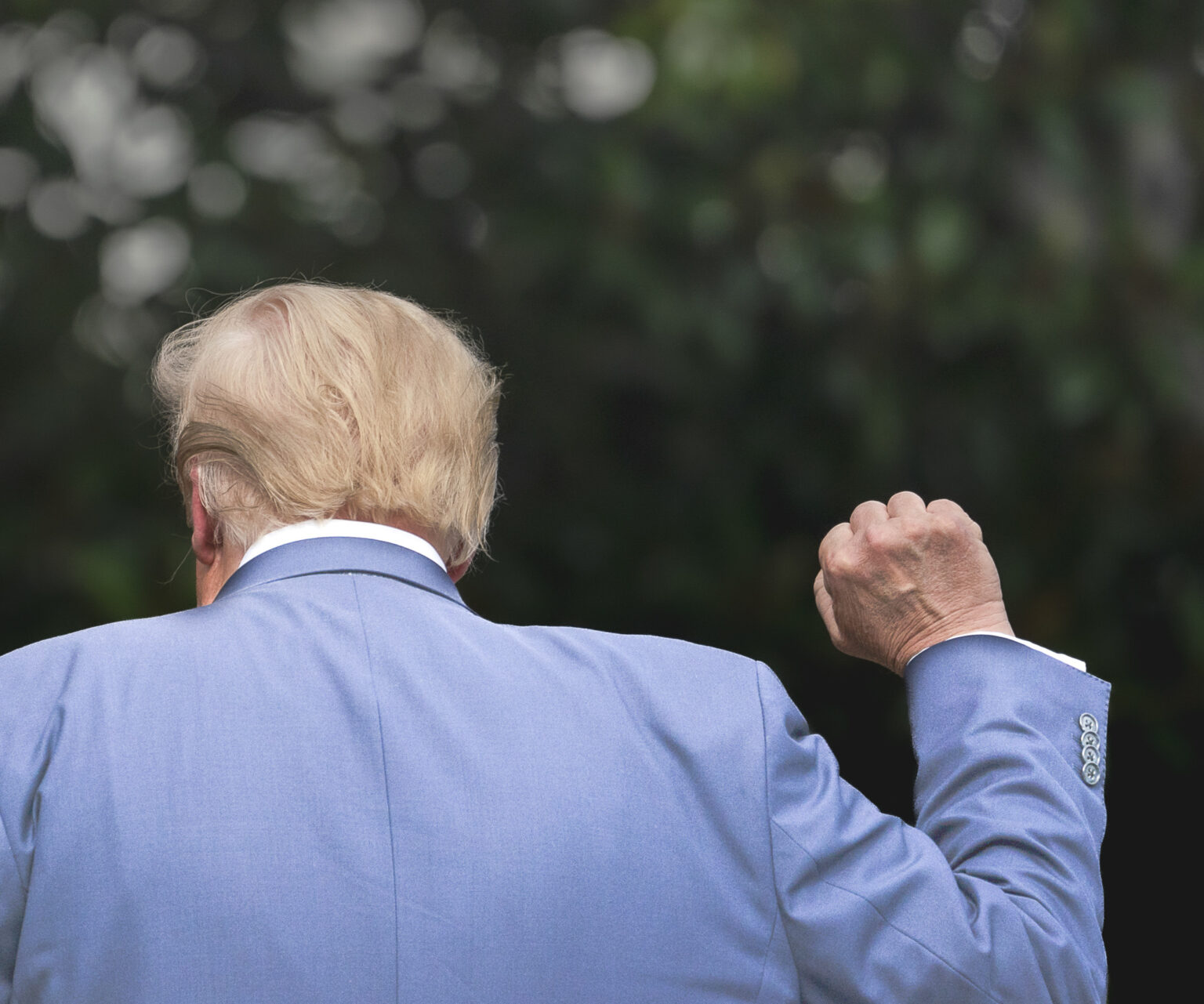
Donald Trump tapped into those anxieties, vowing to revive American industry, restore lost jobs, and reject the progressive critique of masculinity. But as his second term rolls on the contradictions of "bro" politics—an uneasy mix of blue-collar populism and corporate-friendly deregulation, nationalism and foreign entanglements—are becoming harder to ignore. Unaddressed, these will lead to greater political alienation among the MAGA base, which will tend to look for more radical solutions.
Male Dispossession
Recent economic transformations have disproportionately affected industries traditionally dominated by men, leading to job losses and wage stagnation. The decline of manufacturing jobs—a sector that has seen significant reductions over the past decades—has left many men grappling with a loss of identity and purpose.
Americans generally perceive the workplace situation of women improving more than that of men. This has accompanied the prominence of feminist narratives around “emancipation” from male authority as well as a tendency for divorce and family courts to benefit women. For years, progressive, “woke” politics has dismissed traditional masculinity as "toxic" for its association with exclusion, dominance, emotional repression, and strong national identity. Today, a quarter of Americans report negative views of “masculine” men.
Political Masculinity
In this climate, traditional masculinity becomes a political category.
In fact, there is evidence that identifying as a Republican in the US has long-correlated with testosterone levels. A 2019 study found that,
“Recent findings have linked testosterone to altruistic behavior in economic decision tasks depending on group membership and intergroup competition. The preferential treatment of ingroup members, while aggression and discrimination is [sic] directed towards outgroup members, has been referred to as parochial altruism.”
Masculinity in politics, therefore, principally means a defence of the in-group’s interests and borders.
In the case of his 2016 victory, Trump appealed to a white, working-class constituency less socialised into the pathologisation of masculinity. Unabashedly brash, and anti-establishment, the “bro” has become a catchword for the attitude that served to rally the electorate to Donald Trump, resonating with disillusioned men by offering them a sense of identity and defiance.
“Bro” culture has also tended to mean a celebration of the idea of competition—both on the global stage, against rivals such as China, and economically in the domestic arena. We might contrast this to the “risk aversion” that more often characterises the feminine disposition. The glorification of the economic “winner” taps into a broader narrative that prizes self-reliance and the spoils of unfettered market competition, somewhat awkwardly merging economic liberalism with the desire to reclaim traditional roles.
Indeed, we may perceive a certain tension here. The meaning of "bro" is contradictory, shaping the political landscape by appealing to very different concerns. In the past, Trump has spoken of an immigration moratoria, whereas he is now pushing for an increase of legal immigration, adding downward pressure on wages for American workers, and reducing pressure to up-skill (especially in the tech sectors). In terms of foreign policy, he has gone from criticizing Bush Jr. and the Iraq war, and even Biden’s strikes against the Houthis, to engaging in the same actions in Yemen and escalating hostility with Iran, thus increasing the risk to US servicemen and committing American resources for little obvious gain.
A Radical Future
The frustrations that fuelled Trump’s rise persist, intensifying among younger generations, as seen in the popularity of figures like Ezra Schaffer, Nick Fuentes, and Andrew Tate. The rise of "bro" politics reflected deep cultural and economic anxieties—ones Trump harnessed but never fully addressed. His mix of contradicting imperatives— economic populism and Big Tech corporate-friendly policies, America First nationalism with a re-hashed neo-conservatism—will necessarily alienate the MAGA base, leaving it more disillusioned than before his coming on the political scene. As contradictions mount, they will lead to an ever-more radicalised political landscape.
Statement
For years, progressive politics has criticised traditional masculinity, fuelling the backlash that propelled figures like Trump to power. The "bro" figure embodies defiance, nationalism, and economic competition, appealing to those alienated by cultural shifts. However, its contradictions—economic protectionism and free-market capitalism, isolationism and interventionism—highlight its lack of a coherent policy agenda. While rejecting "wokeness" has proven electorally powerful, frustrations persist, and younger figures may push this energy into more radical directions.