The Ghost in the Élysée: Macron’s Monarchical Complex
Emmanuel Macron did not restore the French monarchy. He revealed how little the republic had replaced it.
Elected in 2017 as a centrist outsider, Macron promised a technocratic revival of liberal governance. What emerged instead was an upstart sovereign, cloaked in republican rhetoric but styled like a king. He called it a “Jupiterian” model of command, prizing distance, ritual, and vertical authority.
In that, Macron’s presidency was haunted: by de Gaulle, who built a republic for monarchs, by his own self in power, and by the French’s unresolved need for the kings they once rejected.
In him, the Élysée found the most revealing mimic of France's political schizophrenia.
And the public, weary of weak predecessors, played along at first, because Macron looked the part, and France, the most nostalgic of republics, was yearning for that more dignified aesthetic.
The Makings of a Royal Parvenu
Macron was educated like a prince: Jesuit schools, ENA, Rothschild, in a path mirroring Jean-Christophe Napoléon, the Bonapartist heir and fellow financier. By thirty, he was rich; by thirty-five, whispering in President Hollande’s ear.
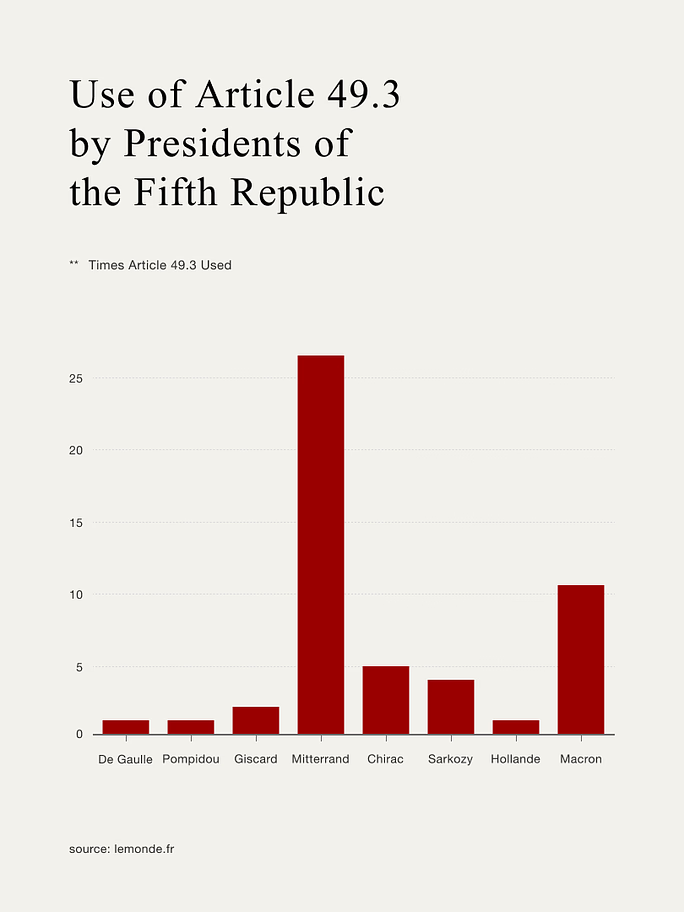
But de Gaulle kept the power for himself, and endowed the presidency with a crown of grandeur and personal decrees. His successors, especially Mitterand, followed this logic with the powers offered by Article 49.3 of the French Constitution, so that the republic became a stage where they performed as its monarchs.
Macron, the latest in such a line of succession, was quick to learn its trick and fall into its traps.
A Style Forged in Solitude
As a ruler, Macron governed from a void: his En Marche! party was new, and thus not intrinsically shaped by loyalty, devoid of regional bases, and with no ideology.
Despite having no parliamentary majority, he has disdained negotiation and has relied instead on decrees, reaffirming his belief that the president must stand above the nation and other institutions, not within them.
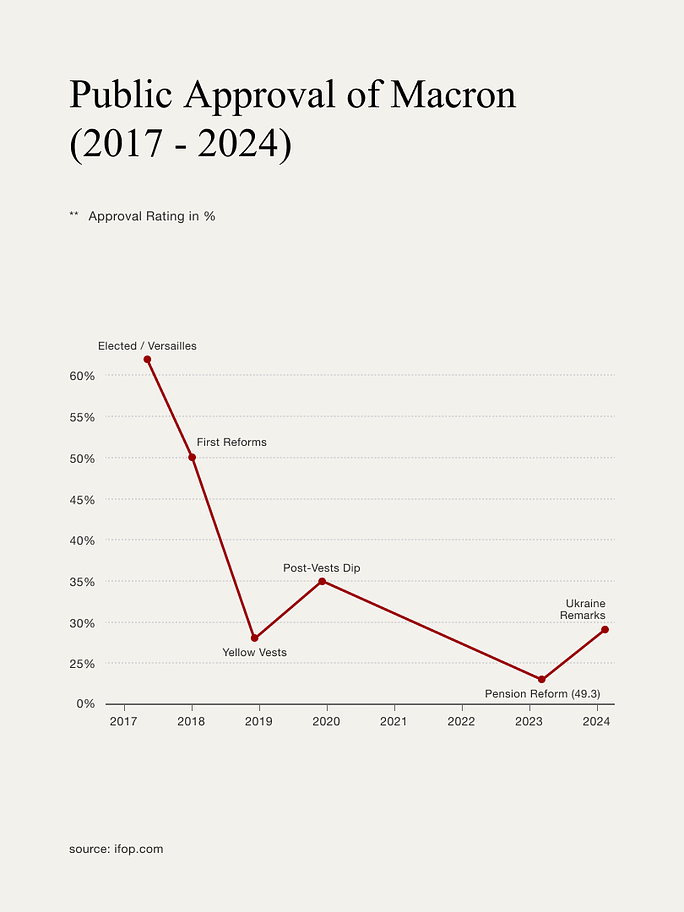
As these highly polarising actions made him grow isolated in power, he sought communion only with the past, referencing Napoleon, de Gaulle, or his mentor Ricœur in his speeches, to try to legitimate himself alone as his popularity fell.
The Backlash Against Roi Macron
Naturally, backlash arrived soon: the Yellow Vests and La Manif Pour Tous were not only protesting policy: they rejected Macron’s distinctive reek of monarchy. He was mocked as "roi Macron," the sovereign ruling, taxing and warring from Versailles.
His aloofness had become a liability, and each instance of bypassing parliament, each decree fuelled the sense he governed from above, not among. His image, once grand, was progressively twisted into one of arrogance.
Macron Revealed the Republic's True Self
During his presidency, Macron has revealed and, indeed, embodied the fact that the Fifth French Republic is a system centralising power while pretending to distribute it, inviting autocracy but delivering no majesty; a monarchy without mystique and democracy without dialogue.
He has stretched the republic to its royal edge, and will be leaving with a legacy of broken reforms and the public knowledge of the political schizophrenia within France, who dreams of authority, but rejects it in hindsight.
Neither a Bourbon nor a Bonaparte, and nowhere close to de Gaulle nor Mitterand, Macron was the best available actor in a play written for a proper sovereign, filling the space with ambition because it no longer held tradition.
And when he finally departs, the French republican crown will still be waiting for a proper king to wear it. Or worse.
Statement
Elected as a moderniser, Emmanuel Macron ruled like a monarch without a crown because France’s Fifth Republic was built for exactly that. His Jupiterian presidency exposed a system designed to concentrate power while feigning democracy. Macron’s aloof grandeur and decree-heavy governance weren’t aberrations but the system’s logical expression. The backlash, from Yellow Vests to viral satire, wasn’t just about policy: it was a rebellion against monarchy in republican costume. As his presidency ends, Macron leaves behind neither revolution nor restoration, only the enduring schizophrenia of a nation longing for sovereign authority, yet perpetually allergic to its consequences.
Welcome to the comments section of the Štandard daily. Please take note of our guidelines, comments are moderated by us. You can contact the moderators at support@statement.com.
Participate in the discussion
Comments are available to subscribers only. If you'd like to join the discussion, choose a subscription starting at €6.72 per month.
All comments 0
Register
Comments are available to registered users only. If you'd like to join the discussion, register here.