
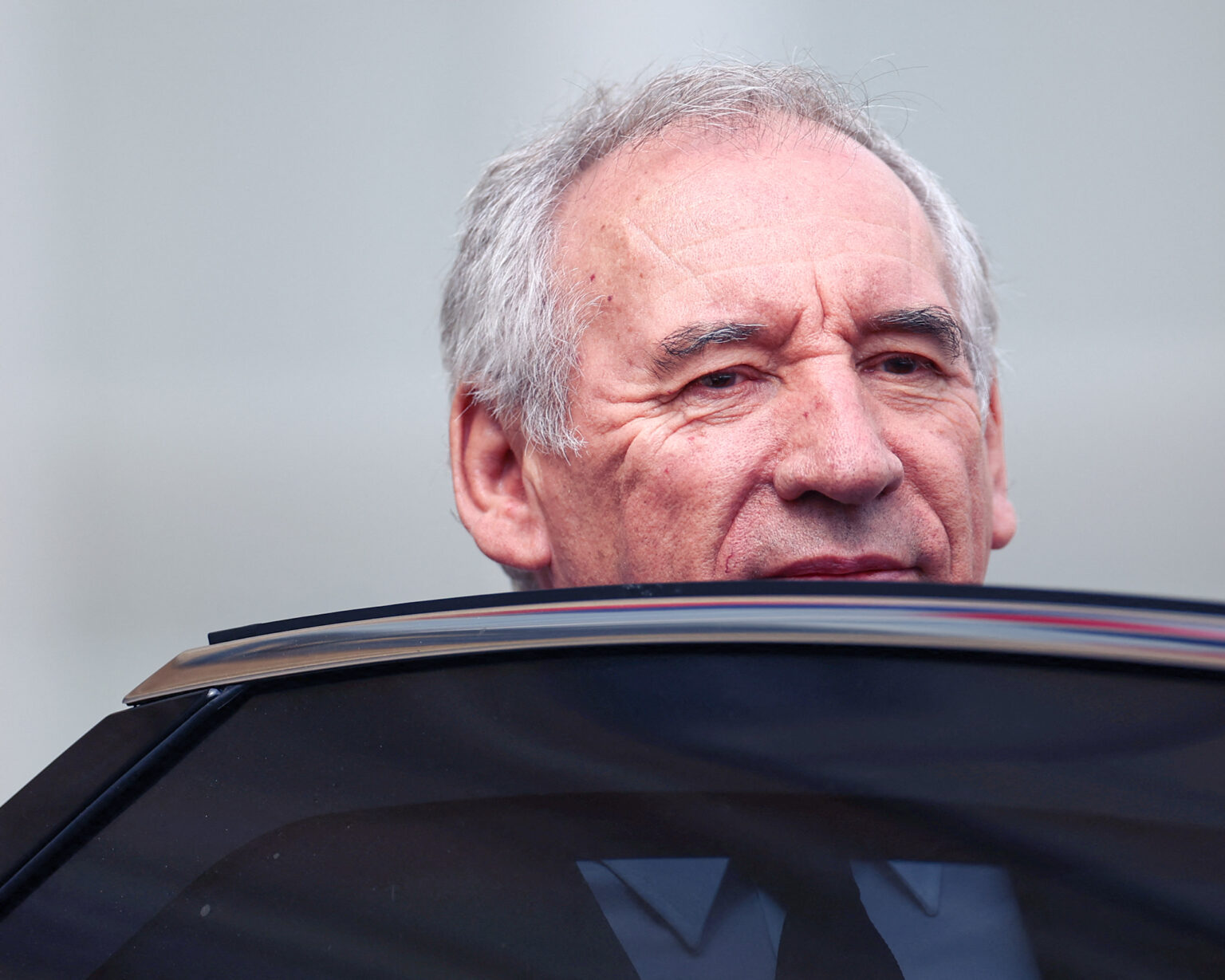
On Monday evening, the French National Assembly passed a vote of no confidence in Prime Minister François Bayrou's government. On August 27, Bayrou had requested a vote in accordance with constitutional law and linked it to his proposal for comprehensive consolidation of public finances.
As part of this consolidation, he wanted to save almost €44 billion of the total €3.3 trillion in government debt – which corresponds to 114 percent of French GDP.
Only 194 deputies voted in favor of confidence, while 364 were against, as announced by President Yaël Braun-Pivet.
Even before the vote, the media was speculating about Bayrou's successor. According to the television station France24, the first secretary of the Socialist Party, Olivier Faure, is the most likely candidate, who, according to his own statements, is “ready to enter Matignon,” as the seat of government is unofficially called.
The politician, who hails from Gascony and supported President Emmanuel Macron on his way to the Élysée Palace in 2017, warned in his speech at 3 p.m. of the “threat” that disproportionate debt growth poses to the French people.
He recently attracted attention with his statement that citizens themselves are responsible for the enormous debt due to their generous use of the achievements of the welfare state, as a result of which the rating agencies are already preparing a downgrade.
However, a downgrade of the rating means that less foreign investment will flow into the country, which in turn will result in a decline in living standards, warned the “son of Pau,” as he is called by the domestic media. They regard the vote of confidence as blackmail of parliament by the government.
What the renowned French daily Le Monde described as a “crazy chess game” was taken to a new level by Bayrou over the weekend. He proposed that the French people should approve his draft budget in a referendum, which can be called by the president at the government's suggestion.
“I think this issue is so important and has such a significant impact on the future of the country that it should be put directly to our citizens. That's why I'm not ruling out any possibilities,” he said in an interview with the Journal du Dimanche on Saturday.
“It is the government's job to make a proposal and the president's job to decide,” Bayrou continued. “We are facing a question of enormous importance that concerns not only technocrats and experts, but one that every citizen must judge,” he concluded.
Macron also submitted a proposal to parliament to legalize assisted suicide. Members of the lower house approved it in May of this year, but procedural steps will apparently prevent it from coming into force this year. It still has to be amended and approved by the Senate and then returned to the National Assembly.
Paradoxically, it was this very issue that the British daily newspaper The Guardian focused on most in a report on the expected fall of the government. The Lepenovci voted against it by a majority.
Not every vote is like every other
Let us remember that Bayrou and his government survived a vote of no confidence in January.
Even if it sounds similar, the procedures are not identical. A vote of no confidence requires a majority of more than half of all 577 deputies, while a vote of confidence is decided by a majority of the deputies present.
It is therefore more than likely that Bayrou's cabinet will not survive this vote, which in turn forms the basis for theories about “political suicide” or “revenge on Macron.”
Two days later, supporters of the La France Insoumise (LFI) party and the Socialists are organizing demonstrations under the slogan “Let's block everything.” In addition to supporters of left-wing parliamentary parties, representatives of trade unions and activist groups are also expected to take part.
After the Prime Minister's speech, the leaders of the various political factions had two and a half hours to deliver their speeches. Opposition representatives from the nationalist National Rally (RN) to the Socialists to the LFI and its “New Popular Front” announced that their deputies would be present in the lower house – thus increasing the quorum – and would vote against the motion, thereby expressing their no confidence.
Even before the vote, LFI chairman Manuel Bompard rejected the possibility that Macron could appoint a prime minister from their ranks. “I don't believe for a moment that Emmanuel Macron intends to appoint a government in Matignon whose goal would be to introduce a policy of breaking with Macronism,” the party coordinator told FranceInfo.
La France Insoumise is an unusual party that has no chairman or presidium, but acts as a loose association of left-wing organizations that are literally coordinated by Bompard. He essentially works to ensure that all these components support LFI's campaign manager, Jean-Luc Mélenchon.
France's excessive debt threatens its survival, Bayrou warned in his speech before the vote. Every subsequent government will face the same problems, he told lawmakers.
"You have the power to bring down the government, but you don't have the power to erase reality. The reality remains relentless: spending will continue to rise and the already unsustainable debt burden will become even heavier and more costly,“ he explained. ”The crucial question, the question of life and death, which concerns our survival, is the question of controlling our spending, the question of excessive debt."
“The country's financial situation is the result of Macron's policies,” Socialist faction leader Boris Vallaud responded to Bayrou. “We cannot agree to the vote of confidence,” he announced, declaring that the Socialist Party is “ready to govern” if Macron turns to them.
The leader of Les Républicains (LR), Laurent Wauquiez, responded immediately to the Socialists, describing the far left as “the greatest political threat” to France. “We will never accept a government that includes members of La France Insoumise and Socialist deputies who would implement the New Popular Front program,” he said.
“I don't believe for a moment that the French are blind to the situation in their own country,” the former leader of the Gaullist party continued. "I think they have only two demands. The first is that savings be made, through austerity measures and not through hidden tax increases. The second is that it should not be the same people again, not the same working France that has worked all its life.“
Wauquiez firmly rejected Bayrou's proposal to abolish two public holidays. ”We have proposed that instead of two public holidays, we introduce 365 public holidays for those who do not work and receive social benefits," he explained. “If you listened to working France, you would have the unanimous support of the Republicans today.”
The chair of the so-called ecologists' faction, Cyrielle Chatelain, expressed the assumption that the rejection of confidence was a “relief” for Bayrou. “In a few hours, you will submit your resignation to the President of the Republic without this causing you any sadness or regret,” she said in the debate, before turning to the Macronists in the chamber and calling on them to “free themselves from the shackles of the right.”
“As long as you continue your alliances with the right, which no longer has anything to do with Gaullism, you remain prisoners of the networks of the Rassemblement National,” she explained. “To free yourselves from this stranglehold, you must accept and renounce the imposition of your policies,” she continued.
She then called on Macron to choose the next prime minister from the New Popular Front, who “could make up for what [previous governments, editor's note] have messed up.” She described the president's record as “bleak.”
“Mr. President, since you are an obstacle, you must understand that the coalition that the French people chose more than a year ago is indispensable to you,” she concluded. [The RN received the most votes, but due to an agreement between the Macronists and the left, they did not participate in the formation of the government, editor's note].
“This moment marks the end of the suffering of a phantom government,” said RN faction leader Marine Le Pen. She described the confidence vote as “a moment of truth in which those responsible are forced to reveal the disastrous results of fifty years of uneconomical leadership.” However, she rejected calls for Macron to resign, stating that she “expects nothing on this matter.”
On the contrary, she called on the president to dissolve parliament and call new elections. “Everything indicates that dissolution is not an option for him, but a duty from a legal, political, and even moral point of view,” she said in plenary.
The leader of the largest independent faction also called on the president to “assume the role of arbiter assigned to him by the Constitution,” namely “to restore the parliamentary representation of the people and allow voters to make their choice without the second round of voting being used to distort the electoral logic.”
She was referring to the agreement between the left-wing alliance and the Macronists, which weakened the RN in the parliamentary election runoff and reduced its representation in the lower house.
“If parliament is not dissolved, we will continue to constructively, but without weakness, defend the ideas that our voters have entrusted us to defend. But I solemnly tell you: do not expect the RN faction to follow you in your tax and migration madness, in your petty ideological prejudices that prevent you from seeing the reality of the country,” she declared indignantly.
Éric Ciotti, former chairman of the Republicans and founder of the pro-Le Pen party Union pour la République (UDR), also lashed out at Macron in similar fashion. He described the head of the Élysée Palace as “primarily responsible for this disaster” and promised “the change that the French people are demanding.”
He described Bayrou as a “pompous pyromaniac” who deliberately ended his career as prime minister. "You decided to leave and veiled your resignation with false, clever communication, which is primarily intended to serve as a springboard for your pseudo-candidacy in the presidential elections. You invented a resignation statement, but no one is fooled,“ he said.
Bayrou concluded by thanking his government and refusing to respond to ‘polemics’ and ”insulting remarks.“ He emphasized that he had ”conveyed an honest and active image of the Republic" and also thanked the deputies. They voted at 6:20 p.m., and the results were published after 7 p.m.
Who will be the next prime minister?
According to French media, discussions about a possible successor are already underway behind the scenes. Representatives of the cabinet and the Élysée Palace see the vacant prime ministerial post as a problem for several reasons.
In addition to the aforementioned “Block Everything” demonstration, Paris is awaiting Friday's assessment by the rating agency Fitch, which could downgrade France's rating and thus weaken the country's international economic importance.
Extensive demonstrations by the unions are also expected next week, with plans for September 18. According to current assumptions, the demonstrations are expected to resemble the protests of the so-called yellow vests, which originally began as a reaction to the increase in fuel taxes but spread to nationwide demonstrations that paralyzed France.
Among the names most frequently mentioned are Defense Minister Sébastien Lecornu and Justice Minister Gérald Darmanin, who was interior minister in previous governments. Several government sources also pointed to former Foreign Minister Jean-Yves Le Drian, who, as a former member of the Socialist Party, could be supported by the Socialists.
Instability intensifies
Macron's term still has two years to run, but political instability continues to intensify. In 2017, he secured his way into the Élysée Palace and kept Édouard Philippe in office as prime minister, who then resigned on July 3, 2020.
During the Covid pandemic, he was replaced by Jean Castex, who remained in office until May 2022 and was then replaced by Élisabeth Borne. That same year, Macron secured his re-election as president.
Following Borne, whose government was marked by 14 resignations and dismissals of ministers, Gabriel Attal, the youngest prime minister in French history, took office in January 2024. During his tenure, Macron threw a famous “grenade” into the National Assembly when he called extraordinary parliamentary elections in response to the RN's landslide victory in the European elections.
Attal remained in office until September 2024, but only as a so-called caretaker. In July 2024, he lost the confidence of the parliament at the time. His successor, Michel Barnier, lasted only three months as prime minister—the shortest term in French history—before being replaced by Bayrou.
Bayrou left office after nine months, significantly shortening the term of office for heads of government in France. Similar to Slovakia, the president's term of office is limited to two consecutive terms, so Macron does not have to worry about the situation in the government after 2027.
Even for the head of the Élysée Palace, there is no world-renowned successor who would also be acceptable to the behind-the-scenes players in the palace. T