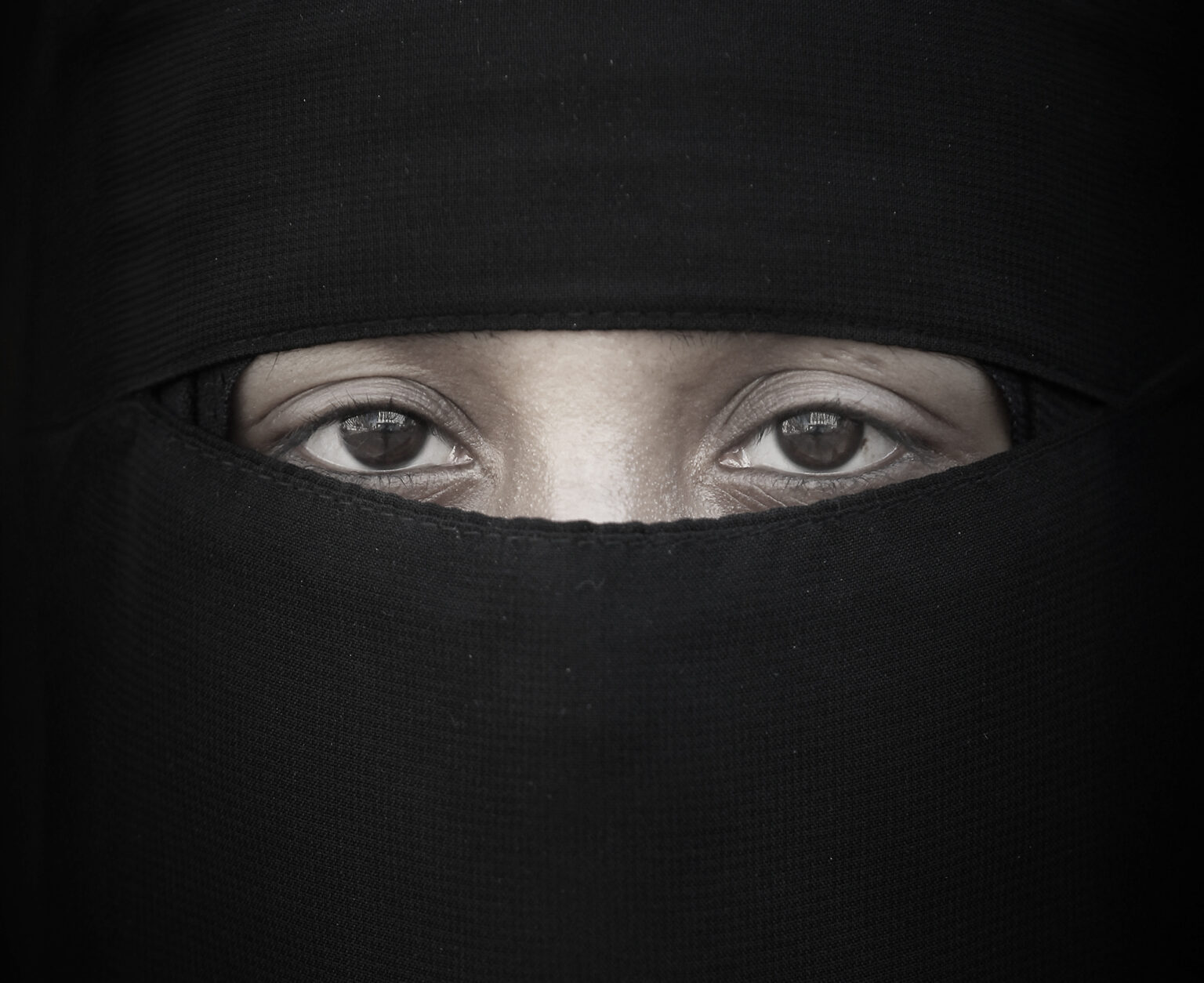
The rise of Islam
As early as 1922, the first mosque was built in Paris. It served the spiritual needs of soldiers of North African origin—known since the Napoleonic era as tirailleurs, or light infantry.
Since then, dozens more places of worship have been built in a country that, until 1792, was ruled by a “most Christian king” (le roi très chrétien) and that has, since the Revolution, prided itself on its “secular” tradition.
In 2023, France’s national statistics office INSEE noted that once-dominant Catholicism is disappearing from French society. Between 2019 and 2020, only 29 percent of respondents identified as Roman Catholic—a faith that the institute still described as “dominant.”
Only 67 percent of respondents with Catholic parents said they had “inherited” their faith from them, compared with 91 percent among those from Muslim families. According to INSEE, Islam is the “second largest” religion in France, with ten percent of the population identifying as Muslim during that period.
Back in 2016—at the height of the migration crisis—France’s Muslim population made up 8.8 percent of the total. Figures published by the Pew Research Center at the time projected that this share could rise to as high as 18 percent by 2050, if migration continued at a high pace.
Against this backdrop, atheism has gained ground, largely due to the official French policy of laïcité—enshrined in the first article of the constitution. In official surveys, a majority (51 percent) now describe themselves as having “no religion.”
It is also noteworthy that INSEE does not officially collect data on religion. Such figures are therefore derived solely from voluntary surveys.
Does the rise of Islam affect elections?
The rise of Islam in Europe brings a range of potential challenges. The religion offers not only a moral code but also a legal system governing contracts between individuals or tribes, as well as hudud—a criminal law framework.
European legal systems, by contrast, rest on three pillars: Greek philosophy, Roman written law, and Christianity. From Roman law derives the principle of territorial integrity of law—the idea that law applies to a territory regardless of who inhabits it.
In contrast, Islamic law is applied personally—that is, it applies wherever Muslims live. Put simply: if a Muslim stands on the coast of Antarctica, sharia applies there.
Islam itself, however, does not prescribe a political orientation in the European sense. It cannot automatically be said that French Muslims lean left or right.
A survey by the European Center for Populism Studies showed that Muslim voters approach certain issues differently from native French citizens but do not clearly align with one side of the political spectrum.
The study found that Muslims were significantly more conservative on the question of same-sex adoption, while leaning more “left” on issues of migration. On the question of higher taxes for the wealthy, their responses were nearly identical to those of non-Muslims.
Despite broad similarities in voting behavior, one difference emerged: parties such as Marine Le Pen’s National Rally (RN) received nearly the same level of support among Muslims with immigrant backgrounds as among other French citizens, but the far-left Unbowed France (LFI) enjoyed slightly greater support among Muslim voters.
This trend likely stems from LFI’s open support for migration, though deeper factors are also at play.
Islam is, by nature, a highly social religion. Alongside prayer and pilgrimage, one of its five pillars is zakat—almsgiving, a tax that every wealthy Muslim must pay. The poor and needy, however, are exempt if they have nothing to give.
The Arab (not necessarily Muslim) turn toward left-wing politics must also be viewed in the context of the nahda, or Arab Renaissance, which began in the Middle East at the turn of the 19th and 20th centuries. The political system of Arab socialism - Baathism, from the Hizb al-Baath (“Party of Resurrection”)—remained influential until December 8, 2024, when Sunni jihadists, backed by Turkey, overthrew Syria’s last Baathist leader, President Bashar al-Assad.
An diesem Tag stürzten sunnitische Dschihadisten unter dem Schutz der Türkei den letzten Baathistenführer, den syrischen Präsidenten Baschar al-Assad.
Although Baathism represents a form of leftist Arab nationalism, it generally draws on a shared cultural heritage rooted in Islam. It is notable that the flag of the Baath movement features the same stripe arrangement as the Palestinian flag. Likewise, the ruling Palestinian Fatah movement defines itself as left-wing and social democratic.
Before the extraordinary elections in the summer of 2024, Muslim leaders and left-wing activists warned against the RN. As Turkey’s Anadolu Agency reported in July, Muslims faced “two choices—to vote for left-wing parties or not vote at all.” The call openly urged support for the left, attempting to sway the outcome through demographic influence.
If this trend continues, France may see the end of centrist or “Macronist” politics. Muslims, collectively alarmed by Le Pen’s movement, are likely to turn increasingly toward the left and support one another, a shift that would only deepen polarization—much like the divisions already visible in the United States.
Author: Samuel Burda