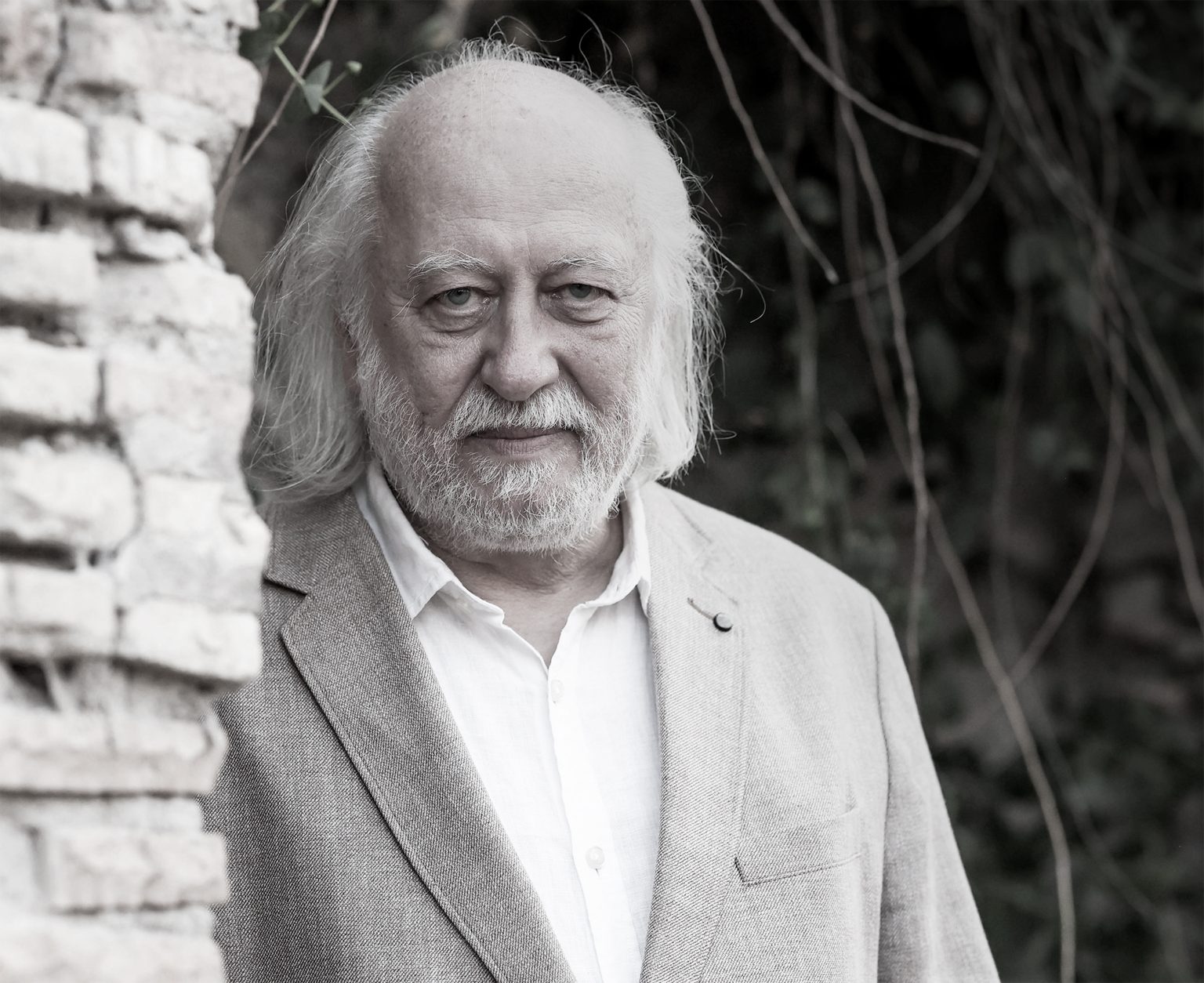
"A compelling and visionary work that affirms the power of art in the midst of apocalyptic terror." This sentence was also mentioned in the justification for awarding the most prestigious literary prize at the Royal Swedish Academy of Sciences. Which work does it describe?
Hungarian writer László Krasznahorkai was born in 1954 in the small town of Gyula in southeastern Hungary, near the Romanian border. He attended a secondary school specializing in Latin. He was a very talented musician.
He began studying law, but the school did not interest him. He tried his hand at several professions. In the end, he did finish his law degree, but this was more because of his aversion to military service than any desire to practice law. He later studied Hungarian and cultural pedagogy. Even as a well-known writer, he did not abandon teaching and lectured at various universities.
He avoids the media and literary events. He rarely appears in public and does not like to talk about his life. This is also related to the unclear topic of his Slovak roots. On his father's side, he is of Jewish origin, and his family (allegedly) lived in Slovakia in the past. Hence the name Krasznahorkai [Krásna Hôrka is the name of a castle in Slovakia, ed. note]. However, in interviews, the writer obscures this topic and does not give direct answers. It is currently unclear in which country he lives.