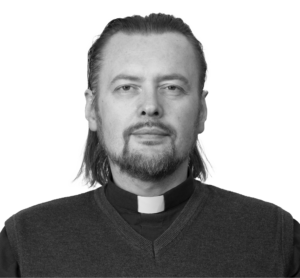
Later, it became clear what had happened: his 20-year-old grandson had committed suicide in a nearby town. The priest then explained to the faithful present that the man had suffered a heavy personal loss. "It was an extremely moving moment for all of us," said one of the members of the community.
The priest later described how the man came to the altar in despair, seeking comfort and closeness. "He didn't know who to turn to, so he remembered Jesus Christ. And, naturally, he saw me there too. We've known each other for twenty years, we're friends," he said.
The video of the quiet, spontaneous embrace elicited mostly empathetic responses. However, critical voices also appeared on social media, questioning the interruption of the Eucharistic liturgy. The priest responded clearly: he would do the same thing again in a similar situation. "For me, faith is shown in our actions," he added.
No metaphor
This case also has another significance: the Church does not use only abstract metaphors when it speaks of God's embrace. It touches on the deep human desire to be accepted, especially in times of crisis. The priest, who is a living icon of Christ, embraces a person in their pain. He does not stand against faith, but at its core.
In such moments, God's closeness becomes concrete and tangible—not only as a truth of faith, but as an experience that both body and soul can accept.
In the Bible, God often approaches man not with words, but with gestures. Just remember one of the most powerful moments in the Gospel: a loving father embraces his prodigal son before he hears his explanation or apology (cf. Lk 15:20).
God's embrace is an image of unconditional acceptance—it does not remove pain by denying it, but by carrying it together with the person. When a person finds themselves at the end of their strength, they often no longer need answers. They need to experience that they are not alone in their suffering.
After all, what else did God do when he took on a real human body? For some, therefore, it is enough to look at Jesus Christ on the cross. From a certain angle, they see in him God's embrace nailed to the cross.