
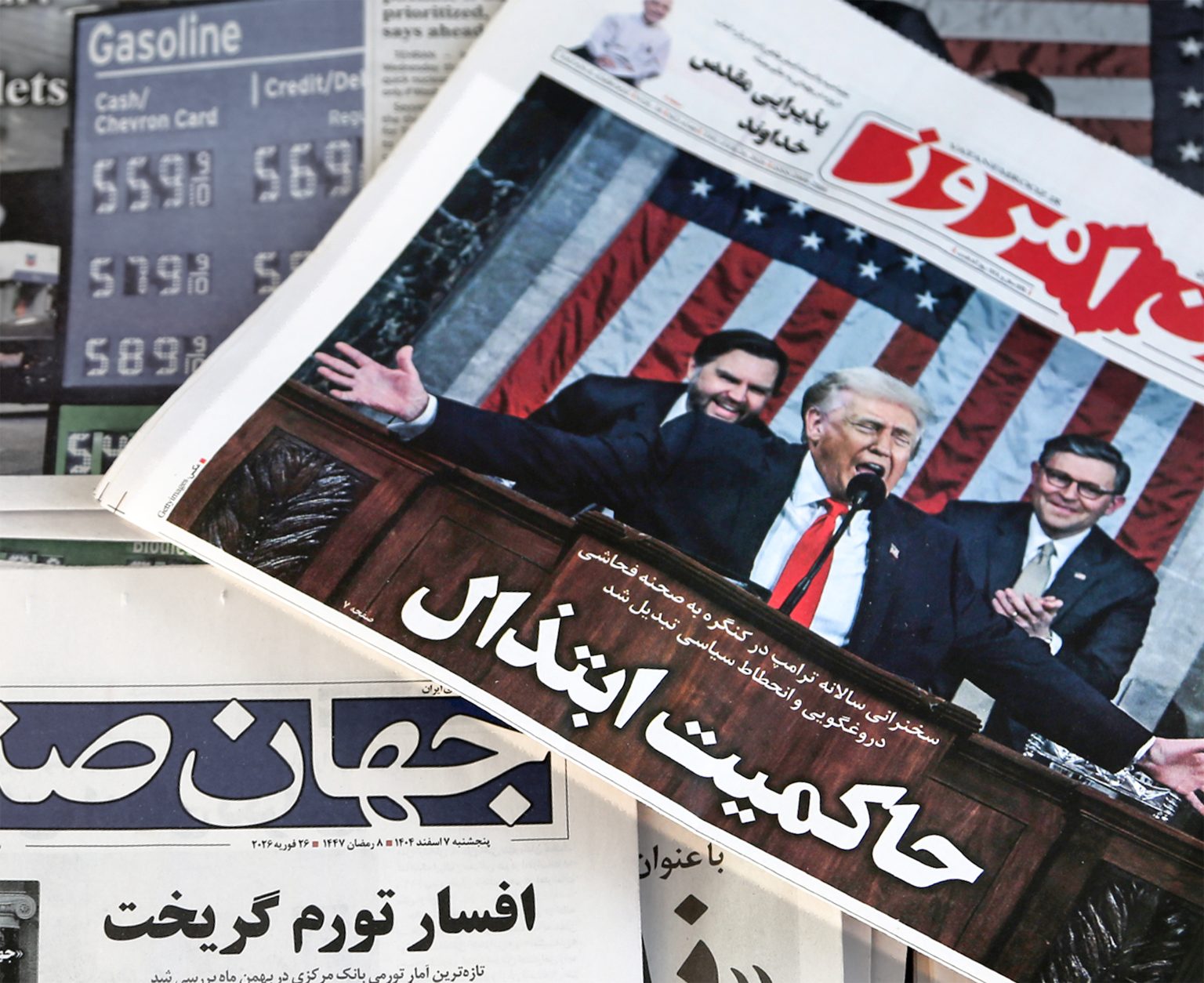
On Saturday, the United States and Israel launched coordinated air and missile strikes against dozens of military and strategic targets in Iran. Explosions were reported at several locations.
US President Donald Trump confirmed American involvement, saying the strikes were carried out under the name ‘Operation Epic Fury’. He told Iranians: ‘I say tonight that the hour of your freedom is at hand.’
Israeli Prime Minister Benjamin Netanyahu stated the joint action was intended to remove what he described as an ‘existential threat’ from Tehran. He added that the time had come for Iranians to ‘cast off the yoke of tyranny’.
Iran responded with missile and drone strikes against targets in Israel as well as US military bases in Qatar, Bahrain, Kuwait and the United Arab Emirates. Israel reacted by declaring a nationwide state of emergency.
The region now stands on the brink of a broader conflict with unpredictable consequences. Governments across Europe, Asia and the Americas swiftly called for restraint.
Global reactions
Lebanese Prime Minister Nawaf Salam warned against Lebanon being drawn into the conflict. ‘We will not accept that anyone drags the country into adventures that threaten its security and unity,’ he wrote.
Czech Foreign Minister Petr Macinka said he had spoken by phone with his Israeli counterpart, who confirmed ‘tightly coordinated actions in Iran with American forces’. He said the main targets were underground Iranian nuclear facilities and other military facilities connected with ballistic missile systems, adding: ‘We expect a broader operation that may last several weeks.’
The United Nations High Commissioner for Human Rights, Volker Türk, condemned the strikes and Iran’s retaliation. ‘As always, in any armed conflict, it is civilians who end up paying the ultimate price,’ he said. ‘Bombs and missiles are not the way to resolve differences but only result in death, destruction and human misery.’ He urged restraint, de-escalation and a return to the ‘negotiating table’, warning that further violence could widen the conflict with devastating consequences across the Middle East.
Europe pushes for de-escalation
European Council President António Costa and European Commission President Ursula von der Leyen appealed for calm. ‘We call on all parties to exercise maximum restraint, to protect civilians, and to fully respect international law,’ they said.
French President Emmanuel Macron pressed for an urgent meeting of the UN Security Council and urged negotiations aimed at halting Iran’s nuclear and ballistic missile programmes.
Germany said it had been informed in advance of the strikes and convened a crisis team. The UK said it did not participate in the strikes, while stressing that Iran must never be allowed to develop nuclear weapons. Both governments said they were focusing on the safety of their citizens in the region.
Spanish Prime Minister Pedro Sánchez rejected unilateral military action. ‘We demand immediate de-escalation and full respect for international law,’ he said.
Russia condemned the strikes and called for an end to the military campaign and a return to diplomacy.
Ukraine’s Foreign Ministry blamed the Iranian authorities for the escalation. ‘The cause of the current events is precisely the violence and impunity of the Iranian regime, in particular the killings and repression of peaceful protesters, which have become particularly widespread in recent months,’ the ministry said.
Czech opposition leader Andrej Babiš said Iran’s nuclear programme and support for terrorism also pose a threat to Europe and that the Czech Republic stands with its allies.
Polish President Karol Nawrocki said Poland had been informed about the military action through allied channels, without detailing further steps.
Norwegian Foreign Minister Espen Barth Eide questioned Israel’s description of the attack as pre-emptive. ‘The attack is described by Israel as a pre-emptive strike, but it is not in accordance with international law. A pre-emptive attack would require the existence of an imminent threat,’ he said.
A conflict that could spread beyond the region
After months of rising tension, the Middle East is now facing open military confrontation between Iran on one side and Israel, backed by the United States, on the other. Tehran’s strikes on US bases in the region have increased the risk that the conflict could spread beyond the initial theatre of fighting.
While Washington and Jerusalem speak of eliminating an ‘existential threat’ and of the prospect of political change in Iran, much of the international community is calling for restraint, the protection of civilians and a return to diplomacy. The coming days will determine whether further escalation can be prevented.
(reuters, pir)