
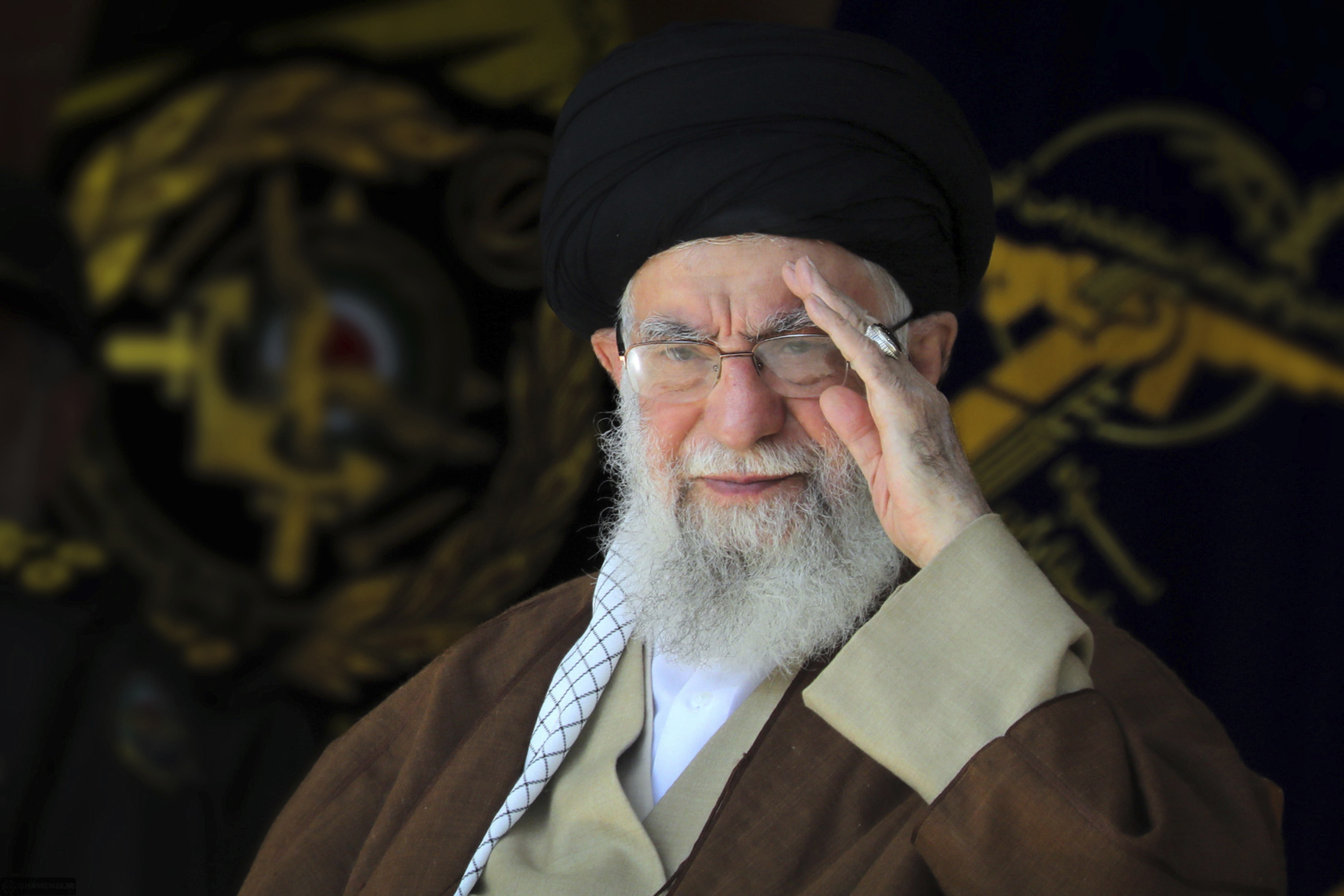
Tehran/Berlin. On 28 February 2026, the United States and Israel launched an operation that is likely to alter the strategic balance in the Middle East for good. Within a matter of moments, more than 40 high-ranking targets were struck simultaneously in Tehran and at other critical sites. Among those killed was Ayatollah Ali Khamenei, supreme leader of the Islamic Republic of Iran since 1989 and the regime’s central locus of power.
The opening blow was both a precise decapitation strike and the beginning of a broader aerial campaign. Alongside the targeted elimination of decision-makers, military infrastructure, missile positions and security facilities were hit. Carried out by American and Israeli forces and prepared through intensive intelligence work, the operation combined operational precision with overwhelming force. The decisive factor was simultaneity. When a leadership core is struck within seconds, there is no time to react, no time to co-ordinate, no time for countermeasures.
To understand how such an operation becomes possible, the actors must be named. Mossad is Israel’s foreign intelligence service. It gathers information abroad, conducts espionage, carries out covert operations and is regarded as one of the most operationally experienced agencies in the world. The Central Intelligence Agency (CIA) is the United States’ foreign intelligence service. It collects information globally, analyses threats and undertakes covert measures on behalf of the US government.
Such services do not supply the bombs. They supply the accuracy.
Locations, movement profiles, communication patterns, security routines – without such groundwork, the precise elimination of several dozen leaders would not be possible. The initial strike on Iran was therefore a fusion of military superiority and concentrated intelligence. It is precisely at this point that the debate in Germany begins.
‘We are no longer in a time of peace’
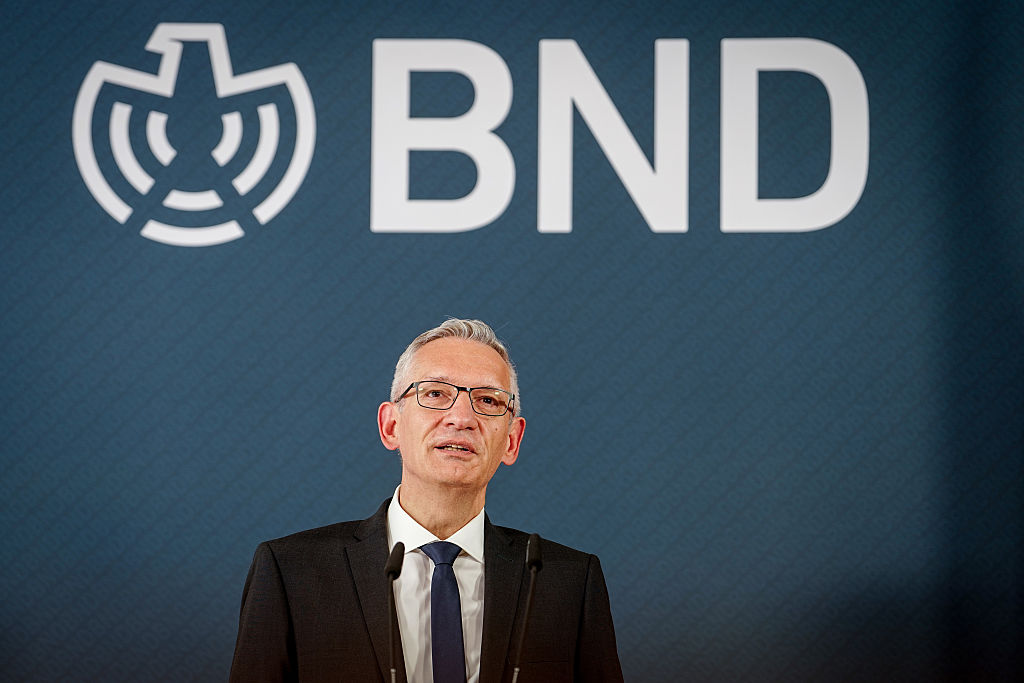
While rockets strike in the Middle East, the debate in Berlin over the future of the Bundesnachrichtendienst has intensified. The BND is Germany’s foreign intelligence service. Its statutory mandate has so far been to collect and analyse information of foreign and security policy relevance. As a rule, it is not authorised to intervene operationally. BND president Martin Jäger has publicly questioned that logic. At the Munich Security Conference, he declared that Germany was ‘no longer in a time of peace’. Russia was waging a ‘shadow war’ in Europe through sabotage, disinformation and hybrid operations. Adversaries, he said, must ‘feel the pain’. The service must be prepared ‘to take more risk’.
Chancellor Friedrich Merz echoed the sentiment, arguing that the BND must ‘play at the very highest level in intelligence terms’. The head of the Chancellery, Thorsten Frei, spoke openly of a ‘paradigm shift’. The message is clear: the BND should no longer merely observe, but under certain conditions be able to act.
In concrete terms, the reform proposals would allow the service to undertake active cybermeasures. In the face of serious threats, it would not only analyse but also be permitted to disrupt or neutralise digital infrastructure. Acts of sabotage abroad are also being discussed as an option if they serve to avert dangers to Germany or its allies. At the same time, plans envisage extending data-retention periods, not only for metadata but, in specific constellations, also for content. There would be greater use of artificial intelligence to process large volumes of data, alongside the possibility – under tightly defined conditions – of more far-reaching interventions in IT infrastructure.
The political argument is that Germany must remain capable of action and should not be permanently dependent on partner services. A state that can report but not intervene remains strategically constrained.
Support and resistance
Support has come from several political quarters. The Green security politician Konstantin von Notz has argued that, in the face of hybrid threats, preventive cybermeasures and operational powers must at least be discussed, albeit strictly within a clearly defined constitutional framework. Signals from the Social Democrats indicate that they, too, take the security situation seriously.
Yet there are clear reservations. The SPD politician Ralf Stegner has expressly warned against handing the BND a ‘blank cheque’. Each new instrument, he argues, increases the need for parliamentary oversight. The service must not become the CIA.
The Federal Commissioner for Data Protection, Louisa Specht-Riemenschneider, has likewise voiced concern about any weakening of existing control mechanisms. The core of the criticism is less emotional than structural. It centres on the separation between police and intelligence services – a lesson drawn from German history. It also concerns the extent to which a foreign intelligence service may operate in areas that in practice touch upon the domestic sphere. It is here that the most sensitive point lies.

Will domestic surveillance expand?
The BND is a foreign intelligence service. Yet digital communication knows no clear borders. Data passes through servers in Germany, platforms operate from German territory and international connections intersect with national infrastructure.
If the service is permitted to store data for longer and analyse it more intensively, the question inevitably arises whether the communications data of German citizens will also be captured to a greater extent. The BND already analyses international data flows. With extended retention periods and broader analytical powers, the scope of that analysis will grow.
The Chancellery points out that operational powers would apply only in an ‘intelligence exceptional situation’. That definition, however, will be decisive. How narrowly will it be framed? Who determines that such a situation exists? How long does it remain in force? And how will it be reviewed? Critics fear less the prospect of spectacular acts of sabotage abroad than a gradual expansion of technical surveillance at home. Proponents counter that without such instruments Germany would remain structurally disadvantaged in a digitised threat environment.
Tehran as a wake-up call
The strike on the Iranian leadership has marked a new level of escalation. Intelligence services are no longer merely observers but an integral part of military power projection. Information has become the precondition of intervention. Germany faces the question of whether it can permanently confine itself to observation. Security realities argue for greater capacity to act. Constitutional tradition demands clear limits.
The decision will not be taken in Tehran but in the Bundestag. Yet the simultaneous strike on more than 40 targets resonates as far as Berlin. It compels German politics to redefine power in the shadows. The open question is not whether intelligence services have a decisive role to play, but how far a democratic state is prepared to go – and what safeguards it is willing to put in place.