
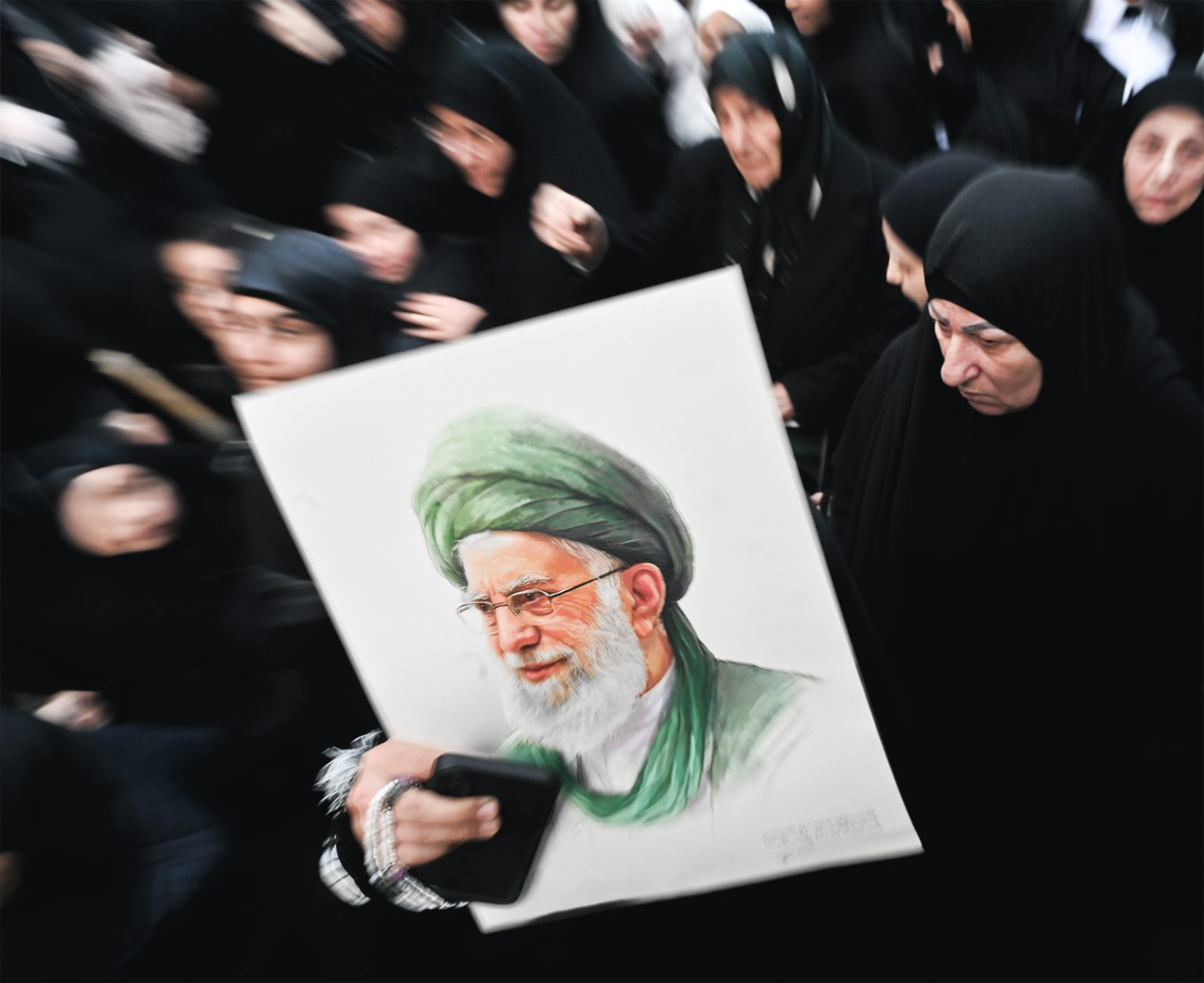
At the end of February, US intelligence agencies admitted that at least 15,000 people linked to the terrorist organisation Islamic State (ISIS) had escaped from a prison in north-eastern Syria. Until January of this year, they had been guarded primarily by the Kurdish Syrian Democratic Forces (SDF), which disbanded after clashes and were partly integrated into the new Syrian army.
The new force was formed around the Movement for the Liberation of Syria (Hayat Tahrir al-Sham), led by the jihadist Ahmad Hussein al-Sharaa, formerly known under the pseudonym Abu Muhammad al-Julani. Unlike the Kurds, the new authorities apparently failed to secure tens of thousands of radicalised militants and their family members.
In addition to fighters from the self-proclaimed caliphate, the SDF – with US support – also detained their wives and children in camps with the aim of deradicalising them. Security at the al-Hol camp collapsed after authority was transferred to al-Sharaa’s government in January, leading to the escape of between 15,000 and 20,000 detainees, according to US intelligence services.
Intelligence sources informed the Wall Street Journal about the development. ‘Security experts have long warned that the wives of Islamic State fighters in the sprawling Al-Hol facility were essentially raising a new generation of militants,’ the American daily noted.
After breaking the territorial power of ISIS in 2019, pro-American forces detained more than 70,000 people in the camp, most of them women and children. ‘At the end of 2025, there were more than 23,000 people there, according to a report by the Pentagon’s inspector general this week,’ the Journal noted.
An unnamed US diplomat said that after the uprising – reportedly sparked by detainees in coordination with al-Sharaa’s approaching forces – no more than 300 to 400 families remained in the camp. The de facto leader of Syria blamed Kurdish forces for the escape of the jihadists, claiming they had withdrawn too early and left the facility unprotected.
In mid-February, the New York Times reported on another detention site near Shaddadi which, according to journalists’ accounts, had been completely abandoned. ‘Orange jumpsuits lay scattered on the ground, left behind by prisoners during their escape, the only trace of the former inmates. The guards’ quarters were abandoned and the prison gates swung open in the wind,’ two reporters described.
According to the Times, the mass escape from the camps occurred on January 19, when Arab Tribal Forces (ATA), supported by the Syrian National Army, attacked the city of Hasaka. The destabilisation of the SDF led to the collapse of security at the sites that had housed some of the world’s most radical Islamist militants and their families.
The newspaper also reported that the arrival of Syrian army units and allied tribal militias was delayed by ten hours after Kurdish forces withdrew, ‘apparently creating a security vacuum that allowed hundreds of families to flee’.
ISIS and the first wave of migration
Islamic State rose to power against the backdrop of Syria’s civil war. Although the organisation had been founded in 2002 as the ‘Islamic State of Iraq’, it later expanded its name after joining the armed campaign against former president Bashar al-Assad.
Under the acronym ISIS, it became widely known in Europe, the United States and Russia. After breaking away from al-Qaeda in Iraq in 2014, the group proclaimed itself a ‘global caliphate’ and seized large parts of Iraq and Syria. The Salafist movement was eventually defeated in 2019 and has been accused of genocide and ethnic cleansing.
Its entry into the war against Assad dramatically intensified the brutality of the conflict, prompting millions of people to flee the Middle East – about 5.7 million from Syria alone. The movement of refugees was later joined by migration from North Africa, particularly the Sahel, and Europe experienced its largest recorded influx of migrants in 2015.
Despite styling themselves as ‘Salafists’, seeking to purify ‘true’ Islam from later historical accretions, a large number of Sunni scholars condemned their theology and practices. Even within the anti-Assad opposition – which was partly financed and armed by the US – several militant groups spoke out against the Islamists.
One such faction was the former Syrian branch of al-Qaeda, later known as the al-Nusra Front. Its supreme emir until its dissolution in 2017 was Abu Muhammad al-Julani.
Both Islamic State and al-Nusra identified themselves with Sunni Islam, which, alongside the Quran as a theological and legal source, also recognises the collection of sayings of the Prophet Muhammad – the Sunnah. Assad, who comes from the Alawite religious minority, was widely regarded by his opponents as aligned with Shiite Islam, and their struggle against him was framed as a ‘holy war’.
Will the caliphate return?
After the collapse of security at the al-Hol camp, testimonies began circulating on social media claiming that detained jihadists welcomed the Syrian National Army as ‘liberators’. Elements within Syria’s new military structures are also believed to sympathise with Sunni extremists, as suggested by footage reported by ABC News correspondent James Longman.
‘We confronted the rebel when we noticed the ISIS patch on his shoulder,’ he said in the description of a video from December 2024, when Sunni fighters supported by Turkey overthrew Assad. At the same time, the United States began withdrawing personnel from Syria in mid-February.
The release of Sunni extremists has come at a particularly volatile moment for the Middle East. Since February 28, the United States and Israel have struck hundreds of targets in Iran, which, under its Shiite theocratic leadership, regards itself as a protector of Shiite communities in the region.
The Islamic Republic derives its religious legitimacy from the figure of Ali. According to Shiite tradition, Ali ibn Abi Talib – the husband of the Prophet Muhammad’s daughter – was intended to become caliph after the Prophet’s death. Instead, leadership passed to other successors.
Those who rejected the authority of Muhammad’s successors argued that leadership should remain within the Prophet’s bloodline and described themselves as standing ‘on Ali’s side’ – in Arabic, shi'at 'Ali – a phrase that later gave rise to the term Shi'a.
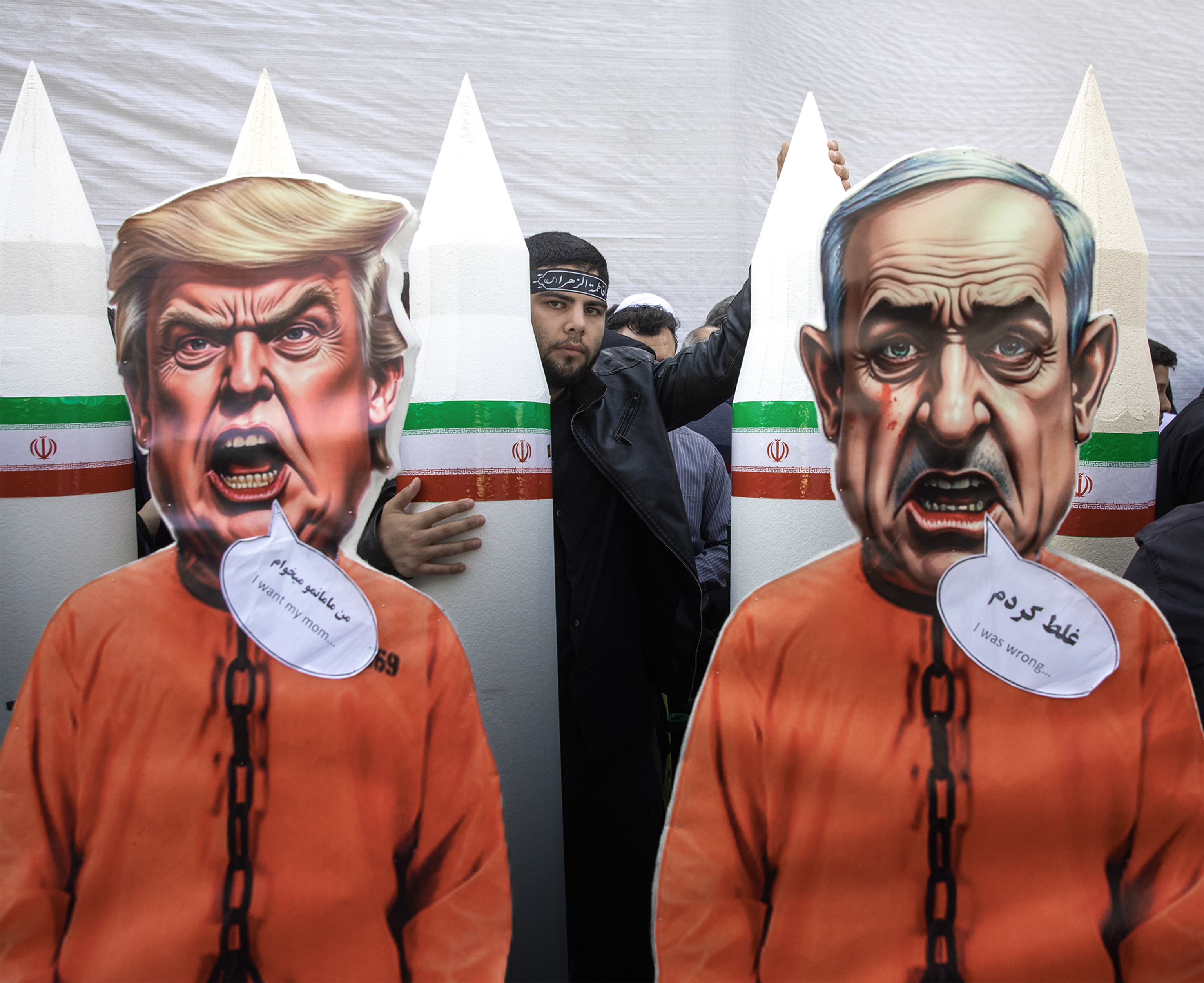
Iran, one of four predominantly Shiite states alongside Iraq, Bahrain and Azerbaijan, lost its head of state in the first Israeli-American strikes. The day after the current war began, Tehran confirmed the death of Supreme Leader Ali Khamenei, raising expectations that the regime will respond forcefully.
At the same time, attacks against forces that defeated Assad – a close ally of Iran – may also form part of Tehran’s attempt to defend its Shiite identity. Israel launched a ground incursion into Lebanon on Tuesday in an effort to pre-empt attacks by Hezbollah, and the Shiite militia could once again be drawn into a broader sectarian confrontation in Syria.
Escalating tension between Shiites and Sunnis could also provoke confrontation in the Persian Gulf against Arab monarchies, potentially widening into an Arab–Persian conflict. Yet many Arabs in southern Iraq also identify with Shiite Islam, leaving it uncertain how regional alignments would develop.
What began with the CIA-backed Operation Timber Sycamore during Barack Obama’s presidency could therefore evolve into another major conflict engulfing much of the Middle East – and potentially trigger a further wave of migration towards Europe. Donald Trump and Benjamin Netanyahu have also played a role in shaping the present escalation.
To what extent will the conflict affect America and Europe?
The destabilisation of Iran alone has raised fears of a potential terrorist attack in the US. Within a day, those fears appeared to materialise.
Ndiaga Diagne, a man of Senegalese origin, opened fire in Austin, Texas, killing three people. He arrived at the scene wearing a T-shirt with the Iranian flag and the words ‘Property of Iran’.
The war that Trump and Netanyahu began at the end of February is now starting to spill over into the United States. It may only be a matter of time before its consequences reach Europe as well.