
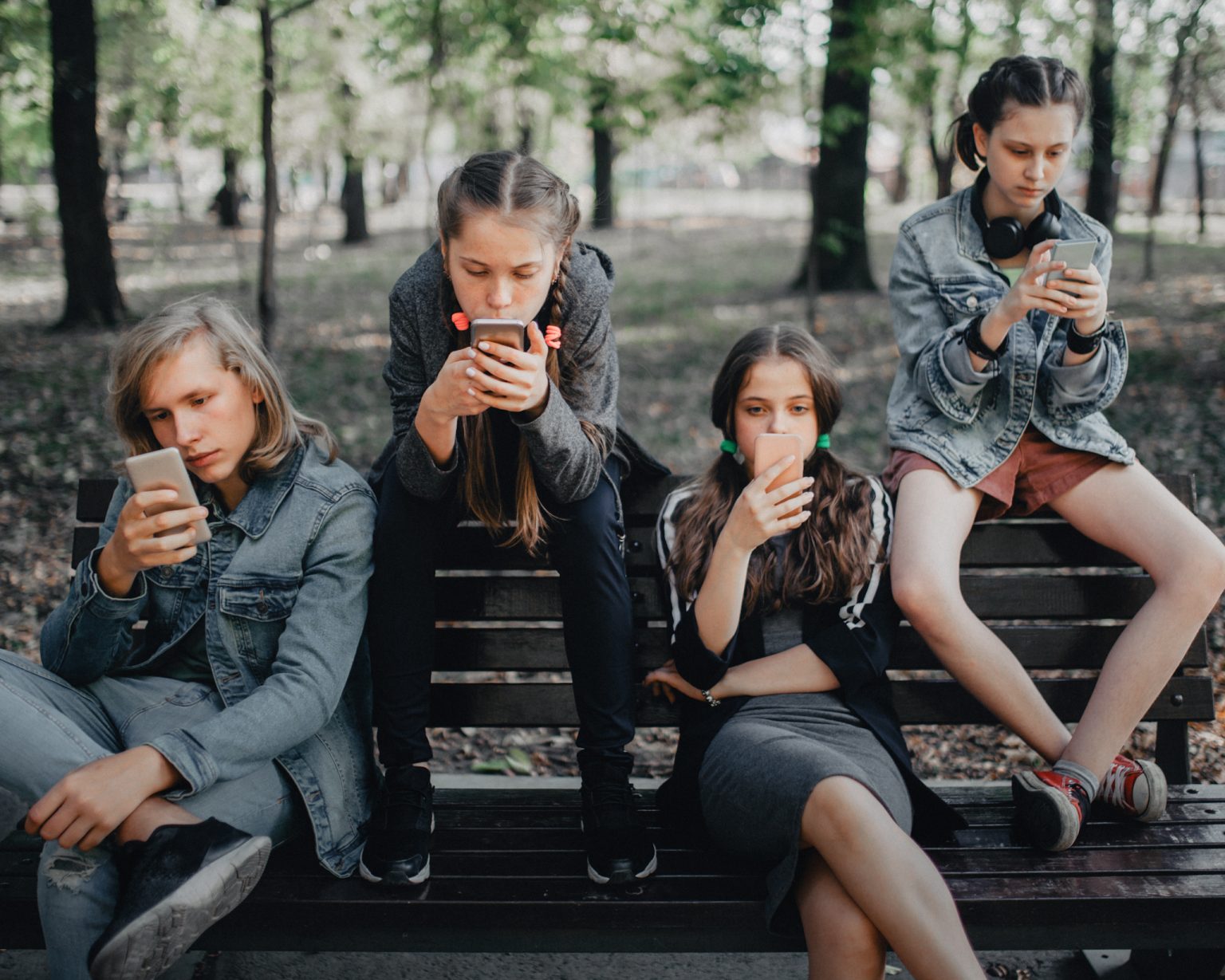
Roughly three months after Australia introduced a groundbreaking ban on social media accounts for teenagers, regulators across Europe, Brazil and several US states are preparing to emulate the move.
California Governor Gavin Newsom, widely considered a likely Democratic presidential contender for 2028, joined the call last month. Republican President Donald Trump is also reportedly ‘interested’ in introducing age limits for social media.
The shift follows growing concerns about online abuse and its impact on the mental health of teenagers. Media coverage has also highlighted outrage over the spread of sexual images of children generated by artificial intelligence.
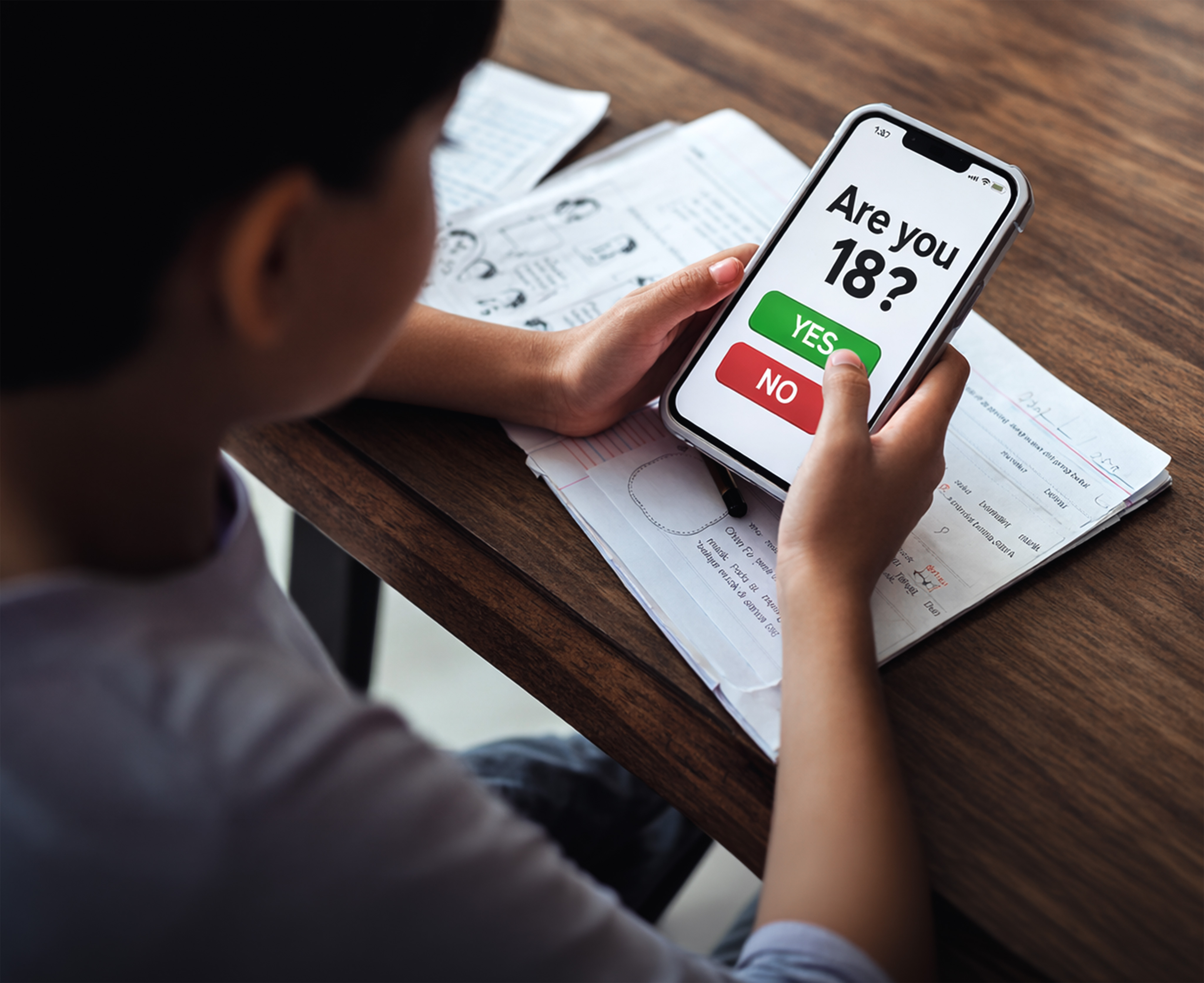
At the same time, confidence is increasing in the capabilities of age verification software. Supporters say the technology can estimate a person’s age through facial analysis, parental consent, identity checks and other digital signals.
Recent advances in artificial intelligence have improved the effectiveness of age-restriction tools while lowering their cost, according to Reuters interviews with more than a dozen experts, including regulators, child safety advocates, independent researchers and vendors who perform age checks for major technology companies such as TikTok, Facebook and OpenAI.
‘The age assurance market has matured significantly in the last two years,’ says Ariel Fox Johnson, general counsel for Common Sense Media, a San Francisco-based organisation that focuses on children’s online interests. She points to improvements in technology as well as the creation of trade groups, technical protocols and certification schemes that standardise how the effectiveness of various tools is evaluated.
The age determination market is maturing
Social networking companies can now often estimate an individual’s age group with reasonable confidence using behavioural data such as the year an account was created or the type of content a user views.
In addition, a growing industry of age, identity and trust verification providers, including Yoti, k-ID and Persona, offers additional layers of checks through automated tools such as facial scanning and machine analysis of official identity documents.
At the app store level, Apple and Google have also introduced tools that allow parents to share a child’s age range with developers without disclosing additional personal data.
‘The technology has certainly improved, not just specifically in age verification but also in identity verification more broadly,’ says Merritt Maxim, vice-president at the US research firm Forrester. ‘It has consequently lowered the average cost of verification, so that where five years ago it was used mainly for higher-value transactions, it can now be applied to almost any digital service without significant financial impact.’
Suppliers typically charge less than a dollar per profile for basic automated age verification checks, although at high volumes the cost often falls to just a few cents, according to industry officials.
More expensive traditional processes such as human review and additional background verification, once standard a decade ago, remain available at a premium but are needed far less frequently.
Facial scanning is becoming more accurate
According to an ongoing study by the US National Institute of Standards and Technology (NIST), facial scanning software used by platforms such as TikTok, Facebook, Instagram and Threads has steadily improved in accuracy. When first tested in 2014, systems produced an average error in age estimates of 4.1 years. By 2024 the average error had fallen to 3.1 years and is now roughly 2.5 years.
The British company Yoti says the latest version of its facial analysis model, expected to launch in April, records an average error of just 1.04 years for users aged between 14 and 18.
San Francisco-based identity verification firm Persona, used by OpenAI and Reddit, reports a similar average error of 1.77 years for users aged 13 to 17.
A report commissioned by the Australian government last year concluded that photo-based age estimation tools were generally accurate. However, it noted that users within three years of the legal age threshold of 16 fall into a ‘grey area where systemic uncertainty is higher’. The report therefore recommended that such cases be redirected to ‘additional methods of verification such as identity-based verification or parental consent’.
Experts say the systems still struggle in certain situations, including with particular skin tones, grainier images from older phones or when checks rely solely on on-device processing designed to protect privacy, meaning the data is analysed only on the user’s phone rather than being sent to a cloud server.
For example, systems relying on on-device processing are less likely to detect attempts by teenagers to appear older than they are, said Rick Song, chief executive of Persona. Common tricks include wearing wigs, applying heavy make-up or fake facial hair, or scanning the plastic faces of action figures instead of their own.
Still, executives argue that facial age estimation provides a digital equivalent of the checks carried out daily in bars and liquor stores in the offline world. ‘If you look young, they may ask you and you may have to produce your ID,’ said Robin Tombs, chief executive of London-based Yoti.
He added that social media services generally require less facial scanning and identity verification than pornography or gambling sites, partly because they already hold large amounts of user data. This allows them to rely more heavily on a method known as inference, which analyses online behaviour, linked financial information and other signals in order to meet regulatory requirements.
Thousands of cancelled accounts
Australia’s internet regulator said it will collect population-level data for two years to assess the impact of the ban, with initial results expected later this year. Since the law came into force in December, the ten social media companies covered by the legislation have already blocked around 4.7 million suspected underage accounts, although not all of them were active.
Meta said that in the first weeks after the ban took effect it shut down about 550,000 Instagram, Facebook and Threads accounts believed to belong to minors. Snapchat said it had cancelled roughly 415,000 accounts.
Regulators in other countries are closely monitoring the developments. European Commission President Ursula von der Leyen is expected to discuss age verification during an upcoming visit to Canberra. The United Kingdom, which already requires age verification for pornographic websites and is considering stricter child safety rules for social media and artificial intelligence chatbots, is also exchanging information with Australian authorities.
The early results of Australia’s experiment should be treated with caution because affected companies have generally done only the minimum required to comply with the law, said Iain Corby, chief executive of the Age Verification Providers Association (AVPA), which represents about three dozen vendors including Yoti and Persona.
In some cases, he said, social media companies have even asked AVPA member firms to disable stricter age checks. ‘They are trying the patience of the regulator to see what they can get away with,’ Corby admits.
(reuters, im)