
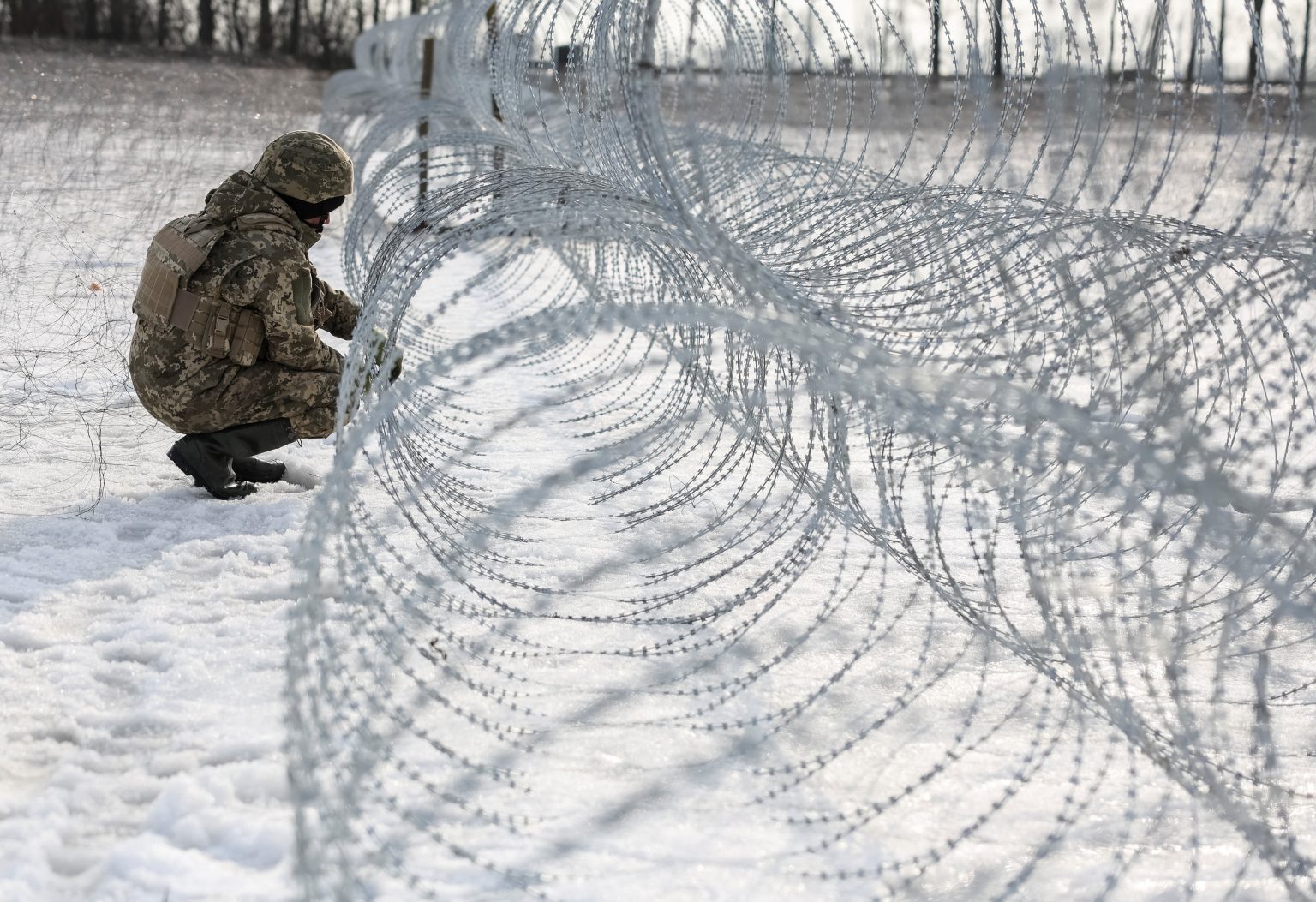
The beginning of 2026 does not look unfavourable for Ukraine, at least in statistical terms. In the second half of February, Ukrainian forces liberated more territory than they lost for the first time since the summer counter-offensive of 2023. Nevertheless, Russian pressure continues in the Zaporizhzhya region, where the Ukrainian General Staff is attempting to blunt Moscow’s advance.
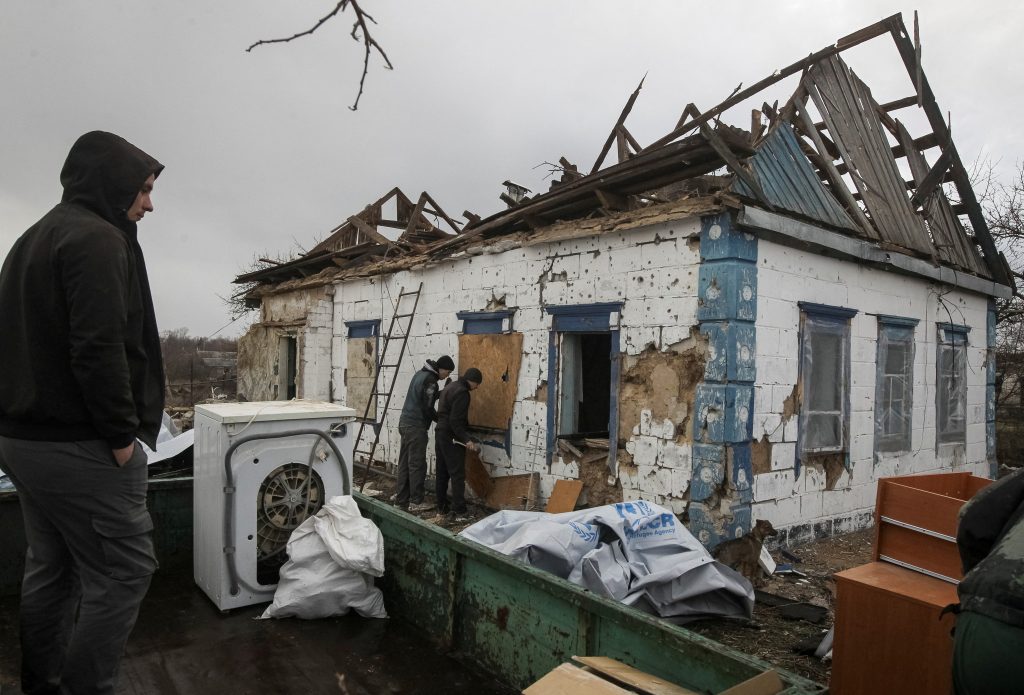
One of the most contested places on the front in recent months has been the town of Huliaipole in Zaporizhzhya Oblast. Before the war the town had more than 13,000 inhabitants. Today just over 100 civilians remain. Since last October, the town has also held the title ‘Hero City of Ukraine’, awarded by President Volodymyr Zelenskyy.
For the first time in three years
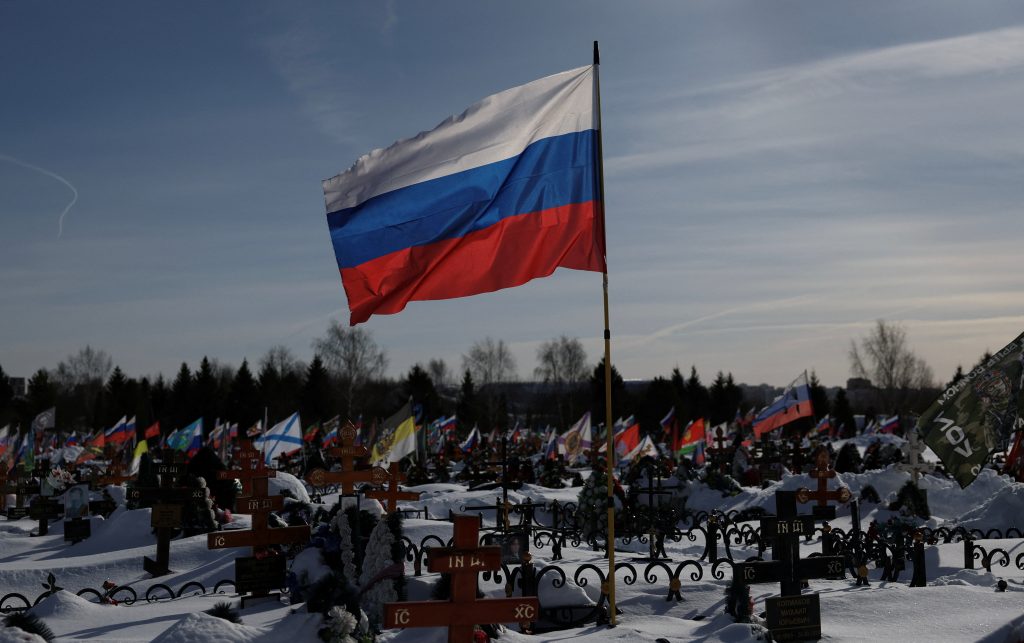
At the beginning of March, analysts from the US Institute for the Study of War (ISW) reported that ‘Ukrainian forces have liberated roughly 257 square kilometers since January 1. Ukrainian forces achieved a net gain of almost 33 square kilometers between February 14 and 20 and a net gain of roughly 57 square kilometers between February 21 and 27’.
ISW also notes that the last time Ukraine recorded net territorial gains was during the summer counter-offensive of 2023. In June Ukrainian forces recaptured 377 square kilometres, followed by 257 square kilometres in July and 1.47 square kilometres in September.
At the end of February and the beginning of March, President Volodymyr Zelenskyy said Ukrainian forces had regained 460 square kilometres since the start of 2026, significantly more than ISW’s estimate.
ISW analysts stress that their mapping methodology may underestimate Ukrainian gains because it records the furthest confirmed extent of Russian control until sufficient evidence indicates that those positions have been abandoned.
‘Successful, localized Ukrainian counterattacks in recent weeks are unlikely to develop into a full-scale counteroffensive, and Russian forces very likely will stabilize their positions and resume advancing,’ the institute wrote. At the same time, the Ukrainian attacks have disrupted Russia’s preparations for planned spring and summer offensives.
Key town contested
The anticipated spring and summer offensives are also expected to affect Zaporizhzhya Oblast and the town of Huliaipole. Ukraine’s Deep State monitoring project reported as early as 9 March that ‘the adversary has virtually occupied the city, withdrawing large numbers of infantry there, moving additional forces and actively operating in the depth of the territory’.
For Kyiv, the difficult situation was confirmed in an interview with Radio Svoboda by Dmytro Filatov, commander of the 1st Independent Assault Regiment, who uses the battle nickname Perun. On 8 March he described the town as ‘almost occupied’. At the same time, he suggested that the development was part of a broader plan and that the reason for the situation would become clear in the near future.
Ukraine’s Commander-in-Chief Oleksandr Syrskyi said in early March that Kyiv’s goal in the Huliaipole area was to ‘stop the operational initiative and force the enemy to play by our rules’. For now, the general’s claim cannot be independently verified.
An exception is Syrskyi’s statement that Ukrainian forces are advancing near the village of Oleksandrivka in Dnipropetrovsk Oblast. Russian forces attempted a counter-attack there on 15 March but were unsuccessful. Since then, the Russian army has concentrated on strengthening its defensive positions rather than launching further assaults.
In their latest report on 16 March, ISW analysts wrote that the Ukrainian advance near the village could limit Russian offensive operations in the direction of Oleksandrivka and potentially threaten Russian positions around Huliaipole.
Ukrainian forces are not yet launching a decisive assault on the town itself. However, they are advancing in areas to the north-west, north-east and east of Huliaipole.
So far, these advances have not been sufficient to compel Russian forces in the area to halt their offensive operations. Nevertheless, Ukrainian positions west of the town have slowed the Russian advance to less than 1.2 to 1.5 kilometres per week.

The Kremlin also claims progress
Moscow is also reporting gains. In the first two weeks of March, Russian forces captured 12 Ukrainian villages, Russian state agencies reported on Monday, citing Russian Chief of the General Staff Valery Gerasimov.
The remarks were made during a visit to the southern grouping of Russian forces. According to the Russian Defence Ministry’s Telegram channel, Gerasimov said that ‘the offensive is underway in all directions.’
He also claimed that Russian troops were ‘actively moving towards Slovyansk’, a heavily fortified city in Donetsk Oblast that has long been regarded as one of the Kremlin’s main objectives.
According to Gerasimov, the town of Kostyantynivka, which has been under sustained Russian pressure, is already 60 per cent under Russian control. Ukrainian forces, he said, are ‘taking all possible measures to stop our advance’. Street fighting is reportedly continuing in the north-western part of the town.
The Russian general also stated that Russian forces continue to establish buffer zones in the Kharkiv and Sumy regions along the Ukrainian-Russian border.