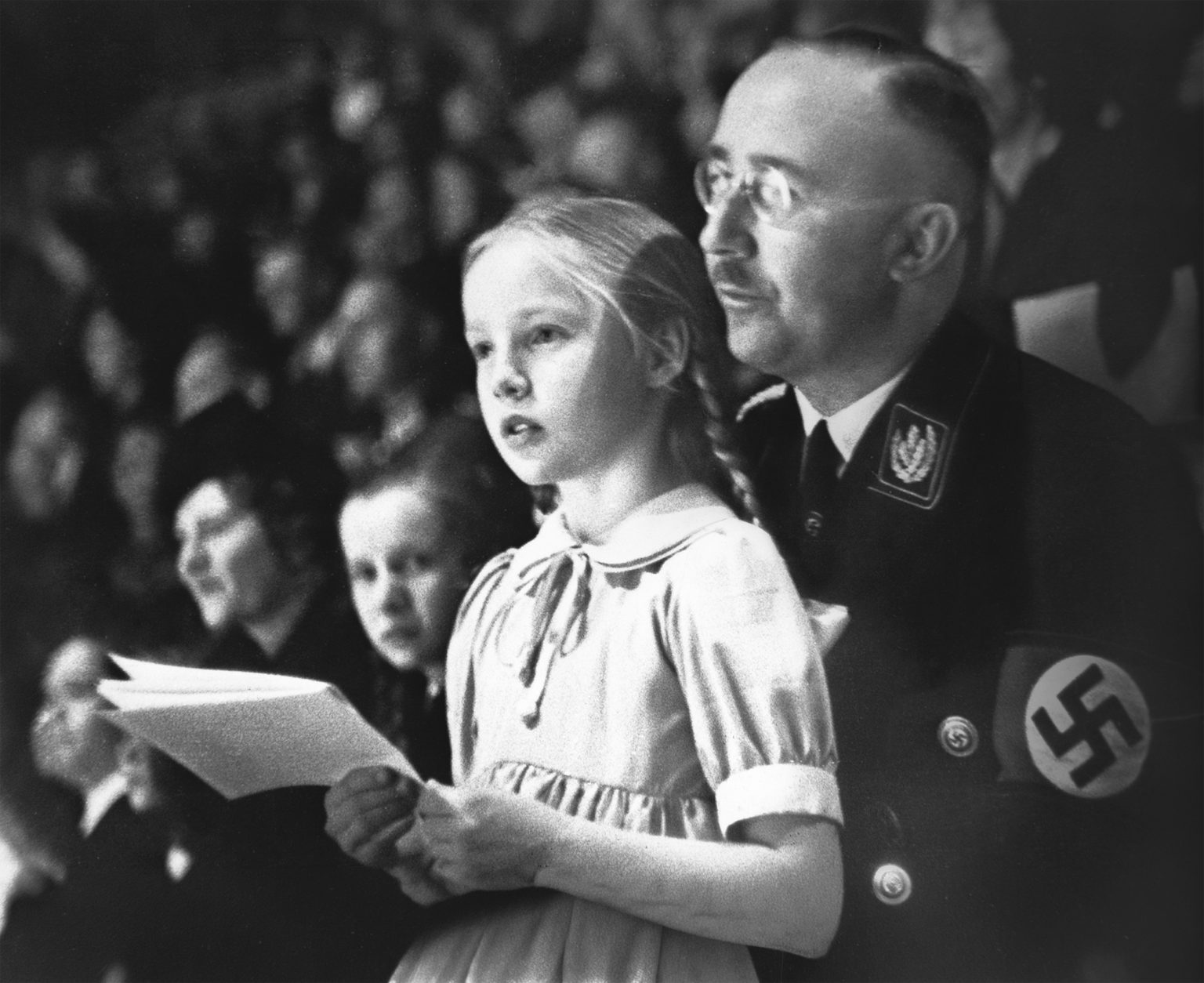
Contemporary propaganda and publications, including the 1941 work Slovak National Socialism or Du und Dein Volk (‘You and Your People’), show that the European Axis powers relied not only on military strength but also on family policy to secure their future.
Children relinquished by their mothers were redistributed to adoptive families after a short stay in medical facilities. Their new mothers were often the wives of soldiers and SS officers, ensuring that they would grow up in households aligned with National Socialist ideology and serve the regime in the future.
Before Germany’s defeat, between 20,000 and 30,000 children were born within the Lebensborn programme. Towards the end of the Second World War, it was also extended to women of non-German nationality who were considered ‘Aryan’ and pregnant by German soldiers.
The story of Hagar
Examples resembling surrogacy can also be found in the Book of Genesis, part of both the Christian Old Testament and the Jewish Torah: ‘Abraham’s wife Sarah was barren. But she had a maidservant, an Egyptian named Hagar. One day Sarah said to Abraham, “Look, the Lord has prevented me from bearing children. Go in to my maidservant; perhaps I shall obtain a son through her.” And Abraham agreed with Sarah.’ According to Jewish, Christian and Muslim traditions, Hagar bore Abraham a son, Ishmael, regarded as the forefather of the Arabs.
This is often cited as an early example of surrogacy, as the child was raised within Abraham’s household. Interpretations have differed across religious traditions. In Islam, Ishmael is regarded as a legitimate son. In Christian tradition, he was long considered illegitimate and inferior to Isaac, the son of Abraham and Sarah, who is seen as the forefather of the 12 tribes of Israel.
Following their conversion to Christianity, Slavic authors often referred to Muslims and various non-Christian steppe peoples, such as the Cumans, as Ishmaelites or Hagarians, emphasising what they regarded as their origin from the womb of an Egyptian slave woman. This contrasted with Islamic conceptions of lineage, in which the status of the mother – whether wife, concubine, slave or victim of rape – did not exclude the child from full membership of society and, if acknowledged by the father, from inheritance. Similar patterns existed in parts of Europe before Christianisation.
Surrogate fatherhood?
The use – or exploitation – of a woman’s reproductive capacity has therefore taken many forms throughout history. If there is such a thing as ‘surrogate motherhood’, can one also speak of ‘surrogate fatherhood’, in which a man’s role is reduced to his procreative function?
The Jewish traveller Ibrahim ibn Jakub, writing in Arabic in the 10th century, described a ‘City of Women’ west of the lands of the Prussians: ‘It has lands and slaves, and the women allow themselves to be defiled by their slaves. If a woman gives birth to a boy, she kills him. They ride horses, personally participate in war and are distinguished by their strength and severity.’ The account echoes the legend of the Amazons.
Similar figures appear in the works of Homer and Herodotus, in chronicles of Kievan Rus’ and in the writings of the Czech chronicler Cosmas, although the boundary between myth and history is often blurred. Modern historians accept that female warrior societies existed north of Greece, and archaeological findings support aspects of such accounts.
At the same time, historians generally question the reliability of Ibn Jakub’s description of a distinct ‘City of Women’. It is therefore unlikely that men of the Baltic Prussian tribes ever faced the fate of being reduced to reproductive slaves.