
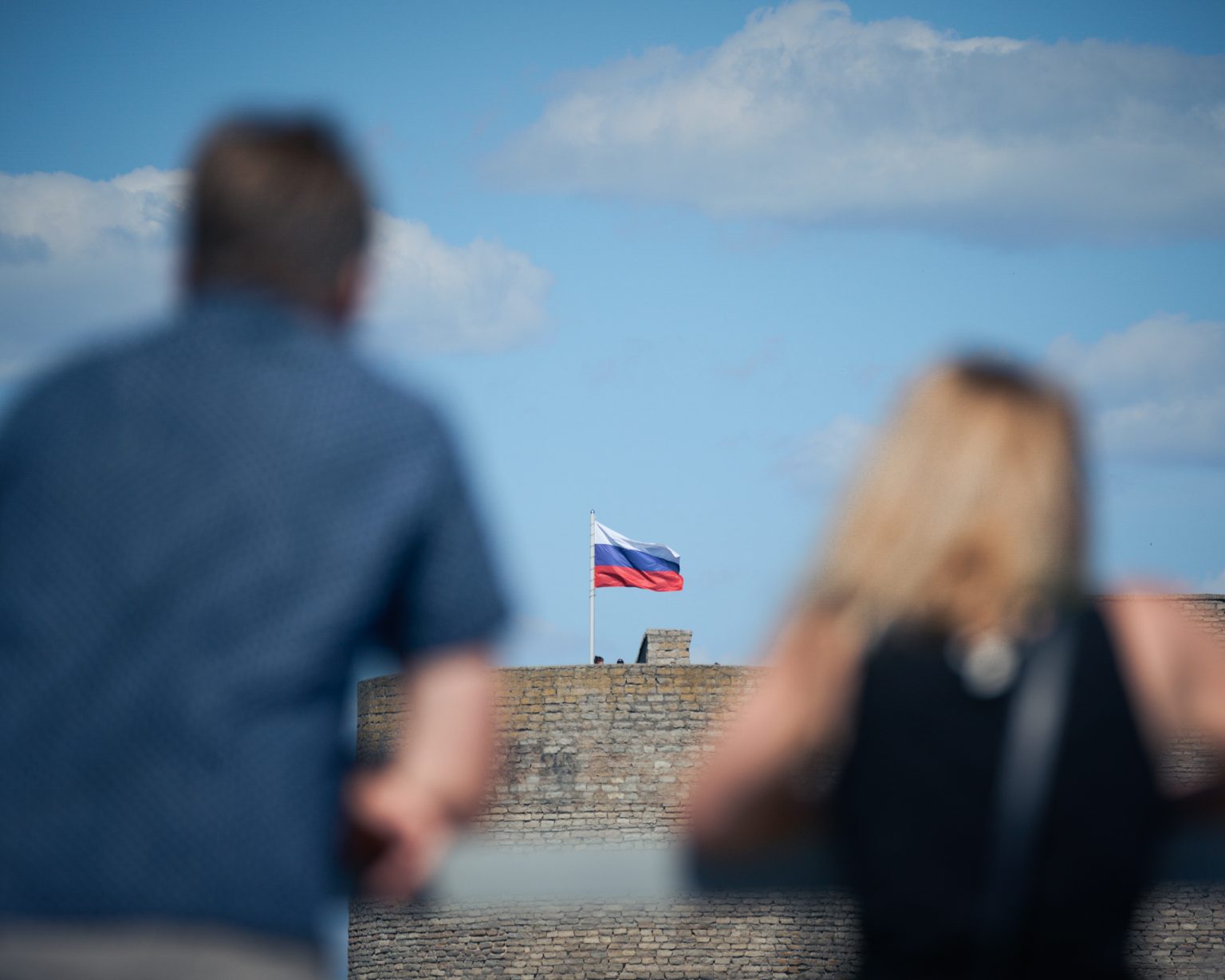
Narva, the easternmost city in the European Union, has a population of just over 53,000. Nearly 90 per cent are ethnic Russians, while only around half hold Estonian citizenship. Across the bridge over the Narva River lies the Russian city of Ivangorod.
‘The Estonian Foreign Ministry summoned the Russian chargé d’affaires after a Russian Su-30 fighter jet violated Estonian airspace near the island of Vaindloo on 18 March and remained there for about one minute,’ the country’s foreign minister said the following day. Italian Air Force aircraft were scrambled in response to the incident, which occurred around 200 kilometres from Narva.

The Narvian People’s Republic
In February, a Russian-language media campaign promoting the secession of Narva and surrounding areas into a so-called Narvian People’s Republic (NPR) appeared across several social media platforms.
On 11 March, the Estonian counter-disinformation portal Propastop first drew attention to activity on social networks, compiling extensive audiovisual and written material from platforms including VKontakte, Telegram and YouTube.
The NPR has its own flag and coat of arms. The material also outlines military ranks for its armed forces and defines the proposed borders of the entity. The content is openly pro-Kremlin in tone and marked by militaristic rhetoric.
One of the slogans attributed to the project, which so far exists only online, reads: ‘From Narva to Püssi stretches Russian land’ (От Нарвы до Пюсси простирается русская земля). Püssi lies in Ida-Viru County, of which Narva is the main city.
The campaign also relies heavily on memes and other viral formats. Despite the often playful presentation, Estonian security services warn that the anonymous administrators behind such channels could face criminal prosecution.
The Propastop project itself has also faced criticism. Critics argue that without its reporting, neither domestic nor international media would have taken interest and the campaign would have remained largely unnoticed. The portal rejects such claims as absurd, citing journalistic responsibility and the duty to inform.
On 18 March, Euronews reported that Germany’s 45th Armoured Brigade is stationed in Pabradė, Lithuania, around 400 kilometres from Narva.
According to some analysts, in the event of unrest in the Ida-Viru region, the brigade’s command might opt not to deploy its forces in order to avoid unnecessary exposure. Responsibility for securing Narva and the surrounding region would therefore fall primarily to Estonian police forces and, in the event of escalation, the military.
Possible scenarios
The Baltic states are frequently cited in discussions about a potential escalation between Russia and Europe. Estonia – and Narva in particular – features prominently in such scenarios.
For NATO, one of the most dangerous possibilities would be a rapid incursion by Russian forces into Narva under the pretext of protecting the Russian-speaking minority, followed by threats of nuclear escalation should Estonian forces attempt to retake the city.
However, such a scenario appears less likely in light of the current information campaign. Instead, the Kremlin could seek to avoid direct confrontation with NATO by pursuing hybrid tactics in a Baltic state with a sizeable Russian-speaking population.
‘It would look a lot like the 2014 civil war that Moscow exported to eastern Ukraine,’ explains US Colonel Douglas Mastriano. If the affected state and NATO failed to respond decisively to ‘local separatists’, Moscow could maintain plausible deniability.
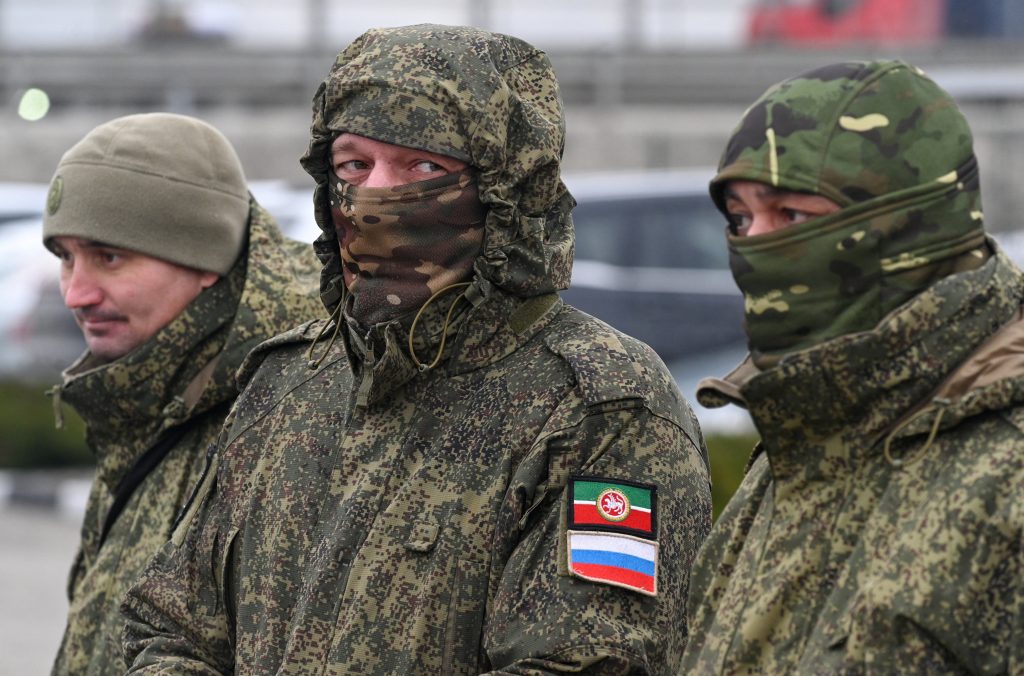
If, however, the response were hesitant, a hybrid conflict could escalate into a broader intervention under the pretext of ‘protecting the Russian minority’. According to Mastriano, such separatists would likely be ‘plain-clothed members of Russian special forces, rather than the “little green men” seen in Crimea’.
Between alarm and restraint
At the same time, Estonia’s Foreign Intelligence Service (Välisluureamet, VLA) has sought to calm concerns. In an interview with public broadcaster ERR in December 2025, its director stated that Russia ‘has no intention of invading any of the Baltic states or wider NATO territory’ for the time being.
The agency’s February 2026 annual report reaches a similar conclusion, suggesting that Moscow is unlikely to attack the Baltic region or other parts of the alliance within the next one to two years.
A source familiar with the situation, speaking on condition of anonymity, suggested that the campaign may not necessarily originate from the Kremlin alone and could also involve Estonia’s Internal Security Service (Kaitsepolitseiamet, KAPO).
‘If the “NPR operation” originates not from the Kremlin but from KAPO, then a successful outcome could allow Estonian authorities to identify pro-Kremlin sympathisers and potential collaborators,’ the source said. ‘However, more deeply embedded networks would likely not fall for such a trap.’