
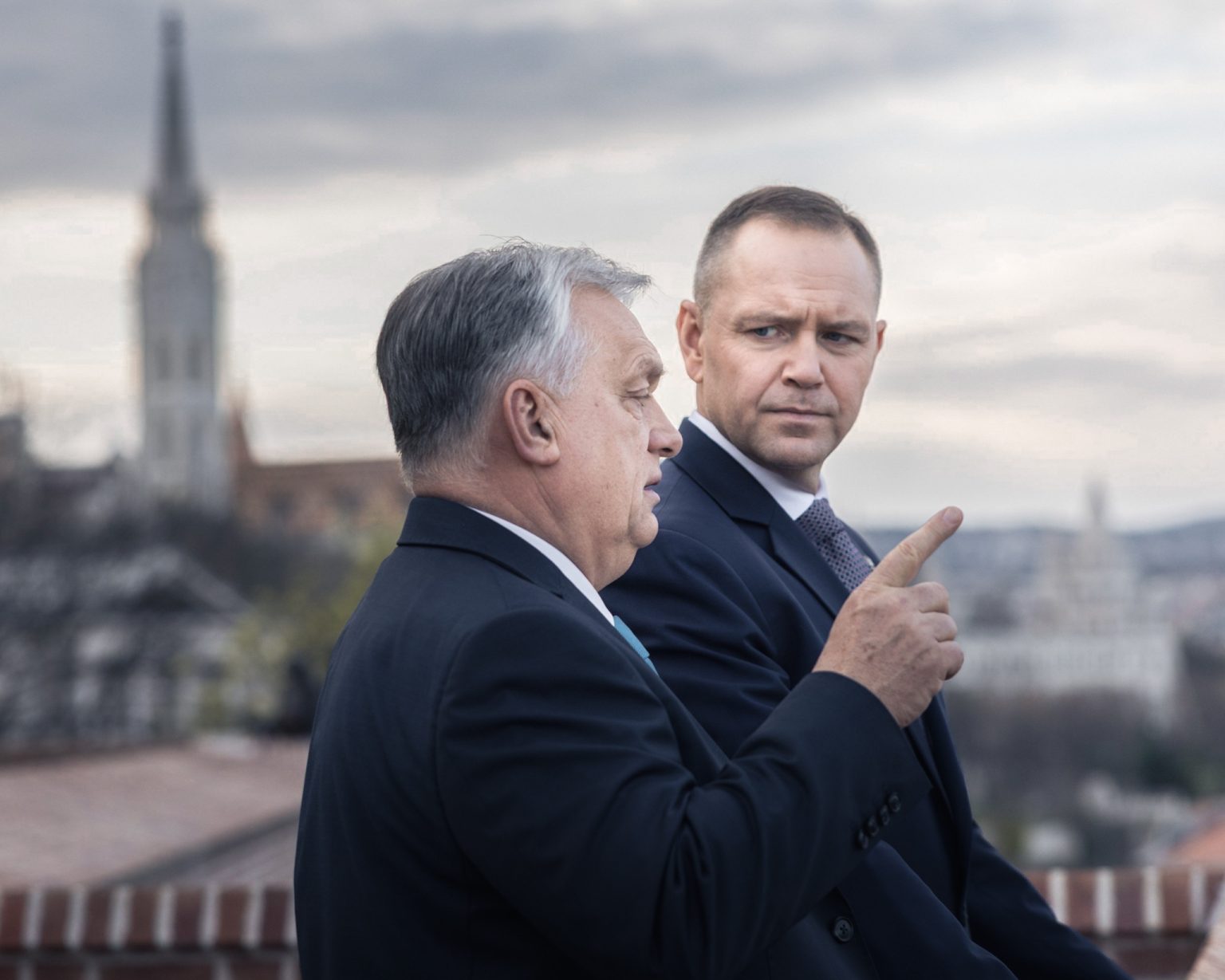
Polish Hungarian Friendship Day celebrations are held alternately in Hungary and Poland. Two years ago they were held in Stary Sacz, last year in Kaposvar and this year in Przemysl. Polish President Karol Nawrocki and his Hungarian counterpart Tamas Sulyok then travelled to Budapest.
‘We Poles love the Hungarians and hate the war criminal Putin. Russia will always be a threat to us, Hungary an eternal friend,’ Nawrocki wrote on social media shortly after the end of his visit to Hungary.
A Pro-Kremlin Politician?
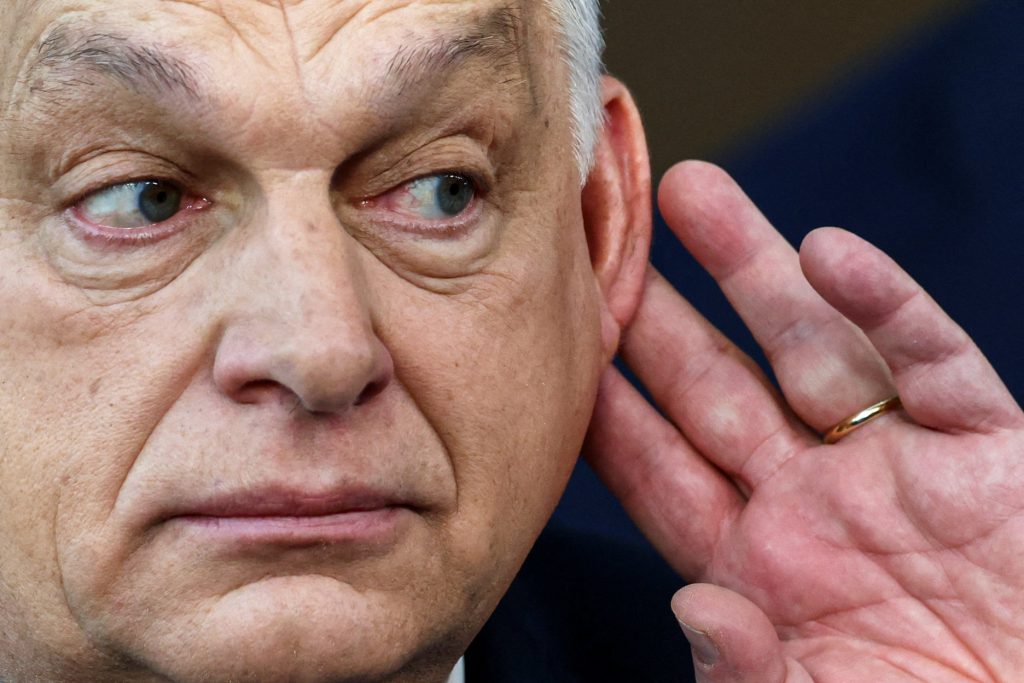
Foreign Minister Radoslaw Sikorski (Civic Platform, PO), who, along with President and Prime Minister Donald Tusk (PO) make up the three most popular Polish politicians, criticised the president’s decision to meet Viktor Orban, saying ‘tell me who your friends are and I’ll tell you who you are’.
The Polish prime minister took a similar view of Nawrocki’s trip to Budapest. He reacted to Nawrocki’s dissatisfaction with journalists with a social media post in which he wrote: ‘Please don’t shout at journalists, Mr Nawrocki. They are not the ones who got you into this Russian mud.’
Nawrocki has made no secret of his scepticism about Brussels. While some Poles see this as an effort to defend the country’s national interests, others fear that, against the backdrop of the ongoing Russia-Ukraine war, undermining European unity could be dangerous.
Recently critical voices have been raised again following the president’s veto of the government’s decision to set up a fund to support the armed forces with European money, and now the president’s meeting with Orban has been added to the issues of the day.
It should be kept in mind that in Russia, Nawrocki has been on the wanted list since 2024, as he was involved in the removal of Red Army monuments in Poland. ‘Russia is by its very nature imperialist: it doesn’t matter whether it’s the white terror, the red terror or the current one,’ Nawrocki declared on Polish television in 2023.
Two Wars with Slovakia
A medieval proverb says that Poles and Hungarians are brothers both in a fight with a sabre and at the table over a drink. Since 1918, when the Austro-Hungarian empire was dissolved, the proverb has been transferred from the peoples of former Hungary, namely Slovaks, Hungarians, Austrians and Ukrainians, to Hungarians alone.
‘Poles and Hungarians, two good friends. Welcome to Budapest, President Nawrocki!’ Orban declared, in the spirit of a proverb still well known in Poland and Hungary.
In 2007, the parliament in Budapest, and subsequently in Warsaw, decided that 23 March would be Polish-Hungarian Friendship Day. Although this day is not associated with any specific historical event in Polish Hungarian history, it coincides with the day in 1939 when the Hungarian Royal Army attacked the nine-day-old Slovak state, thus beginning the Little War.
More than 20,000 volunteers in Slovakia rose against the invading army. However, despite the largest volunteer mobilisation of Slovaks in recorded history, part of the occupied territory remained part of Hungary until 1945. The invasion took place a few months after part of northern Slovakia had been occupied by Poland in 1938.
‘We are united by centuries of shared history and common national heroes. Hungary gave us a hand when we defended ourselves against Russian Bolshevism in 1920, and we showed solidarity with them in 1956 when Kremlin imperialism crushed their freedom,’ Nawrocki said during his visit to the Hungarian capital.
He was recalling a turbulent period in Hungarian history. In March 1919, a Bolshevik coup took place in Hungary and the Hungarian Republic of Councils was proclaimed. On 16 June 1919, the Slovak Republic of Councils was proclaimed in Presov, mobilising men to fight alongside the Hungarian Bolsheviks against the Czechoslovak army.
At the same time, the Polish Bolshevik War was fought from February 1919. ‘The Hungarian Red Army occupied a considerable part of Slovakia, penetrating in the east almost to the Polish border, where it was to meet the Soviet Red Army advancing westwards,’ historian Dusan Kovac summarised in his 1998 book History of Slovakia.
In the summer of 1919, the Hungarian Republic of Councils collapsed, and the future regent of Hungary, Miklos Horthy, gradually rose to power. The so-called White Terror began in the country, mainly affecting supporters of Red Hungary. Shortly after the counter-revolutionary victory, Budapest offered Warsaw 30,000 cavalrymen to defend itself against the Red Army, but Czechoslovakia refused to allow them to pass through its territory.
The Hungarians eventually helped Poland and, at their own expense, through Romania, supplied the defenders of Warsaw with 48 million Mauser rifle cartridges, 13 million Mannlicher cartridges, artillery shells, 30,000 Mauser rifles and much other equipment, while hundreds of Hungarian volunteers fought on the Polish side. It was also thanks to this assistance, mentioned by Nawrocki, that the Poles finally drove the Russian Bolsheviks into retreat in August 1920.
Against the Background of the Affair
Before Nawrocki visited Budapest, the city hosted a meeting of the Eurosceptic faction Patriots for Europe, whose leaders expressed their support for Orban ahead of the April parliamentary elections.
But Nawrocki did not extend his support to politicians such as Marine Le Pen, Italian Deputy Prime Minister Matteo Salvini or Krzysztof Bosak, deputy speaker of the Polish parliament from the National Movement (Ruch Narodowy) party, and did not comment on the elections. It should be recalled that the 86-member faction also includes two MEPs from Poland from the National Movement party.
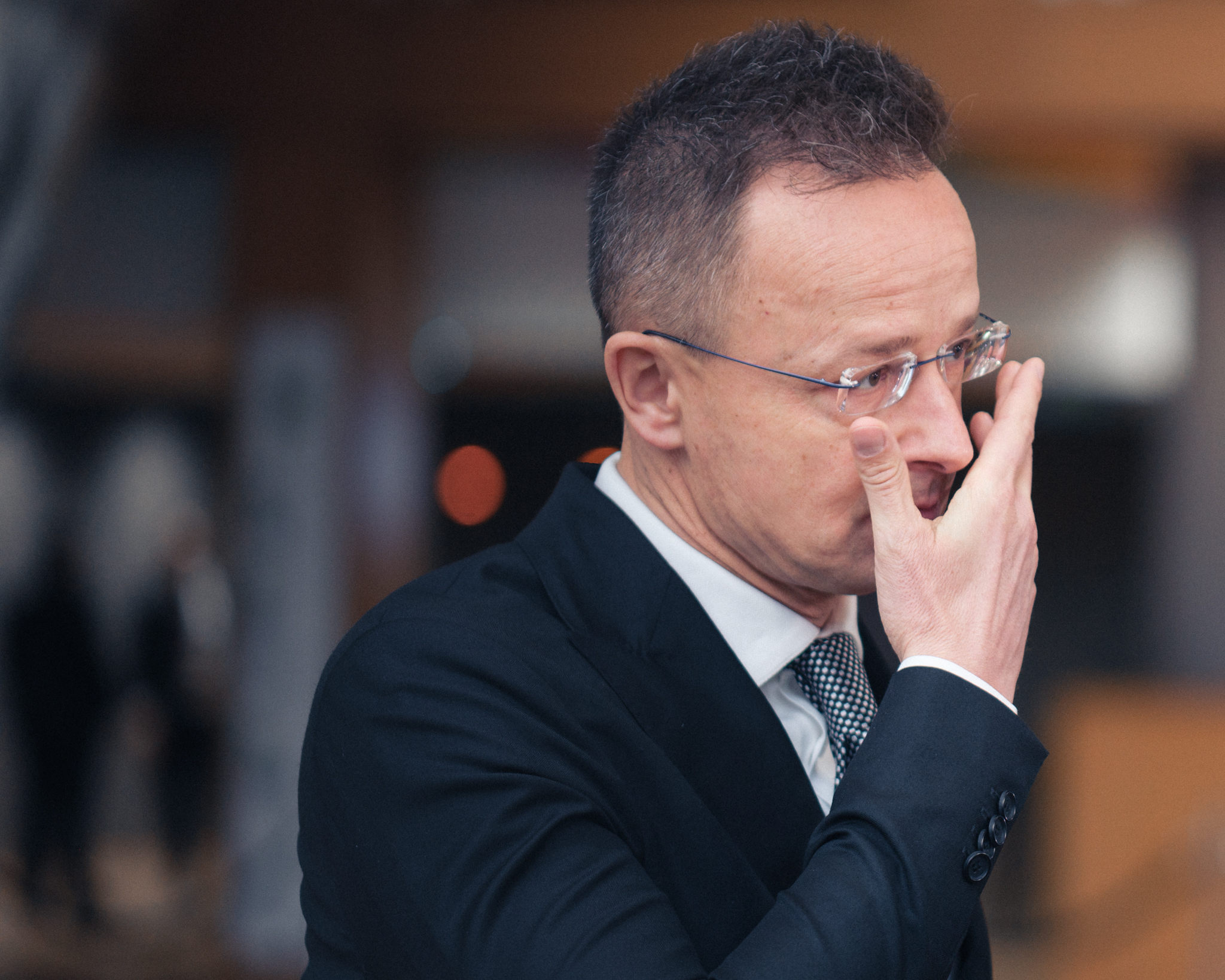
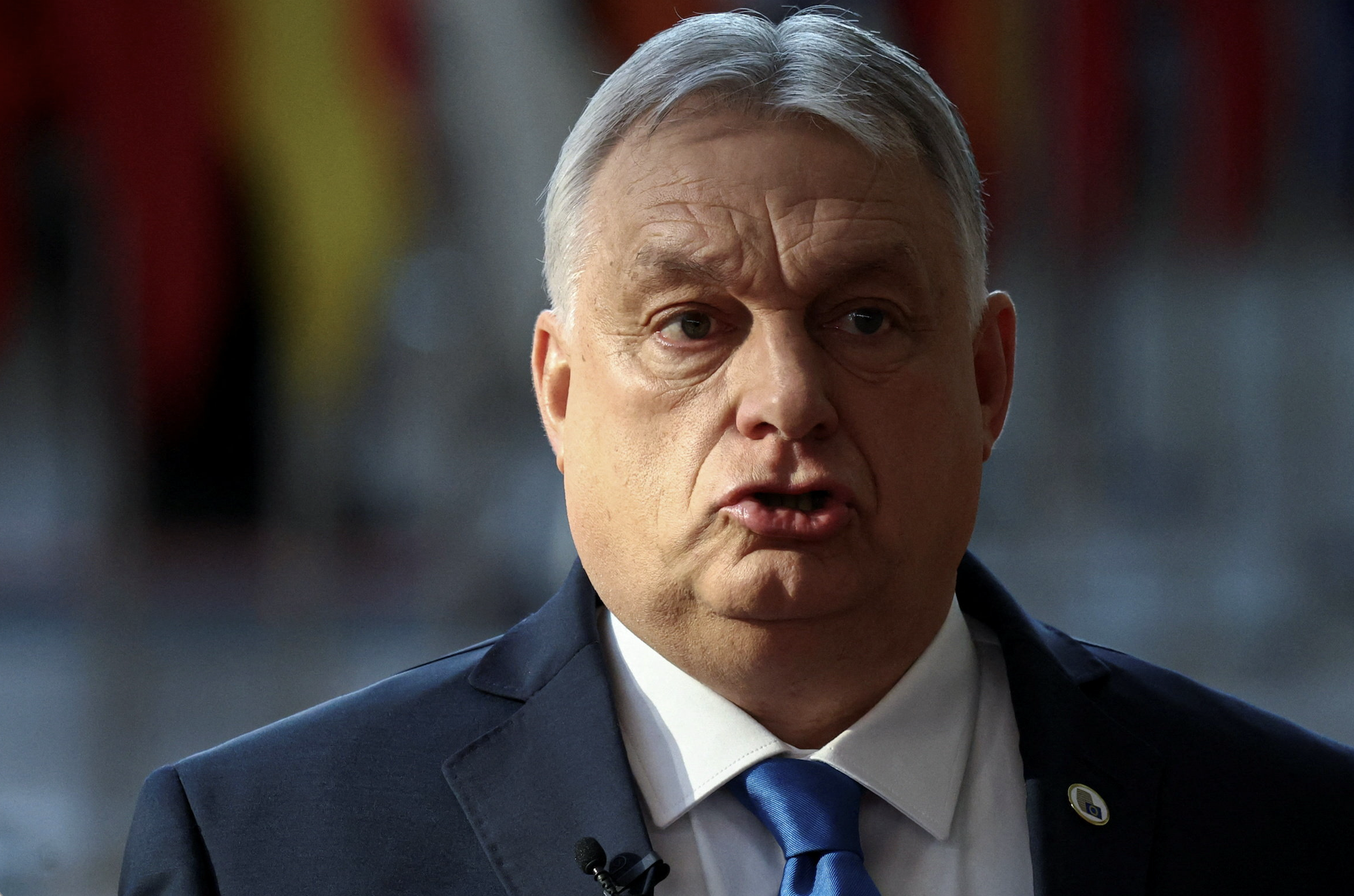
On the evening of 21 March, The Washington Post wrote that Peter Szijjarto, the Hungarian foreign minister, had regularly telephoned his Russian counterpart Sergei Lavrov during breaks in European Union negotiations and kept him informed of the progress of the discussions. Szijjarto later admitted contact with Lavrov during key meetings in Brussels after initial denials, but Orban has already described the possible eavesdropping on his minister as an attack on the country.
The Washington Post also alleges that the Kremlin suggested to the Hungarian authorities that they stage an assassination attempt on Prime Minister Viktor Orban to boost his popularity ahead of key elections, before which Moscow has already expressed official support for Orban.
On behalf of the Trump administration, Vice President JD Vance is likely to express such support to Orban in Budapest in early April.
‘The news that Orban’s people are briefing Moscow on the EU Council negotiations in minute detail should surprise no one. We have had suspicions about this for a long time. That is why I only speak out when necessary and only say as much as is necessary,’ the Polish prime minister responded to the report.
Hungarian opposition leader Peter Magyar spoke of possible treason in this context. Shortly after the first report, a link with Slovakia also emerged. According to investigative journalist Szabolcs Panyi, in 2020, Szijjarto intervened in favour of then-Slovak prime minister Peter Pellegrini ahead of the parliamentary elections.
The Hungarian foreign minister has confirmed that six years ago, before the 2020 parliamentary elections, he did indeed arrange for then Prime Minister Pellegrini, through Sergei Lavrov, to receive Russian Prime Minister Mikhail Mishustin. For the time being, the EU has excluded Hungary from sensitive negotiations to reduce the risk of leaks to Moscow.
Hungary’s parliamentary elections have attracted considerable attention because of the statements and positions of political leaders, including efforts by non-state actors to influence the outcome. Over the weekend, Donald Trump, Andrej Babis and Benjamin Netanyahu endorsed Viktor Orban in video messages at the fifth Budapest International Conservative Political Action Conference (CPAC). Trump described Orban as ‘a strong leader who defends borders, culture and sovereignty, and highlighted our shared journey to rebuild the West.’