Breaches at Arms Manufacturers Expose Czech–Slovak Security Gaps
An arson attack on LPP Holding’s premises caused damage worth hundreds of millions of Czech crowns. The company told Statement that the affected buildings were not used to produce drones for Ukraine.
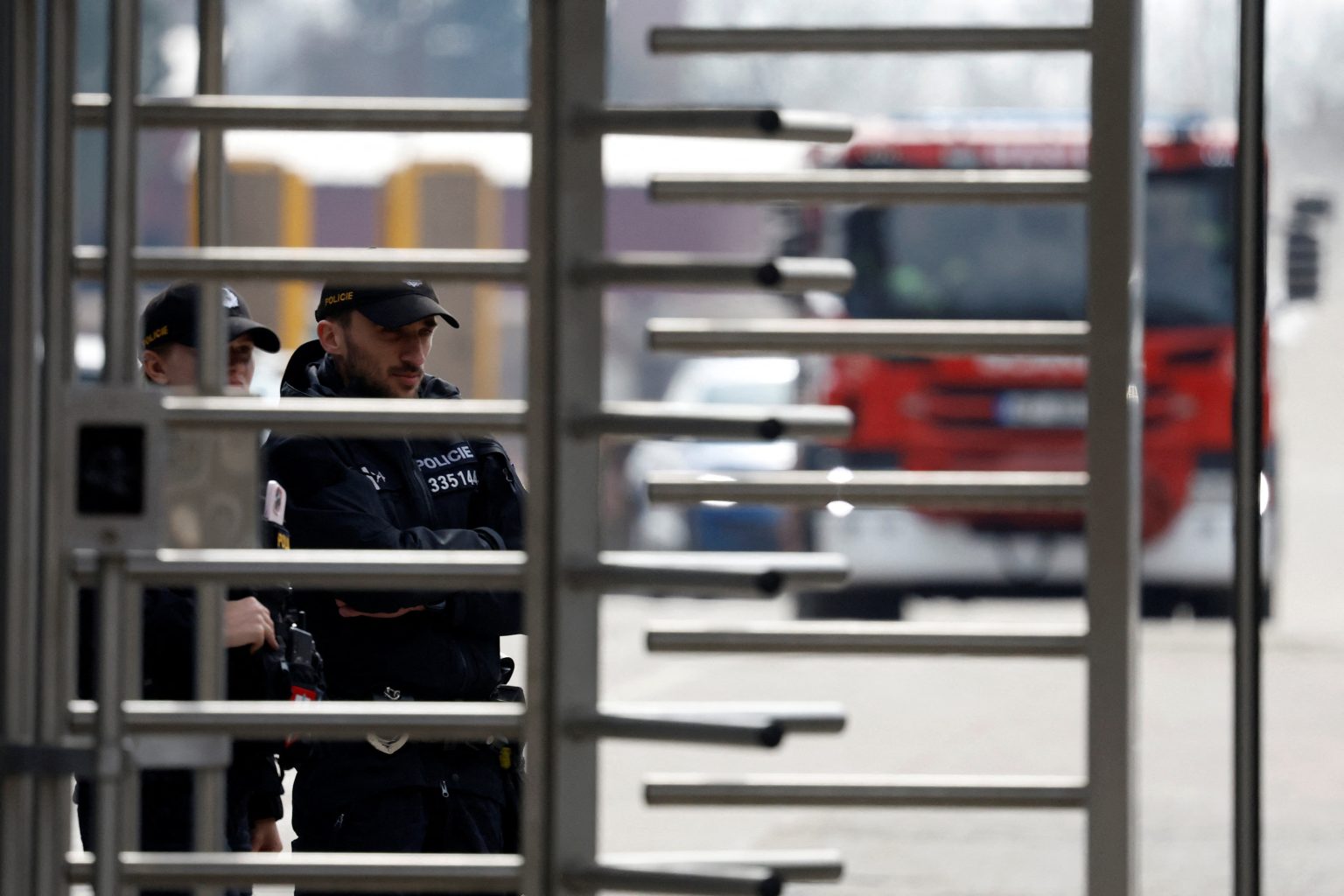
Entrance to the LPP Holding industrial site in Pardubice, where the arson attack took place. Photo: David W. Cerny/Reuters
|
Shortly before noon on 25 March, a young American woman involved in an arson attack on the premises of LPP Holding in the industrial zone of Pardubice, Czech Republic, was taken into custody in Bratislava. On the evening of 24 March, a Czech court remanded her alleged accomplices in custody, and the Czech authorities are now seeking her extradition from Slovakia.
In the Czech Republic, both detainees – Youssef M., an Egyptian with Czech citizenship, and Anežka B., a Czech national – have been charged with terrorism. According to social media accounts reviewed so far, M. is a student and a pro-Palestinian LGBT activist and feminist, as is B. Supporters carrying Palestinian flags gathered outside the court.
Youssef M. Photo: Second Shift/Instagram
Against Israel ...
The fire that broke out in LPP Holding’s buildings in the early hours of 20 March caused damage estimated at hundreds of millions of Czech crowns. According to the company’s managing director, Miroslav Žižka, the perpetrators entered the building with an axe and a large hammer.
LPP Holding had previously announced plans to develop and produce drones in cooperation with Elbit Systems, an Israeli defence firm that supplies drones to the Israeli armed forces, which have used them in operations including in Gaza. However, no such cooperation was ultimately established.
After the Russian invasion of Ukraine, the Ukrainian company Archer relocated to the Czech Republic, where it supplied the Ukrainian military in cooperation with LPP Holding. According to the Czech news outlet Seznam Zprávy, security authorities have therefore not ruled out the possibility that the incident could represent a false flag operation.
In such a scenario, the attack could have been carried out by organisations or intelligence services acting in the interests of Iran or Russia. It was claimed by an as yet unknown group calling itself the Earthquake Faction, which is not linked to the pro-Palestinian movement. In that case, the perpetrators would effectively be acting as ‘useful idiots’.
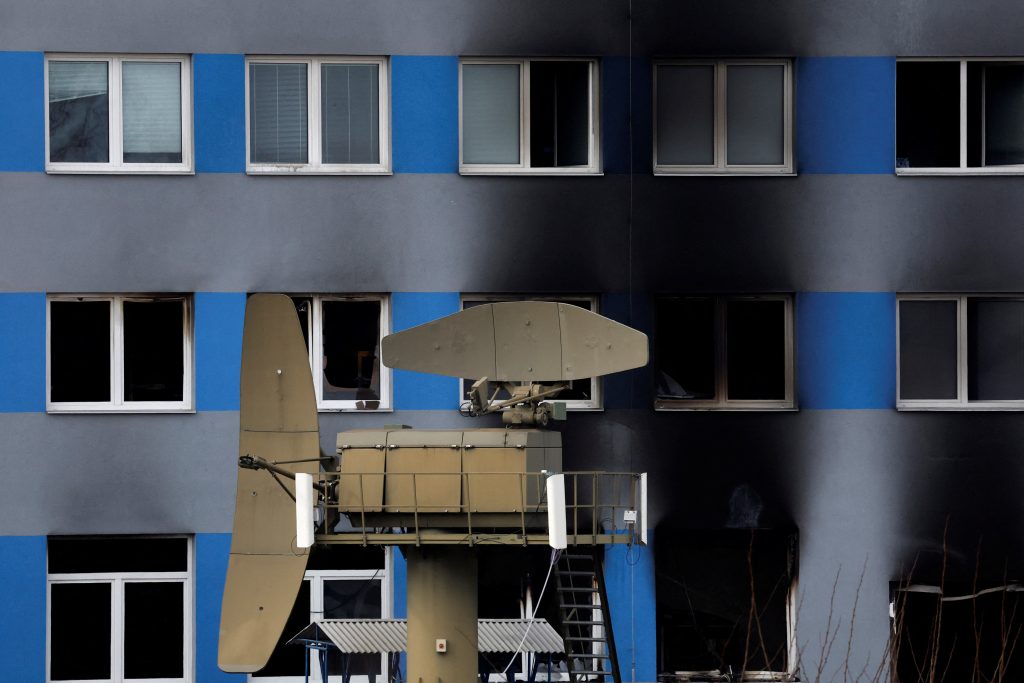
A building in the LPP Holding complex in Pardubice damaged by fire. Photo: David W Cerny/Reuters
... or Against Ukraine?
Statement reported shortly after the start of the US–Israeli attack on Iran that a large-scale war in the Middle East could have adverse effects on Kyiv’s defences. However, the 20 March attack on the company linked to the supply of MTS drones to the Ukrainian military is not expected to affect deliveries.
‘The facilities that were targeted did not house the production of our MTS drones,’ Martina Tauberová, director of external relations at LPP Holding, told Statement.
In an interview with Czech Television, Tauberová was responding to comments by Prime Minister Andrej Babiš, who had called on more than 100 companies producing military equipment to secure their facilities using the latest technology.
The company’s external relations director also addressed several questions to the prime minister via Czech Television. ‘Can we use camera systems with facial recognition? Can security guards pull a gun on the perpetrator? Can we use other means that the law does not allow us to use?’
Speaking to Statement a day after Babiš criticised the company’s security measures, Tauberová declined to specify the exact security arrangements at LPP Holding’s facilities. She cited the ongoing investigation and security considerations and did not comment on hypothetical attack scenarios.
‘LPP Holding ensures the protection of its facilities in accordance with applicable legislation and relevant security standards. We use a combination of physical protection, electronic security systems and continuous monitoring,’ she said.
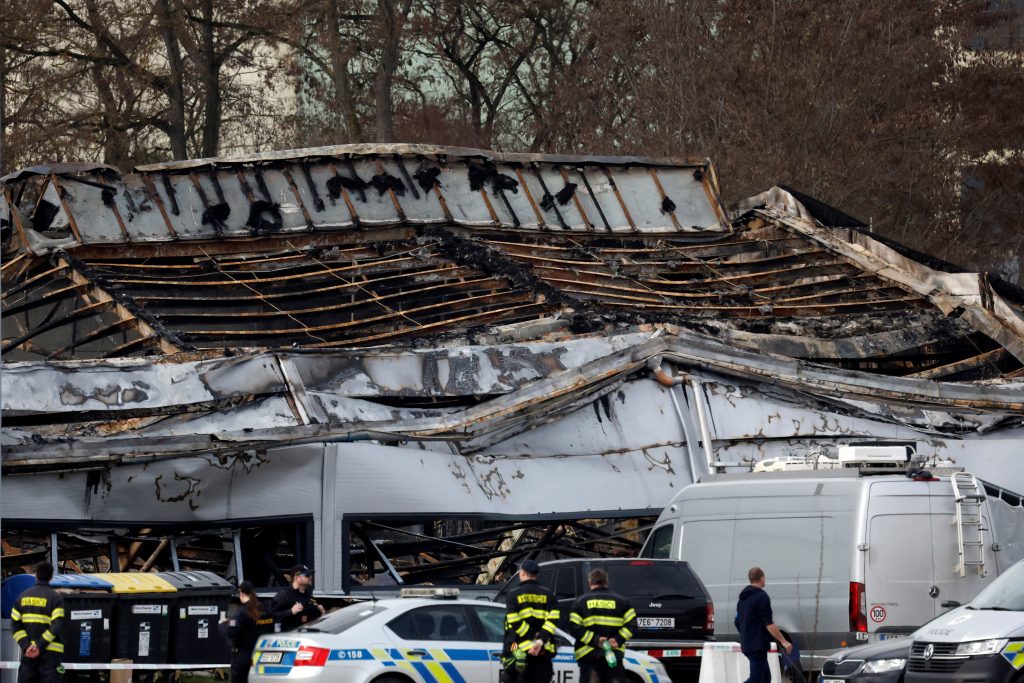
The destroyed production hall of LPP Holding in Pardubice. Photo: David W Cerny/Reuters
Security Gaps
According to Tauberová, the nature of threats facing the European defence industry is changing significantly and increasingly includes asymmetric and hybrid forms of attack.
‘These challenges cannot be addressed at the level of individual companies alone, but require close cooperation with state authorities and security forces,’ she said.
A day after the detention in Slovakia of the American woman involved in the Pardubice attack, the opposition Progressive Slovakia party called for the resignation of Defence Minister Robert Kaliňák (Smer) over what it described as inadequate protection of military and weapons facilities.
The party was reacting to reports that the state-owned arms manufacturer ZTS – ŠPECIÁL, a. s., in Dubnica nad Váhom, had been breached by young YouTubers. They reportedly remained on the premises for several hours.
While the filming of videos in hazardous locations is not new in Slovakia, breaches of strategically important sites had not previously been reported. The company also produces, in addition to cannons, howitzers and mortars, the domestically developed 30 mm automatic cannon 2A42, including the GTS-30 variant intended for Slovakia’s planned anti-drone systems.
‘Various images or video footage purportedly showing the premises of the complex may appear on the internet. It is not possible to comment responsibly on their origin, time of production, completeness or authenticity without proper verification,’ said Nino Rosenberg of ZTS – ŠPECIÁL, a. s.
He added that ‘the company records cases of unauthorized entry by individuals into the premises. In connection with these incidents, the security service has so far detained a total of 16 persons who have forcibly entered the site by repeatedly overcoming security barriers’.
ZTS – ŠPECIÁL, a. s., confirmed to Statement that it cooperates with the state in protecting its facilities, but declined to specify the nature of that cooperation or the authorities involved, as did LPP Holding and Czechoslovak Group, a. s., a multinational group based in Prague.
Colt CZ Group (formerly CZG – Česká zbrojovka Group SE), as well as its subsidiary Česká zbrojovka a.s., told Statement that they have robust security mechanisms in place to protect production sites from a wide range of threats, including potential sabotage.
‘We have been working closely with the Czech Police and other security forces in the Czech Republic for a long time to ensure security. At the same time, we continuously monitor and evaluate relevant incidents at home and abroad to strengthen our resilience and prevent potential threats,’ Eva Svobodová and Jakub Sondel of Colt CZ Group and its subsidiary Česká zbrojovka a.s. told Statement.
In the Czech Republic, intruders armed with a hammer and an axe were able to break into a guarded building. In Slovakia, weapons intended, among others, for the Slovak armed forces were filmed by YouTubers, while at least 16 individuals were detained by security staff. Had the intruders not been amateur content creators but malicious actors, the consequences could have been severe.
Welcome to the comments section of the Štandard daily. Please take note of our guidelines, comments are moderated by us. You can contact the moderators at support@statement.com.
Participate in the discussion
Comments are available to subscribers only. If you'd like to join the discussion, choose a subscription starting at €6.72 per month.
All comments 0
Register
Comments are available to registered users only. If you'd like to join the discussion, register here.