
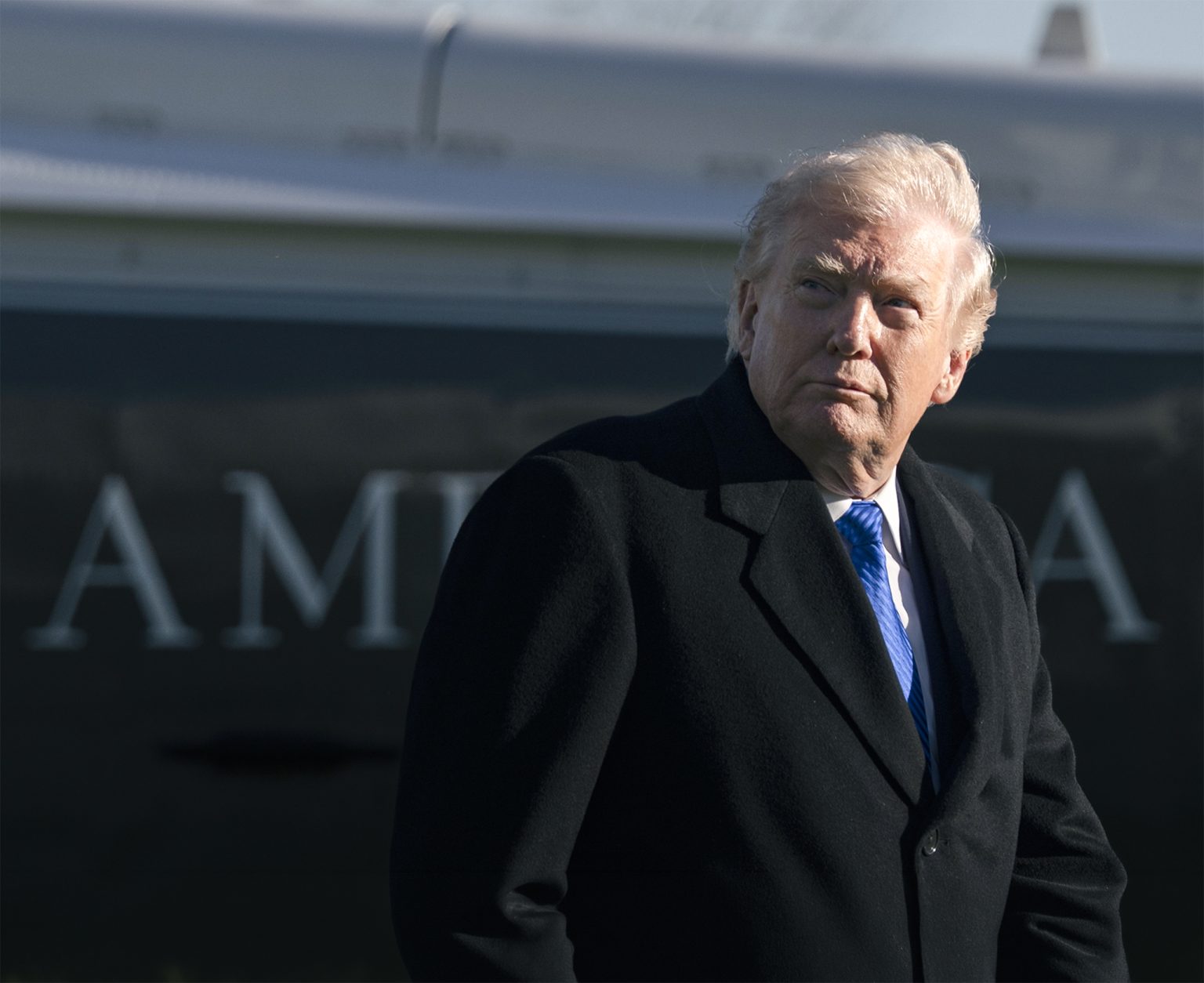
The administration of President Donald Trump is considering a military operation in which US forces would extract nearly 450 kilograms of highly enriched uranium from Iran. According to US officials, such a mission would be exceptionally complex and risky. The president has not yet taken a decision and is weighing in particular the potential danger to US troops, the Wall Street Journal reported.
He nevertheless remains open to the option, the sources said, as it could serve his central objective of preventing Iran from ever developing a nuclear weapon. At the same time, according to a person familiar with the discussions, he is pressing advisers to secure Iran’s agreement to surrender the material as a condition for ending the war. In talks with allies, he has reportedly made clear that Tehran cannot retain the uranium.
The White House insists that no decision has been made. ‘It’s the job of the Pentagon to make preparations in order to give the Commander in Chief maximum optionality. It does not mean the President has made a decision,’ spokeswoman Karoline Leavitt said. The Pentagon declined to comment, and US Central Command has also remained silent.
Iran’s uranium stockpiles
Even before the Israeli and US strikes on Iran earlier in June, experts estimated that the country possessed more than 400 kilograms of uranium enriched to 60 per cent and nearly 200 kilograms enriched to 20 per cent, material that can be further processed to weapons-grade levels with relative ease.
Rafael Grossi, head of the International Atomic Energy Agency, has said he believes most of the material is located at two of the three sites struck by the United States and Israel, notably an underground tunnel at the Isfahan nuclear complex and facilities at Natanz. At the same time, specialists note that Iran retains centrifuges capable of further enrichment and could construct new underground facilities.
People familiar with the discussions say Trump and some of his allies believe such an operation could be conducted in a targeted manner without significantly prolonging the conflict.
The president has repeatedly said he does not want a protracted war. His advisers are also urging him to focus on domestic priorities, including congressional elections, where polls suggest Republicans could face significant losses.
A challenging military operation
Former US officers and analysts warn that seizing uranium by force would rank among the most demanding operations the president could authorise. Iran would be likely to retaliate, potentially extending the conflict well beyond the four to six weeks members of the administration have publicly discussed.
US forces would have to reach their targets under the threat of Iranian air defence systems and drones, secure the area and enable technical teams to search for mines or booby traps.
The extraction itself would require a specialised unit trained to handle radioactive material in a combat environment. Experts say the uranium is likely stored in 40 to 50 specialised cylinders resembling scuba tanks.
The containers would then have to be placed in protective transport units, filling several trucks. If no suitable airfield were available, the military would need to establish a temporary one to move both equipment and material. Former CENTCOM commander Joseph Votel has warned that such an operation would be far from a quick or straightforward mission.
Deploying more troops
Such a hazardous mission could be avoided if Iran agreed to hand over the material as part of a settlement. The United States has previously removed sensitive nuclear material from other countries without combat operations.
In 1994, US forces removed uranium from Kazakhstan under Operation Project Sapphire. Four years later, the United States and Britain helped transfer highly enriched uranium from a reactor near Tbilisi in Georgia to a facility in Scotland.
Meanwhile, the Pentagon is preparing further options should the president opt for escalation, officials said. Rapid-reaction forces, including Marine units and paratroopers from the 82nd Airborne Division, are already being deployed in the region.
Sources also point to the possible deployment of an additional 10,000 troops, which would expand the president’s options. Defence Secretary Pete Hegseth indicated this month that Washington still hopes for a diplomatic solution but did not rule out further use of force. ‘And I will say we have a range of options, up to and including Iran deciding that they will give those up, which, of course, we would welcome,’ he said on March 13.
(lud)