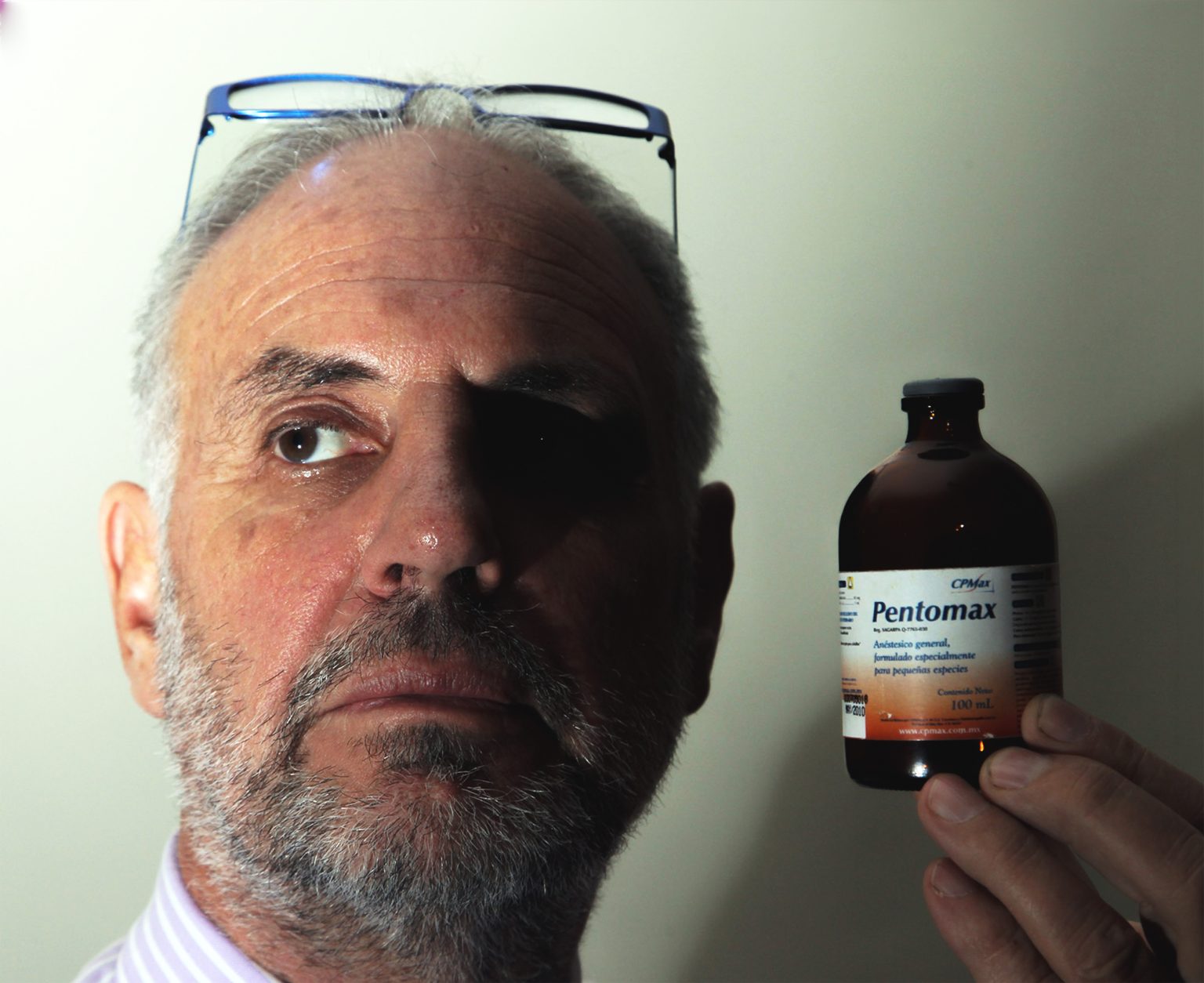
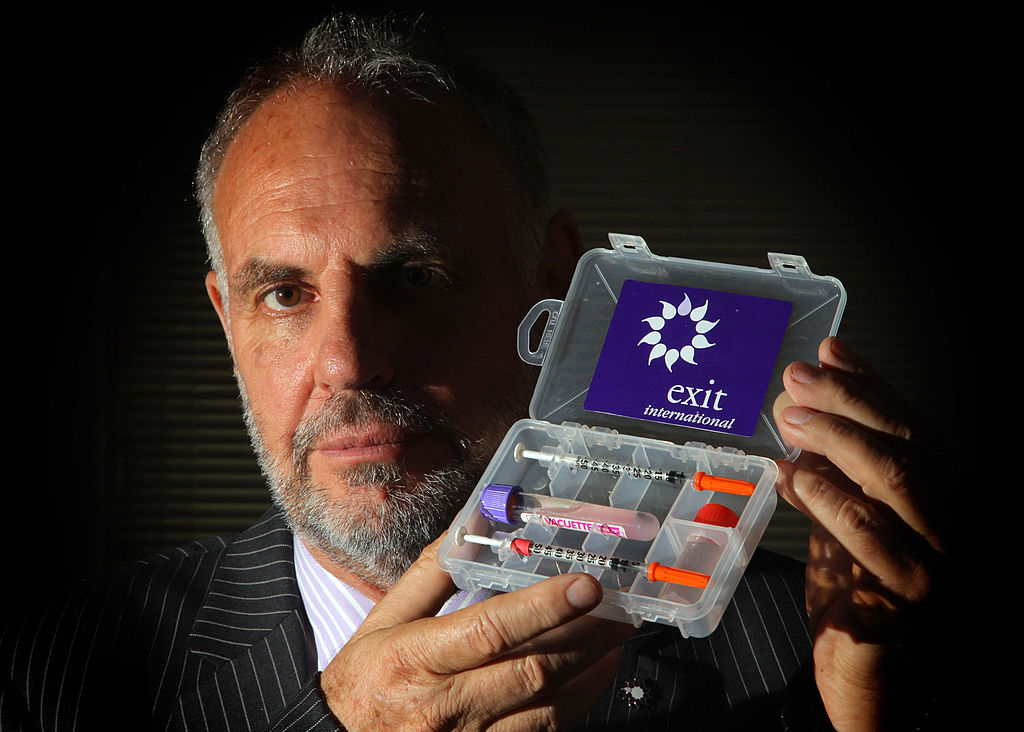
At the same time, similar structures and networks are increasingly visible beyond Switzerland. Reports suggest that organisational offshoots and information platforms are emerging in Germany, accompanied by events at which participants are informed about the possibility of assisted suicide in Switzerland. A consistent legal assessment of that development has yet to emerge.
In that respect, the comparison with figures such as Elon Musk is not entirely misplaced – less in scale than in logic. Nitschke, too, treats a deeply human and contradictory domain as a technical problem. Death is no longer something to be understood, but something to be organised. Where Musk restructures mobility or space travel, Nitschke restructures the end of life. The human being appears no longer as an embedded existence, but as the user of a system designed to function.
The designed death
That logic is most clearly expressed in the ‘Sarco’ capsule. The 3D-printed structure resembles an object from a design study: smooth, minimal, almost elegant. That is precisely the point. Death is no longer to appear chaotic or disturbing, but controlled, clean and technically manageable.
The process is correspondingly simple. Once activated, nitrogen is released into the capsule, oxygen levels fall, the user loses consciousness and dies. A clearly defined sequence, without medical supervision, without an intermediate space. Death is not accompanied here, but initiated.
That is where the real shift lies. An existential moment traditionally shaped by ambivalence, relationships and often doubt is reduced to a technical procedure. Death becomes an application. Everything that makes it human is stripped away in favour of a promise of efficiency and control.
The first reported use of the Sarco capsule in Switzerland in 2024 exposed that tension. The country’s liberal legal framework enabled the attempt while simultaneously setting limits. Investigations for assisting suicide, doubts about legal admissibility and political calls for a ban followed swiftly. The capsule thus became a symbol of a development that, even in a permissive environment, is perceived as a transgression.
Yet rather than pause, Nitschke continues to advance his ideas. With ‘Kairos’, he is developing a device that sharpens the approach further. A neck apparatus that uses inflatable elements to apply targeted pressure to the carotid arteries, interrupting blood flow to the brain and leading rapidly to unconsciousness. Nitschke compares the mechanism to an airbag: a button is pressed, the effect is immediate. Death is fully translated into the logic of a technical trigger.
A decision without counterpart
The core of that development, however, lies not in the devices themselves, but in the systematic relocation of responsibility. Traditional models of assisted dying, for all their controversies, are embedded within a framework: medical diagnosis, psychiatric evaluation, legal oversight. Nitschke’s approach seeks to dissolve that structure. The individual stands alone before the machine – and therefore alone before the decision.
It follows that his most recent proposal is to replace psychiatric assessments with artificial intelligence. A digital avatar would conduct conversations, evaluate responses and determine whether a person is capable of judgement. Once that threshold is crossed, a time window opens in which the user can initiate the process independently. The decision is thereby formalised, standardised and removed from any interpersonal setting.
The justification offered is efficiency and consistency. Human judgement, it is argued, is contradictory and therefore should be replaced by a technical system. Yet that is precisely the problem. Ambiguity is not a flaw of the process, but its core. To eliminate it is to remove not only uncertainty, but also the dimensions of doubt, relationship and responsibility that give such decisions their meaning.
Moreover, technology is not a neutral authority. Algorithms do not produce objective decisions, but reproduce assumptions, data and prior judgements. If the final threshold before death is transferred into such a system, responsibility becomes diffuse. No one decides any longer, which is precisely where the deeper risk lies.
Switzerland thus once again becomes a testing ground. Its legal openness allows developments that would be scarcely conceivable elsewhere. Yet the further this practice moves away from traditional notions of assisted dying, the more pressing a fundamental question becomes: is this still assistance or the construction of a system that strips death of everything that once gave it structure?
For Nitschke, there is no contradiction. Death, in his view, is a matter of individual disposal. Yet what presents itself as radical self-determination ultimately amounts to the severing of the individual from any counterpart – from medicine, from society, from any form of shared responsibility. Death becomes a function. And that, in the end, is the true provocation of his model.