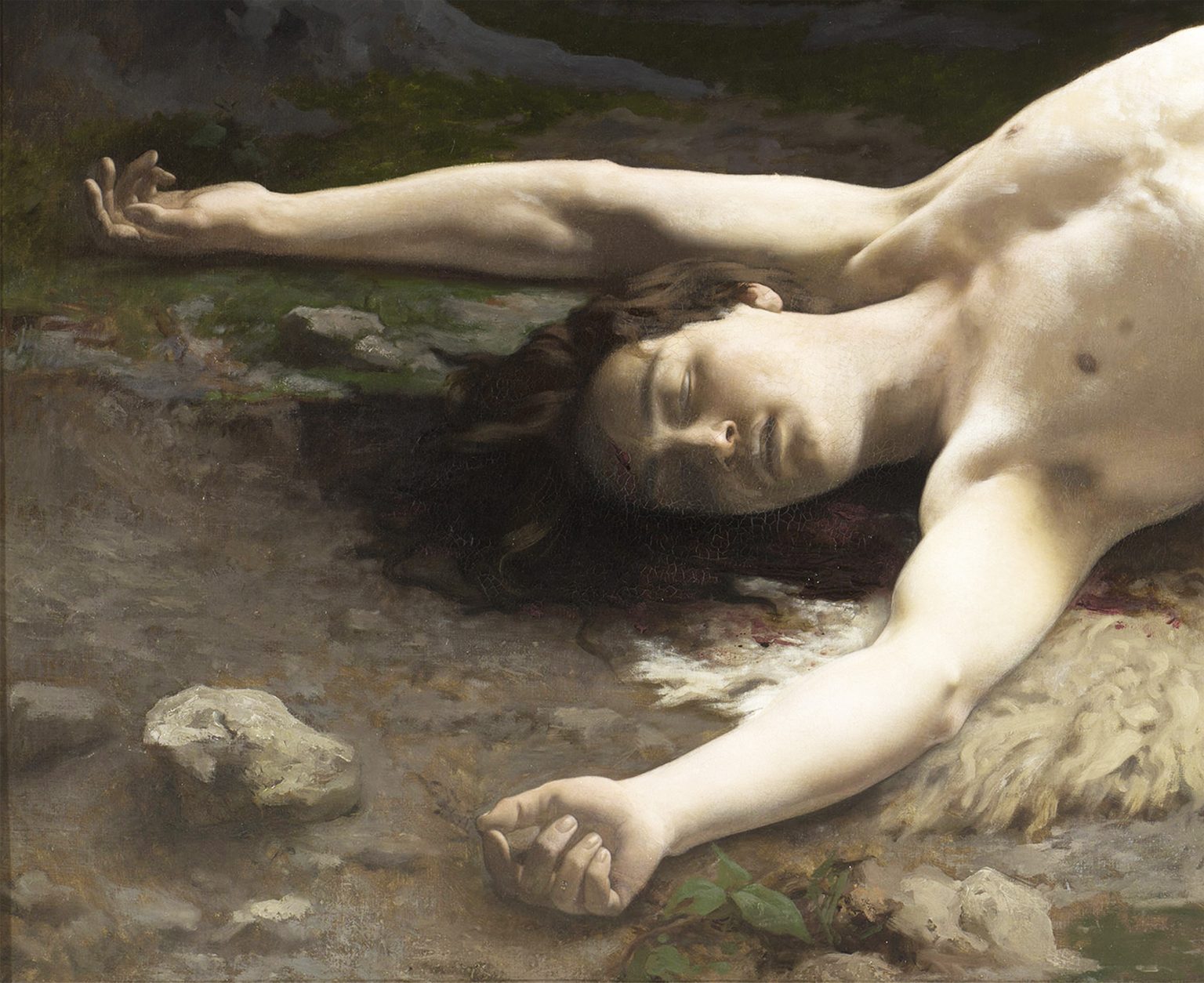
Abel. Photo: Fine Art Images/Heritage Images/Getty Images
Thou shalt not kill
The Church’s witness to life is unequivocal and clear. It can never be permissible to comply with a person’s wish to be killed. Assisted suicide, too, must never be allowed. The Church stands, without exception, for a culture of life.
The foundation of all Jewish and Christian life is the Ten Commandments. Scholars date the text to around 3,000 years ago, with elements of even older origin. That foundation is known as the Decalogue, the ‘Ten Words’. It safeguards life itself, as the fifth commandment reads: ‘Thou shalt not kill’. The principle is disarmingly simple, yet it prohibits the deliberate, intentional and conscious killing of a human being without ambiguity.
Entire libraries of moral theology have grown out of that single, simple sentence. Since Cain slew his brother Abel, man has killed man and sought to justify the act. The doctrine of the just war alone is so complex that it defies brief summary. Only an unjust attack can justify proportionate defence aimed at restoring peace.
In cases of self-defence or defence of others, the decisive question is whether the response remains proportionate. If a threat to life can be averted only by killing an attacker, then killing may be permitted – in most cases, at least. Even the use of lethal force to free a hostage presents a moral dilemma that can be resolved only case by case, in the conscience of the person responsible. The burden of that decision endures. The dilemma becomes still more acute when a gravely wounded comrade on the battlefield faces certain death. May one kill to end unbearable suffering? The Church’s answer is a clear ‘No’ – it is not permitted.
God is a friend of life
Only God can give life, and only God may take it. God wills life, for he created it out of love. And yet many a soldier on the battlefield will have given a mortally wounded comrade a final shot, faced with overwhelming hopelessness, and carried that act on his conscience for the rest of his life, without ever attaining moral certainty. Such certainty cannot be attained.
To describe the question of killing in a hopeless situation so starkly serves a single purpose. It is to make clear that the dilemma between unbearable suffering without hope and death as release can never be resolved by a simple moral judgement. The dilemma remains a dilemma. Nothing, not even the best of intentions, can render the commandment ‘Thou shalt not kill’ inapplicable. It applies always, absolutely and universally. Even in suffering, a human being does not lose dignity, and that dignity forbids killing.
Euthanasia is never permissible
Euthanasia and assisted suicide are both forms of killing and, for a Christian, can never be permitted. The Second Vatican Council set this out in the Pastoral Constitution Gaudium et Spes: ‘Whatever is opposed to life itself, such as any type of murder, genocide, abortion, euthanasia and also wilful self-destruction; whatever violates the integrity of the human person […] all these and the like are infamies; they corrupt human society and debase those who commit them far more than those who suffer them. At the same time, they are a supreme dishonour to the Creator’ (GS 27).
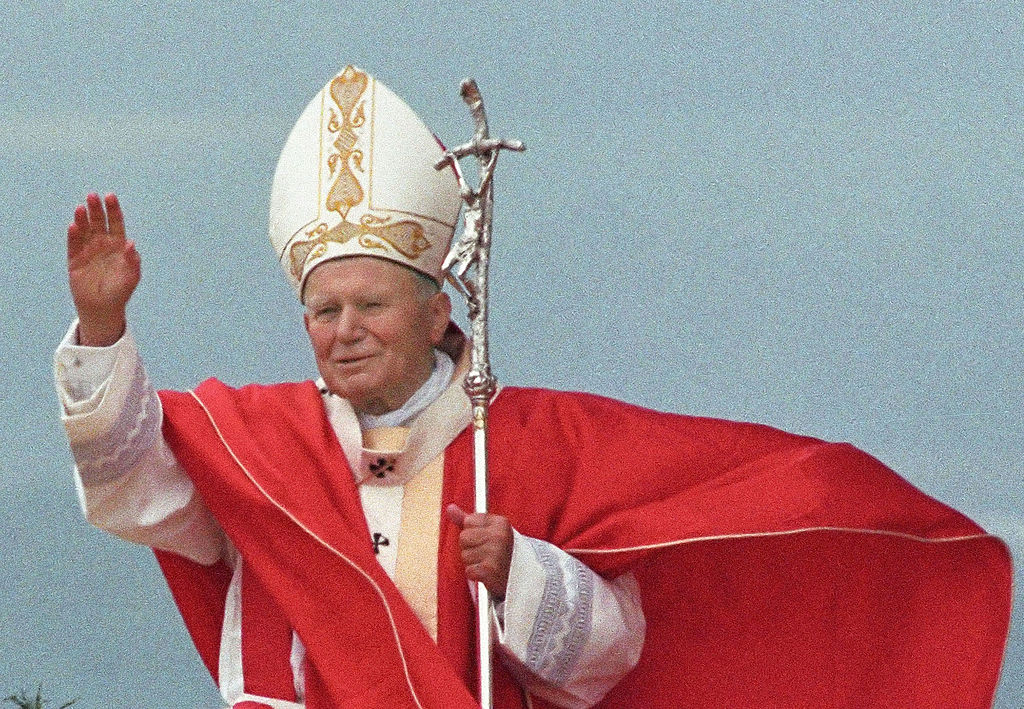
Pope John Paul II coined the term ‘culture of life’ and warned against a ‘culture of death’. Photo: Wojtek Laski/Getty Images
In the encyclical Evangelium Vitae, Saint John Paul II set out the Church’s teaching on life and its protection in comprehensive terms, explicitly drawing on Gaudium et Spes in doing so. ‘Whatever is opposed to life itself, such as any type of murder, genocide, abortion, euthanasia and also wilful self-destruction […] all these and the like are infamies; they corrupt human society […]’. The Pope described such acts as ‘a supreme dishonour to the Creator’. In this respect, John Paul II may fairly be regarded as prophetic.
An absurd idolisation of life leads to death
In an increasingly secular, post-Christian Europe, the understandable desire to end unbearable suffering is growing. Health and life are increasingly treated as matters of technical feasibility. The wish for a long life, as healthy as possible until the end, finds expression in longevity research and in transhumanism. Yet it remains an illusion. Illness and decline are part of human existence, and death ultimately comes to every person. It is precisely the intolerability of suffering that often drives the shift from the desire for long life to the pursuit of self-inflicted death.
What appears a contradiction from the outside is, in fact, a logical consequence. In debates about euthanasia, one need not even invoke notions of lives deemed unworthy of living. The perceived intolerability of suffering, often felt more keenly by others than by those affected, is enough to give rise to the desire to end suffering through what is seen as self-determined death.
The Catholic Church addressed this as early as 1980 in its Declaration on Euthanasia by the Sacred Congregation for the Doctrine of the Faith: ‘Human life is the basis of all goods and the necessary source and condition for every human activity and for all society.’ Life, the declaration continues, is entrusted to man as a good that must bear fruit on earth, while its full and final fulfilment is to be expected only in eternal life.
The false desire to die
From that foundation, the Vatican shows a measure of understanding. It may occur that, because of prolonged and almost unbearable suffering, whether physical, psychological or otherwise, a person believes he may justifiably ask for death. In such cases, the Holy See states, personal culpability may be diminished or even absent. That does not, however, alter the error of judgement to which the conscience may succumb in good faith. The nature of the act remains in itself unacceptable.
The death penalty is not the answer. Photo: stock image via Getty Images
Nor should the ‘pleas of the seriously ill, who sometimes ask for death’, be understood as a genuine wish for euthanasia. Almost always, they are an anguished cry for help and for love. In this respect, the Congregation anticipated what research, particularly into suicide, has since consistently confirmed. The desire for suicide or euthanasia is, as a rule, a call for help. Palliative care physicians consistently observe that when pain is effectively managed and suffering reduced to a bearable level, the wish for suicide or euthanasia often recedes.
Preserving dignity at all times
For that reason, the Church’s primary demand is to ensure that the sick or dying person receives the best possible care. All available and approved means are permissible if they offer a reasonable hope of cure or relief and are aimed at improving the patient’s quality of life. The dignity of the sick and of the dying remains paramount. At the same time, therapeutic excess that merely prolongs suffering through ever more interventions is to be avoided.
‘When death is imminent and cannot be prevented by any treatment’, the declaration of the Dicastery for the Doctrine of the Faith states, ‘it is permitted in conscience to refuse forms of treatment that would only secure a precarious and burdensome prolongation of life.’ At that point, the Church recognises the transition from curative to palliative care. All measures that alleviate suffering are permitted. Even palliative sedation, which places the patient in a temporary or lasting state of sleep or reduced consciousness, is endorsed as an ultimate means of relieving unbearable pain and symptoms at the end of life, provided that the primary intention is not to hasten death.
Assisted suicide is euthanasia by another name
Alongside euthanasia – the active ending of a person’s life – assisted suicide is also under debate as a form of killing. The case of Noelia Castillo Ramos has attracted considerable attention. The young woman secured the right to assisted suicide in court despite the objections of her parents. Spanish law permits assisted suicide even in cases involving depression. In its 2020 document Samaritanus Bonus, the Church states that laws which legalise euthanasia or justify suicide and assisted suicide are gravely unjust, ‘because they claim to legitimise a false right to choose a death defined as dignified solely because it is chosen’.
Here, too, the Church draws heavily on the findings of suicide research, which show clearly that a person is often willing to abandon the wish to die if a viable perspective for living can be developed. That becomes possible when a person feels accepted and loved in suffering and is helped to lead a largely self-determined life despite illness. A patient such as Noelia Castillo Ramos might have been offered new prospects through psychotherapy combined with other forms of treatment, such as occupational therapy and improved medication.
Pope Francis has described this as a ‘throwaway culture’. ‘The victims of this culture are precisely the most vulnerable, who risk being discarded by a system that seeks efficiency at any cost,’ the document Samaritanus Bonus states. Pope John Paul II described the same phenomenon as a ‘culture of death’. According to the Dicastery for the Doctrine of the Faith, such a culture gives rise to genuine ‘structures of sin’. In contrast to many states in the Western world, the Church remains committed to its witness to life and cannot accept either euthanasia or assisted suicide.