
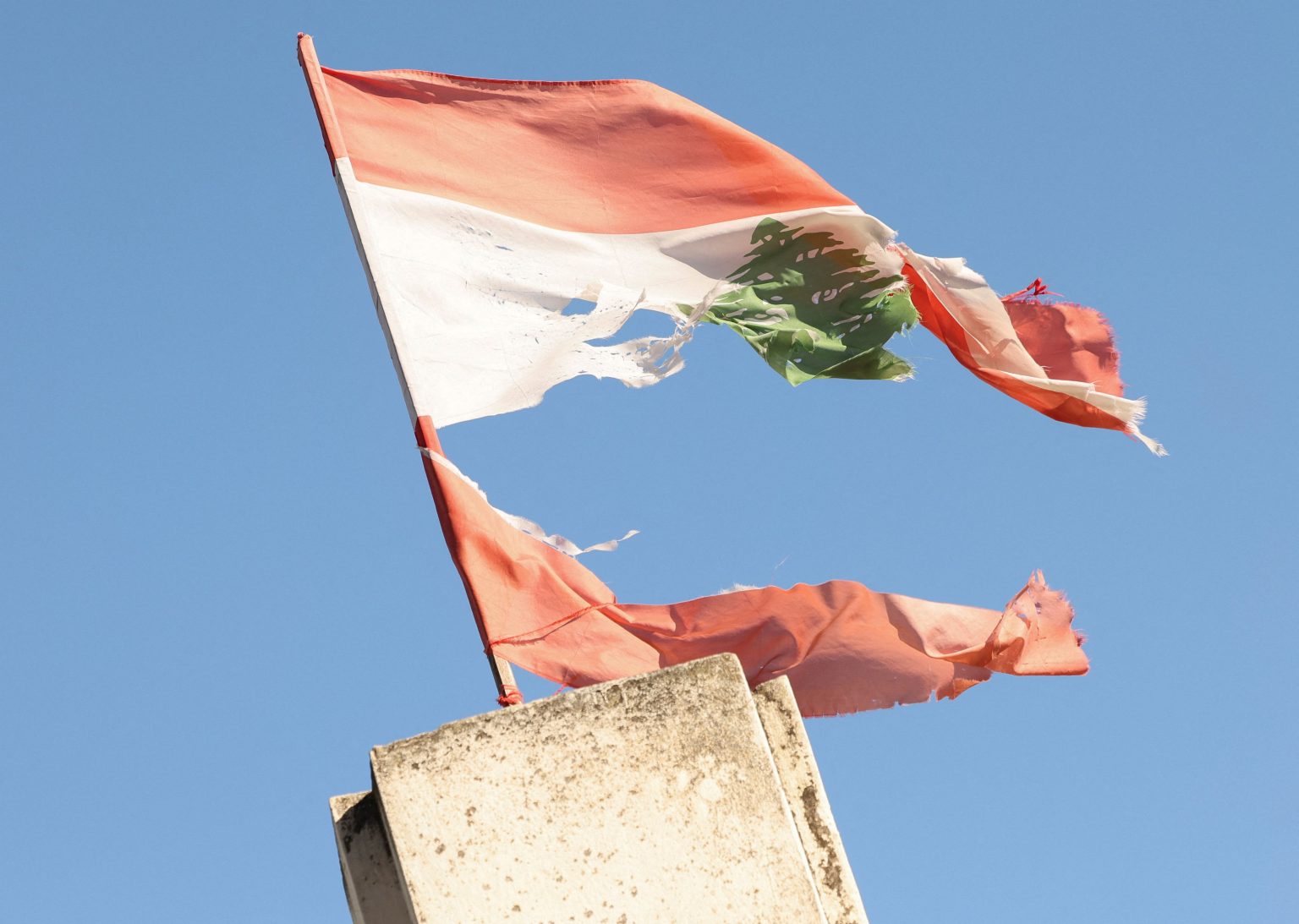
Against the backdrop of the war in Iran, Israel has launched further military operations in neighbouring Lebanon. Since 2 March, the army has targeted Hezbollah positions, while the group has shelled Israel almost continuously since the start of the war in the Gaza Strip.
Unlike the previous wars in Lebanon in 1982 and 2006, this war has seen the emergence of voices calling for radical action with limited international support.
Security in the north
In the very first weeks, the Israel Defense Forces (IDF) destroyed several bridges over the strategic Litani River. Defence Minister Israel Katz argued that Hezbollah was smuggling weapons into the south over these bridges, which the militants are prohibited from doing by UN Security Council Resolution 1701, adopted after the Second Lebanon War.
The warring parties agreed that the area between the river and the 2000 ceasefire line (the Blue Line) would be completely demilitarised and that Hezbollah would not have any military equipment in the area. This provision has not been respected, which served as a pretext for the first ground operations in 2024.
Hezbollah and Israel concluded a ceasefire on 26 November 2024, but both sides violated it. Reports speak of some 500 people killed in sporadic firefights, while Amnesty International has pointed out that evacuation orders and IDF warnings of planned attacks in built-up areas have driven hundreds of thousands of civilians from their homes.
According to Tel Aviv, the current operations are part of the war against Iran, as Hezbollah is the main component of the self-proclaimed axis of resistance, which Tehran has funded virtually since the first Lebanon war (1982). However, the latest escalation has displaced close to a million people, rapidly overwhelming humanitarian capacity in the north of the country.
The area between the Litani River and the de facto Israeli–Lebanese border accounts for roughly a tenth of Lebanon’s territory. Although the government in Beirut has repeatedly declared its intention to disarm Hezbollah in this area, this has not yet happened.
Katz’s statement that the IDF had been ordered to control the entire zone was particularly striking. This would amount to a further occupation of a neighbouring state. In some respects, it would resemble the situation in the Golan Heights, which under international law belong to Syria but were unilaterally annexed by Israel in 1981. That annexation was recognised by US President Donald Trump in 2019.
Support from the nationalist right
The statement by the defence minister was supported by his immediate superior, Prime Minister Benjamin Netanyahu. On 29 March, he ordered the expansion of the buffer zone against Hezbollah, a move that has also raised concerns in Israel.
Hagai Ben Artzi, the brother of Netanyahu’s wife Sara, has been a vocal critic of the prime minister since the last government, widely seen as the most right-wing in the state’s history. He nevertheless considers him too moderate.
Ben Artzi is a regular on Arutz Sheva television, which presents itself as a central medium of religious Zionism. Many of the prime minister’s coalition partners are associated with that ideological current, most prominently National Security Minister Itamar Ben-Gvir and Finance Minister Bezalel Smotrich.
However, Ben Artzi took part in a video conference with representatives of the settler movement in June 2024, where he said that the border between Israel and Lebanon is ‘completely artificial’ and that the historic Galilee region ‘stretches all the way to the Litani River’.
Just two months before this conference, an umbrella organisation was formed. It is called Uri Tsafon (Hebrew for ‘Awake, North’) and presents itself as ‘the movement for the settlement of southern Lebanon’. The settler movement is one of the strongest supporters of the Netanyahu government and is also regularly targeted by EU sanctions for violence in the West Bank.
The radical politician Daniella Weiss, founder of Nachala, who organised a cruise to the shores of the Gaza Strip in 2022 to observe the bombardment, is widely regarded as a leading figure of the movement.
Haaretz pointed out the logo of the newly founded organisation – a cedar (the symbol of Lebanon) framed by a six-pointed star. ‘In order to defeat Iran’s evil and stabilise the State of Israel for generations, we must reach Lebanon. South Lebanon must be under Israeli control,’ the newspaper quoted from the movement’s Hebrew website.
Haaretz further noted that ‘hundreds’ of prominent right-wing activists attended the conference. A similar group was founded last year. The self-proclaimed Pioneers of Bashan aim to settle the aforementioned Golan Heights and possibly other parts of Syria.
The plan is taking shape
The newspaper also reported that current and former Knesset members are openly discussing a ‘security’ occupation of southern Lebanon. ‘If Lebanon provides its territory for the needs of Hezbollah, armed militias or even Hamas, it is our duty to defend our citizens,’ former MK Ruth Wasserman Linde said on i24 television.
During the first week of the war in Iran, the same view was expressed by current MK Amit Halevi (Likud), who suggested that the occupation of southern Lebanon should be included among the objectives of the war. ‘Only full control of this area will bring about the desired change,’ he argued.
Haaretz also drew attention to an opinion piece in The Jerusalem Post headlined, ‘The Litani River is Israel’s natural northern border.’ As of 2024, such arguments have moved closer to the mainstream of public debate.
Recent reporting in Haaretz suggests that the IDF plans to destroy houses in frontline villages near the border, prevent residents from returning and establish a series of ‘permanent’ military outposts extending as far as the Litani.
These reports were later echoed by Defence Minister Katz.