Britain Plans Digital Mass Surveillance for the Next Pandemic
The next pandemic is considered inevitable. In the UK, plans include harvesting real-time location data. To believe such systems would not also be used for other purposes is naive.
Under the proposed plans, a smartphone would transmit the user's location data to government systems. Photo: Statement/Midjourney
|
The British government is working on a new strategy to prepare for future pandemics. The plans read like something from the darker reaches of state surveillance. At the centre is the creation of a system using location data harvested from mobile devices. Critics warn this could mark a transition towards a permanent surveillance infrastructure.
The starting point is the recently published pandemic preparedness strategy by the Department of Health and Social Care. It assumes that future pandemics are ‘inevitable’. The view is also shared by the World Health Organization. The government therefore calls for comprehensive early warning and response systems. The underlying assumption mirrors that of the Covid response, which failed. It reflects the belief that infection rates can be managed through political and technical intervention. The result was not effective containment, but significant restrictions on personal freedom. Alongside traditional measures such as stockpiling protective equipment, new emergency legislation and a biosecurity research centre, digitally supported contact tracing plays a central role in the government’s plans.
Real-Time Location Data
According to the strategy, the proposed system would rely on live location data and artificial intelligence to detect chains of infection more quickly and warn the public efficiently. Responsibility would lie with the UK Health Security Agency (UKHSA), which is also considering cooperation with major technology companies.
The government has not yet named specific partners or provided details about data flows. Contact tracing was already used in limited form during the Covid response. The infrastructure now envisaged would remain in place permanently and could be activated when needed. That would create a system capable of capturing the movements of large parts of the population. It is not particularly plausible that it would remain limited to that purpose.
Scepticism is also fuelled by past experience. In 2021, mobility data from millions of people in Britain were analysed without their knowledge. Three years later, a similar exercise was carried out to identify electric car drivers. Researchers used anonymised mobile phone data in both cases to analyse movement patterns – once for vaccinated individuals and later for motorists. In the vaccination case, the analysis examined whether people went straight home after receiving a jab or visited shops.
Data Protection Assurances
Officially, the government emphasises that the data were anonymised and processed in line with the General Data Protection Regulation (GDPR). That may be correct. However, privacy advocates repeatedly warn that aggregated location data, when available in sufficiently large volumes, can still allow conclusions about individual behaviour. Place of residence, workplace and social contacts can be inferred using standard algorithms. AI systems could extract far more information from raw data, meaning even anonymised datasets might, in some cases, be reidentified.
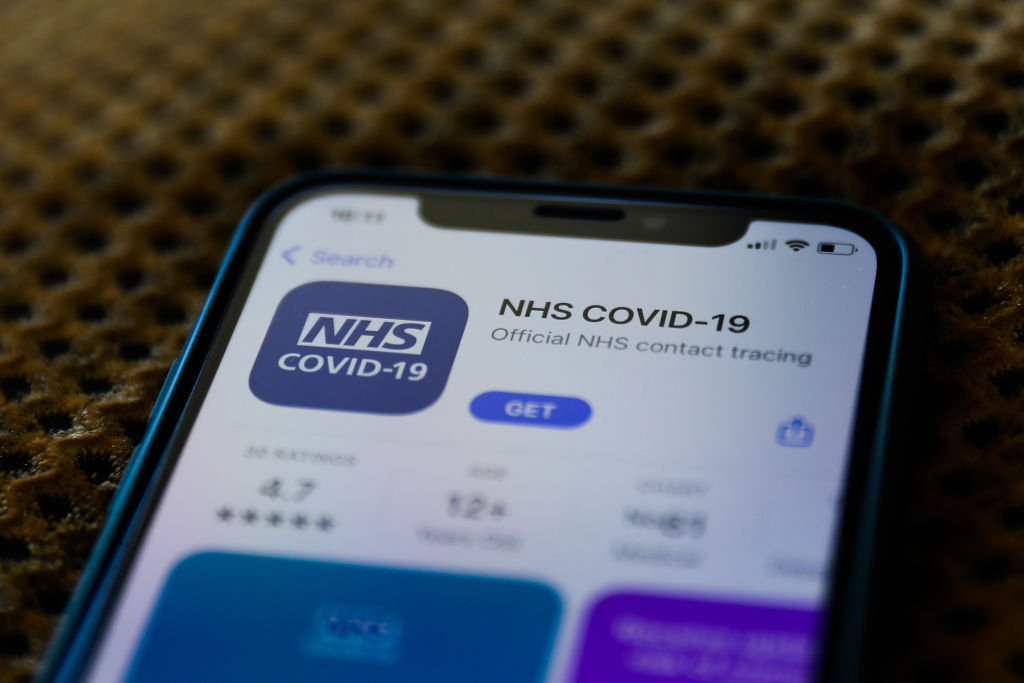
Monitoring measures introduced on a temporary basis during the coronavirus pandemic are now set to become permanent. Photo illustration: Jakub Porzycki/NurPhoto via Getty Images
The new strategy systematically builds on approaches tested during Covid. They are to be further developed and integrated into a permanent state infrastructure. That step is drawing criticism. What was previously justified as a temporary crisis solution could become a lasting feature of government data use.
At the same time, the government argues that better data are essential for responding more quickly to future crises. It insists that the Covid-19 pandemic demonstrated the importance of early detection and targeted action. However, evaluations of containment measures, which are only beginning in some countries, suggest the interventions had little impact on infection trends. Rather than careful evaluation, critics say the response continues to rely on surveillance and restrictions on freedom.
Tech Companies Involved
Another point of criticism concerns the role of large technology companies. As much location data originate from private platforms and telecom providers, the state would depend on their cooperation. Critics fear this could further blur the boundary between public health policy and commercial data use.
The absence of clear time limits also raises questions about what happens to the collected data after the end of a real or alleged pandemic. Without clear deletion deadlines and parliamentary oversight, a system once created could remain in operation for the long term.
Once again, the debate centres on the conflict between security and freedom, to the detriment of civil liberties. In the case of an epidemic, policymakers could rely on citizens’ own interest in avoiding infection. Instead, the government places its faith in technological solutions whose effectiveness in shaping infection trends remains contested. Critics warn this could mark another step in the expansion of state surveillance.
It remains unclear whether the government will implement the plans. A broad public debate on the use of health data and privacy remains essential. Once mass surveillance is established, it may prove difficult to reverse.
Placeholder For Topreaded Placeholder For Topreaded
Placeholder
Placeholder
Placeholder For Topreaded Placeholder For Topreaded
Placeholder
Placeholder
Placeholder For Topreaded Placeholder For Topreaded
Placeholder
Placeholder
Placeholder For Topreaded Placeholder For Topreaded
Placeholder
Placeholder
Placeholder For Topreaded Placeholder For Topreaded
Here is placeholder for Article excerpt Here is placeholder for Article excerpt Here is placeholder for Article excerpt Here is placeholder for Article excerpt
Here is placeholder for Article excerpt Here is placeholder for Article excerpt Here is placeholder for Article excerpt Here is placeholder for Article excerpt
Here is placeholder for Article excerpt Here is placeholder for Article excerpt Here is placeholder for Article excerpt Here is placeholder for Article excerpt
Welcome to the comments section of the Štandard daily. Please take note of our guidelines, comments are moderated by us. You can contact the moderators at [email protected].
Participate in the discussion
Comments are available to subscribers only. If you'd like to join the discussion, choose a subscription starting at €6.72 per month.
All comments 0
Register
Comments are available to registered users only. If you'd like to join the discussion, register here.