
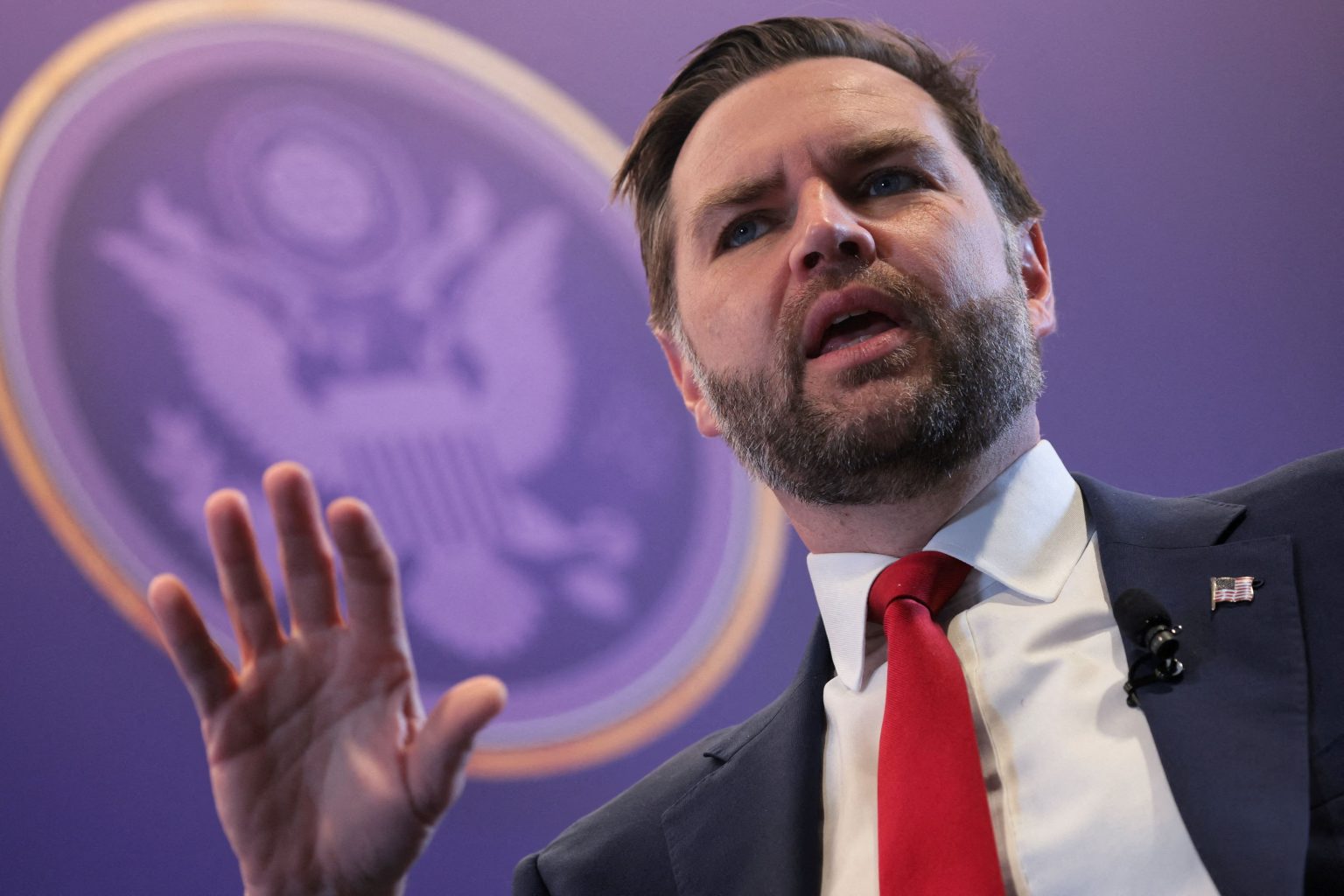
US Vice President JD Vance said in Islamabad on Sunday that negotiations with Iran ended after 21 hours without an agreement. The US delegation is returning to the United States. Pakistan has called on both sides to respect the ceasefire.
“The bad news is that we did not reach an agreement, and I think that is much worse news for Iran than it is for the United States,” Vance told reporters after the talks, adding that there had been several substantive discussions with Iranian counterparts. He described the talks themselves as a positive development.
He added that the delegation was returning “to the United States without reaching an agreement”, without providing further details.
Vance said Iran had declined to accept US conditions, including a commitment not to develop nuclear weapons. It remains unclear whether Washington was seeking a full renunciation of nuclear weapons, a complete dismantling of Iran’s nuclear program or limits on uranium enrichment.
“We need to see a clear commitment that they will not seek a nuclear weapon and will not seek means that would allow them to achieve a nuclear weapon quickly. That is a major goal of the President of the United States, and that is what we have tried to achieve through these negotiations,” he said.
The United States, he added, had made clear what it was prepared to offer and what it insisted on, but Iran chose not to accept the terms.
Iran’s semi-official Tasnim news agency reported that the talks were hindered by “excessive” US demands. Tehran has long maintained that it is not seeking to build an atomic bomb. More than two decades ago, Ayatollah Ali Khamenei issued a religious decree (fatwa) banning weapons of mass destruction.
A spokesperson for Iran’s foreign ministry said the negotiations took place in an atmosphere of mistrust. “It is natural that we could not expect to reach an agreement after just one meeting,” Iranian media quoted the spokesperson as saying.
There Is Still Room for an Agreement
As he left Pakistan, Vance suggested that Iran still had time to consider the US offer: “We are leaving here with a very simple proposition: this is an approach that represents our last offer and the best we can make. We will see if the Iranians accept it.”
He added that he had been in regular contact with US President Donald Trump during the negotiations and had exchanged messages with Admiral Bradley Cooper, head of the regional headquarters of the US armed forces, Defense Secretary Pete Hegseth and Secretary of State Marco Rubio.
According to Vance, the United States “demonstrated a great deal of flexibility” during the talks. He noted that even Trump, who said on Saturday that he did not care whether a deal was reached, adopted a conciliatory stance in the negotiations.
“The president told us, ‘You have to come in good faith and do your best to get a deal done.’ That is exactly what we did, and unfortunately, we failed to move things forward,” Vance said.
After the talks, Pakistan urged both sides to continue observing the ceasefire despite the setback. “It is imperative that the parties continue to honour their commitment to the ceasefire,” said Pakistan’s Foreign Minister Ishaq Dar.
Ships Resume Transit Through the Strait of Hormuz
As negotiations began, the US military said it was “creating the conditions” to start clearing the Strait of Hormuz, through which roughly one-fifth of global oil and liquefied natural gas supplies, as well as large quantities of fertilizer, had been exported before the conflict.
The strait remains a key factor in ceasefire discussions. The US military said two of its warships had passed through the strait and that preparations were under way to remove mines. Iranian state media denied that any US vessels had transited the waterway.
Reuters reported that three fully loaded supertankers passed through the Strait of Hormuz on Saturday, citing shipping data. They appeared to be the first vessels to leave the Persian Gulf since the US-Iran ceasefire agreement was reached on Tuesday.
The Liberian-flagged Very Large Crude Carrier (VLCC) Serifos, along with the Chinese-flagged VLCC Cospearl Lake and He Rong Hai, each have a capacity of up to two million barrels, equivalent to about 2% of global daily oil supply.
Demands and Sticking Points
A senior Iranian source told Reuters ahead of the talks that the United States had agreed to release frozen Iranian assets held in Qatar and other foreign banks. A US official denied this.
In addition to the unfreezing of assets, Tehran is demanding control over the Strait of Hormuz, war reparations and a broader regional ceasefire, including in Lebanon. It also wants to introduce transit fees in the strait.
President Trump’s stated objectives have shifted, but at a minimum he is seeking to guarantee free passage for global shipping through the strait and to significantly curtail Iran’s uranium enrichment program to prevent it from developing an atomic bomb.
The Pakistan-brokered talks took place from Saturday to Sunday and aimed to secure a lasting settlement to the six-week conflict, which began on 28 February with a US-Israeli strike on Iran.
(reuters, nyt, sak)