
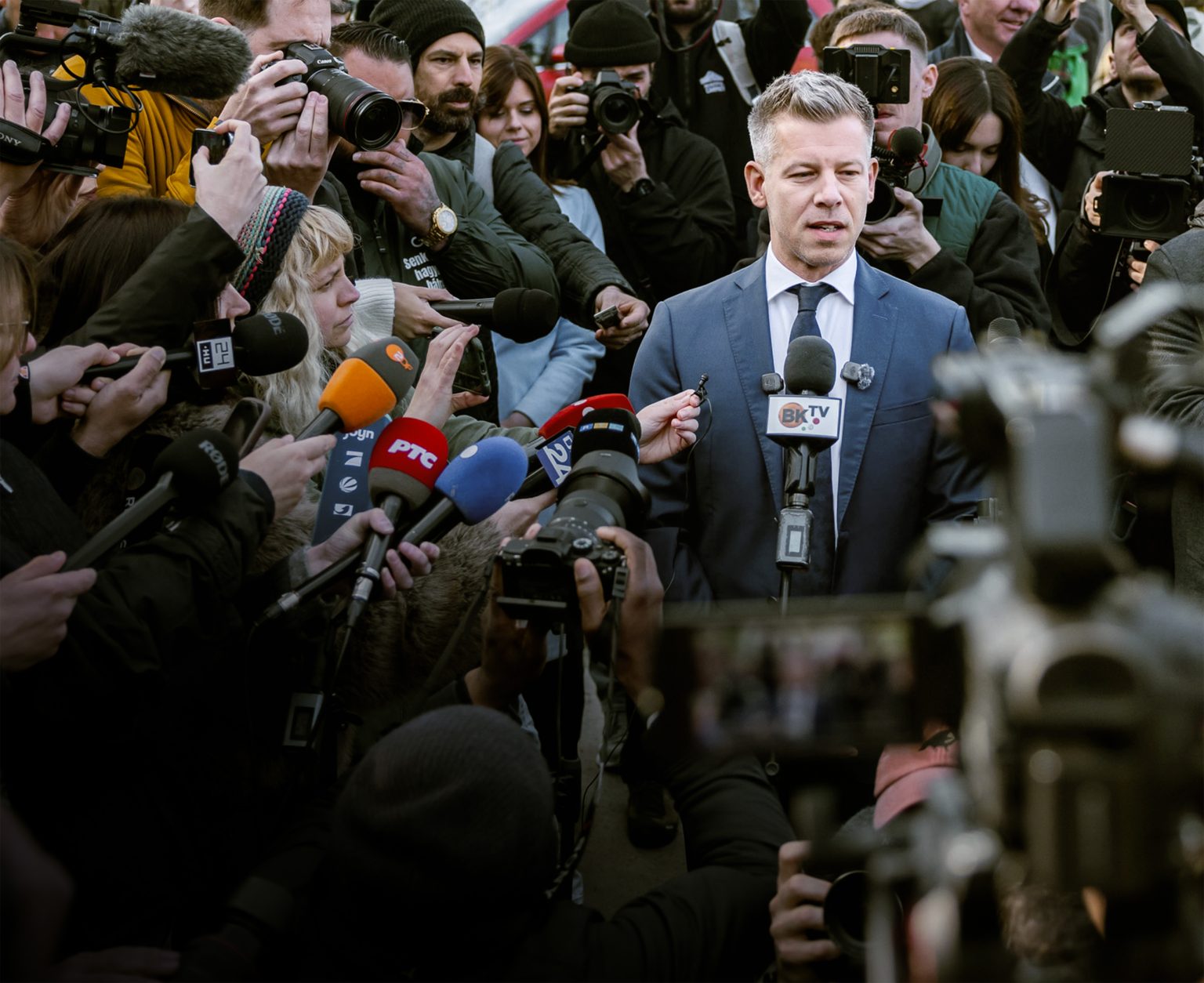
Prime Minister Viktor Orban’s governing coalition, made up of Fidesz – the Hungarian Civic Union and the Christian Democratic People’s Party (KDNP), came second in the 12 April elections. Peter Magyar’s formerly extra-parliamentary opposition Tisza party won a constitutional majority.
The outcome of the Hungarian elections will chart Budapest’s domestic and foreign policy for several years. Given the global situation, the vote was also closely watched abroad, as a perceptible change of course was expected in the event of Magyar’s victory.
Poland Before and After the Vote
The issue of Ukraine was one of the key areas for which both Moscow and Brussels watched Sunday’s elections closely. Magyar has travelled extensively across Hungary over the past two years, visiting villages large and small, many of them repeatedly.
In the final days of the campaign, he held five or six pre-election meetings a day. As American journalist and historian Anne Applebaum, known among other things for her book The Red Famine, points out, Magyar "avoided the themes that Orbán chose to promote - global politics, the war in Ukraine, the conspiracy that Ukraine was somehow colluding against or might even invade Hungary".
Polish President Karol Nawrocki met Orban in Budapest on 23 March and described the country as an old friend of Poland, which several politicians and political analysts described as a pre-election endorsement.
On 12 April, Foreign Minister Radoslaw Sikorski (Civic Platform, PO), who together with President and Prime Minister Donald Tusk (PO) make up the three most popular Polish politicians, again criticised Nawrocki for his trip to Budapest, but did not comment on the election outcome.
On 13 April, Tusk wrote about his phone call with Magyar, addressing him by his first name and saying he was very happy. The Polish president has not commented on the election.
European East
The Kremlin said Hungary "has made its choice" and that Moscow expects pragmatic relations with the new leadership. "We don't send congratulations to unfriendly countries. Hungary is an unfriendly country — it supports sanctions against us," presidential spokesman Dmitry Peskov said. Magyar signalled readiness for dialogue with Russia, while stressing that relations would remain distant.
Ukraine’s President Volodymyr Zelensky wrote on social media: "I congratulate Péter Magyar and the TISZA party on their resounding victory. … Europe and every European state must become stronger, and millions of Europeans seek cooperation and stability."
Leaders of the Baltic states also congratulated, with Estonian Prime Minister Kristen Michal saying Hungarians had made a "historic choice" and Lithuanian President Gitanas Nauseda describing the election result as a "great victory for Hungary and Europe".
A United Europe?
German Chancellor Friedrich Merz and Norwegian Prime Minister Jonas Gahr Store also congratulated Magyar on his election victory and highlighted European unity.
British Prime Minister Keir Starmer, French President Emmanuel Macron, European Commission President Ursula von der Leyen and Finnish Prime Minister Petteri Orpo also issued brief congratulatory messages.
"I note with full respect the decision of the Hungarian people in yesterday’s parliamentary elections and stand ready to work intensively with the new Hungarian prime minister, whom I congratulate on the election result. The goals of the Slovak government remain unchanged," Slovak Prime Minister Robert Fico (Smer) wrote on social media.
Among other things, Fico also mentioned the "revival of the V4 format" – the Visegrad Four grouping of Hungary, Poland, Slovakia and the Czech Republic – which, according to Magyar, is also a goal of his future government. At the same time, Fico was one of the few statesmen to express gratitude to the outgoing Hungarian prime minister. Several representatives of the Slovak opposition expressed their joy in connection with the Hungarian elections.
President Peter Pellegrini said he respected the election results and hoped that "relations between Slovakia and Hungary will maintain the high level they have enjoyed in recent years and will continue to be based on mutual respect, cooperation, joint membership of the European Union and the North Atlantic Treaty Organisation, good neighbourliness and friendship".
Czech President Petr Pavel praised Orban’s acknowledgement of defeat and congratulated Magyar. Czech Prime Minister Andrej Babis congratulated Magyar on social media on his victory, saying he would work constructively with whoever the Hungarians elect.
"Facing such a strong opponent as Viktor Orban has never been easy, but Magyar has won the trust of the majority of Hungarians and carries high hopes and expectations. He must not disappoint," Babis added.
Neither US President Donald Trump nor Serbian President Aleksandar Vucic has yet reacted to the Hungarian election results.