
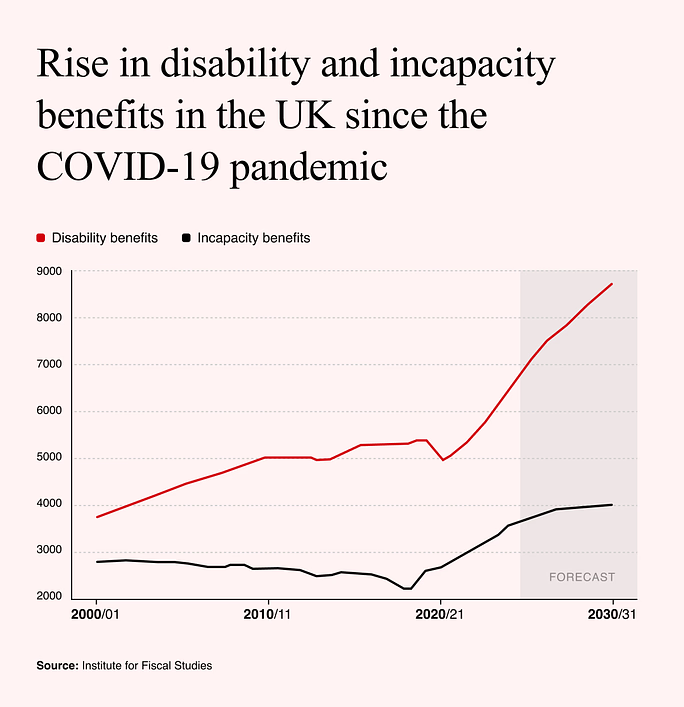
The left-leaning Tony Blair Institute, founded in 2016 by former Prime Minister Tony Blair, has called on Sir Keir Starmer’s Labour government to tighten welfare rules, warning that the UK’s benefits system is expanding at a pace that risks becoming fiscally unsustainable. Almost a third of people (30%) stated that they knew someone who should not receive benefits but was, while 53% believed that receiving benefits kept young people with mental health issues from working permanently. The rise is especially marked since the COVID-19 pandemic.
This is happening while Britain’s youth unemployment problem has worsened significantly, with figures showing it now exceeds levels seen in Greece and Spain. More than 900,000 people aged 18–24 were not in employment, education or training last year, the highest number since 2005, according to the Resolution Foundation. The share of this age group classified as economically inactive has risen to 15%, up from 13% in 2019, putting the UK above southern European countries that have traditionally struggled with high youth unemployment.
Calls for Reform from Within Labour Circles
The Institute has urged ministers to take more decisive action on sickness and disability benefits, arguing that the current system risks encouraging long-term detachment from the labor market. It has proposed stricter eligibility criteria and a clearer distinction between conditions that genuinely prevent work and those that can be managed alongside employment.
The think tank suggests that some claimants, including those with milder mental health conditions like anxiety, should not automatically qualify for long-term support, but instead be encouraged back into work through a more active and conditional system. The aim is to shift the balance away from passive support toward participation, particularly at a time when the UK economy continues to face labor shortages in several sectors.
This argument reflects a broader concern that the current structure of welfare incentives may, in some cases, discourage re-entry into the workforce. The Tony Blair Institute’s position does not call for the dismantling of the welfare state, but for a recalibration that prioritizes sustainability and economic engagement while maintaining social protection.
Policymakers are increasingly confronted with difficult trade-offs. On one hand, there is a clear need to provide support for vulnerable individuals, particularly those with genuine health conditions or barriers to employment. On the other hand, the continued expansion of welfare spending places pressure on public finances at a time when the government is already managing high levels of debt and competing demands on resources.

Political Fault Lines Emerge
The steep rise in those accessing welfare for mental conditions since the COVID-19 pandemic, well above what is seen in healthcare, suggests that some people are gaming the system. That has been made worse by the recent proliferation online of guides promising to show people how to maximize their access to benefits.
The Tony Blair Institute’s intervention reflects a view that, without reform, the system risks drifting toward long-term dependency. By tightening eligibility and encouraging greater workforce participation, proponents argue that it is possible to both reduce fiscal pressure and improve economic outcomes.
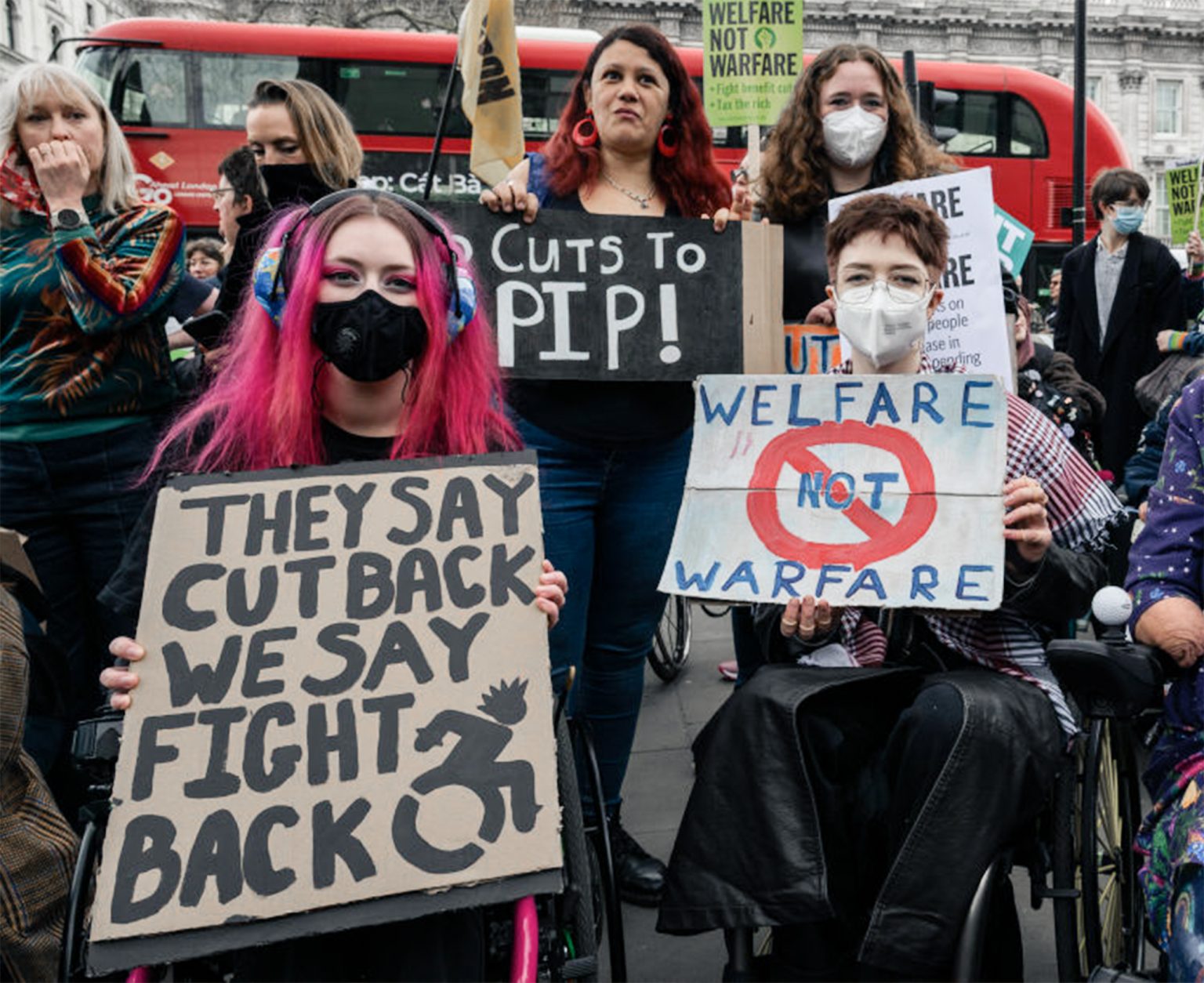
For Starmer’s government, the issue is politically sensitive. Labour has traditionally positioned itself as a defender of the welfare state, and any move to restrict access to benefits risks criticism from within the party as well as from advocacy groups. An attempt to slow the rate of increase in the welfare bill led to a government defeat in the House of Commons, damaging Starmer's authority. However, the scale and trajectory of spending growth make the question of reform increasingly difficult to avoid.
The fact that a center-left institution is now advocating stricter controls highlights how far the debate has shifted. Concerns about sustainability are no longer confined to conservative policymakers, but are now being voiced across a broader political spectrum.
Ultimately, the challenge for the Government is to strike a balance between maintaining a robust safety net and ensuring that the system remains financially viable over the long term. With welfare spending rising steadily over the past five years and projected to increase further, the UK faces difficult, likely unavoidable decisions.