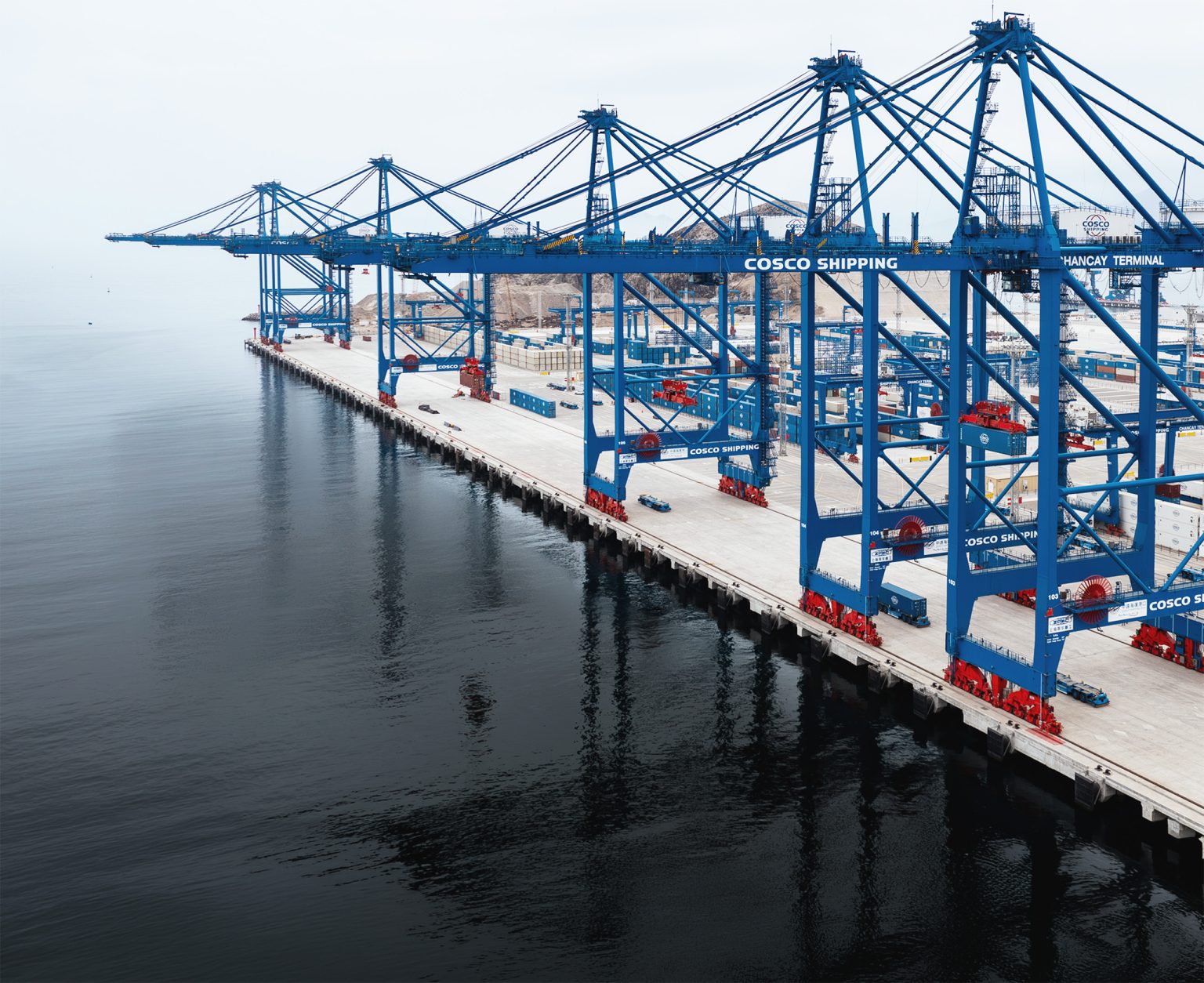
For the US Department of Defense, the port's commercial role is only part of the picture. The Pentagon has raised concerns that Puerto Chancay may not remain purely civilian in function, warning that the deep-sea port could also serve the Chinese navy.
The American Foreign Policy Council (AFPC) placed this in a wider strategic frame, citing the National Interest: "Over the past two decades, while the United States tried to develop democracies abroad, China has been quietly building an infrastructure empire across Latin America and the Caribbean, with the aim of economically and militarily alienating the continent from US interests."
The newest member of the BRI, as of May 2025, is Colombia. Its president, Gustavo Petro, is among the most vocal critics of Donald Trump in the region and has repeatedly traded public blows with Argentine President Javier Milei on the X platform.
It was against this backdrop that the events of 3 January carried particular weight for Petro and other regional leaders: after six months of escalating naval presence and strikes on alleged drug vessels, Delta Force commandos seized Venezuelan President Nicolás Maduro and his wife, Cilia Flores, a move widely read as a warning against too close an alignment with China.
The US State Department accused Maduro of leading the Cartel de los Soles, a criminal organization that smuggles drugs into the United States. No direct links between the Chavista government and the cartel have been formally established, though the organization draws its visual identity from the insignia of the revolutionary Bolivarian army.
With the continent's most prominent opponent of the Monroe Doctrine removed and oil reserves estimated at half a billion dollars seized alongside him, Washington had sent its signal: American threats under Donald Trump are not to be taken lightly.
The Long Game
The connection between South America, narco-terrorist organizations and the People's Republic of China is not immediately apparent. Yet in its Trumpian update, the Monroe Doctrine, which first relegated the southern continent to America's backyard, brings all three into a single strategic frame.
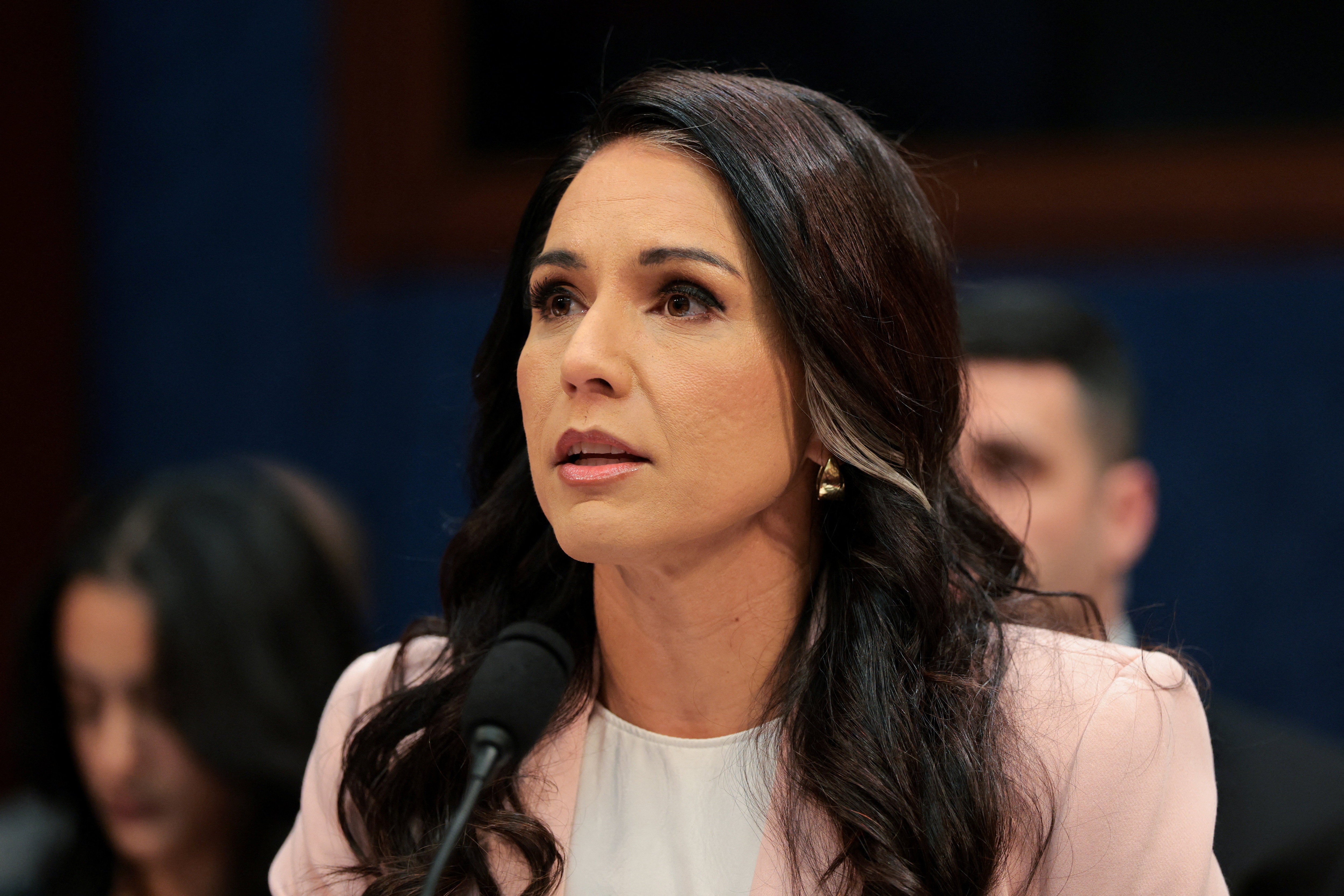
In her latest appearance before Congress, Tulsi Gabbard, Director of National Intelligence, delivered the intelligence community's regular threat assessment. Drug trafficking remains the greatest danger to the homeland, the assessment concluded, whether in the hands of the Cartel de los Soles or Colombian left-wing extremist militias such as the National Liberation Army (ELN) and the Revolutionary Armed Forces of Colombia (FARC).
In Washington's view, the ideological ties between these organizations and the current standard-bearer of global communism are compounded by a more tangible link. The chemical precursors used by these militias, and by Mexican and other cartels, to produce drugs are imported from across the Pacific.
The Trump administration has maintained that fentanyl, the drug most frequently invoked during the election campaign, is produced on Mexican territory using precursors brought in by Chinese nationals, who subsequently cross into the US illegally.
Beijing’s Expanding Influence Meets Regional Pushback
For Washington, even a commercial foothold is cause for concern. Two-thirds of South American states belong to the BRI. Panama, the most recent recruit, has since stepped back from the initiative: President José Raúl Mulino exchanged harsh words with Trump over the Canal, but his government's practical response was to allow China's economic presence to diminish.
In early February, Uruguayan President Yamandú Orsi travelled to Beijing and Shanghai. Uruguay is one of the few Latin American countries outside the BRI, but the visit yielded several memoranda of understanding alongside agreements on meat trade and scientific exchange.
A mid-June 2025 assessment by the US Council on Foreign Relations (CFR) finds one prominent landlocked country conspicuously absent from the list of Chinese partners: Paraguay. Its case illustrates why Beijing's economic expansion in the region will not be straightforward.
As the New York Times recently recalled, Paraguay is the last South American country to recognize the Republic of China (Taiwan) as the legitimate government of China. Diplomatic relations between the two date to 1957, a legacy of two fiercely anti-Communist administrations.
A statue of Chiang Kai-shek, founder of the Kuomintang, stands in the capital, Asunción. The Stroessner dictatorship that cemented the relationship has long since given way to elected governments.
Stroessner's latest successor, Santiago Peña, has been described by US Secretary of State Marco Rubio as "a strong American ally". In an interview with the Times, however, Peña acknowledged that he and his right-wing government are under pressure from Beijing to replace the Taiwanese embassy with a mainland Chinese one.
The political map of South America is drawn along a familiar axis: left-wing governments are assumed to lean toward Beijing, right-wing ones toward Washington. Both "capitalist" Washington and "communist" Beijing work within this framework, though the expansion of either power has long ceased to be driven by ideology.
Alongside cyber-attacks, Paraguay faces trade restrictions directed at its farming sector. The farmers concerned have turned to the Paraguay-China Chamber of Commerce, which in turn brings pressure to bear on the government from within.
For Beijing, this is a long-distance race. The prize is commercial dominance in America's own backyard.