
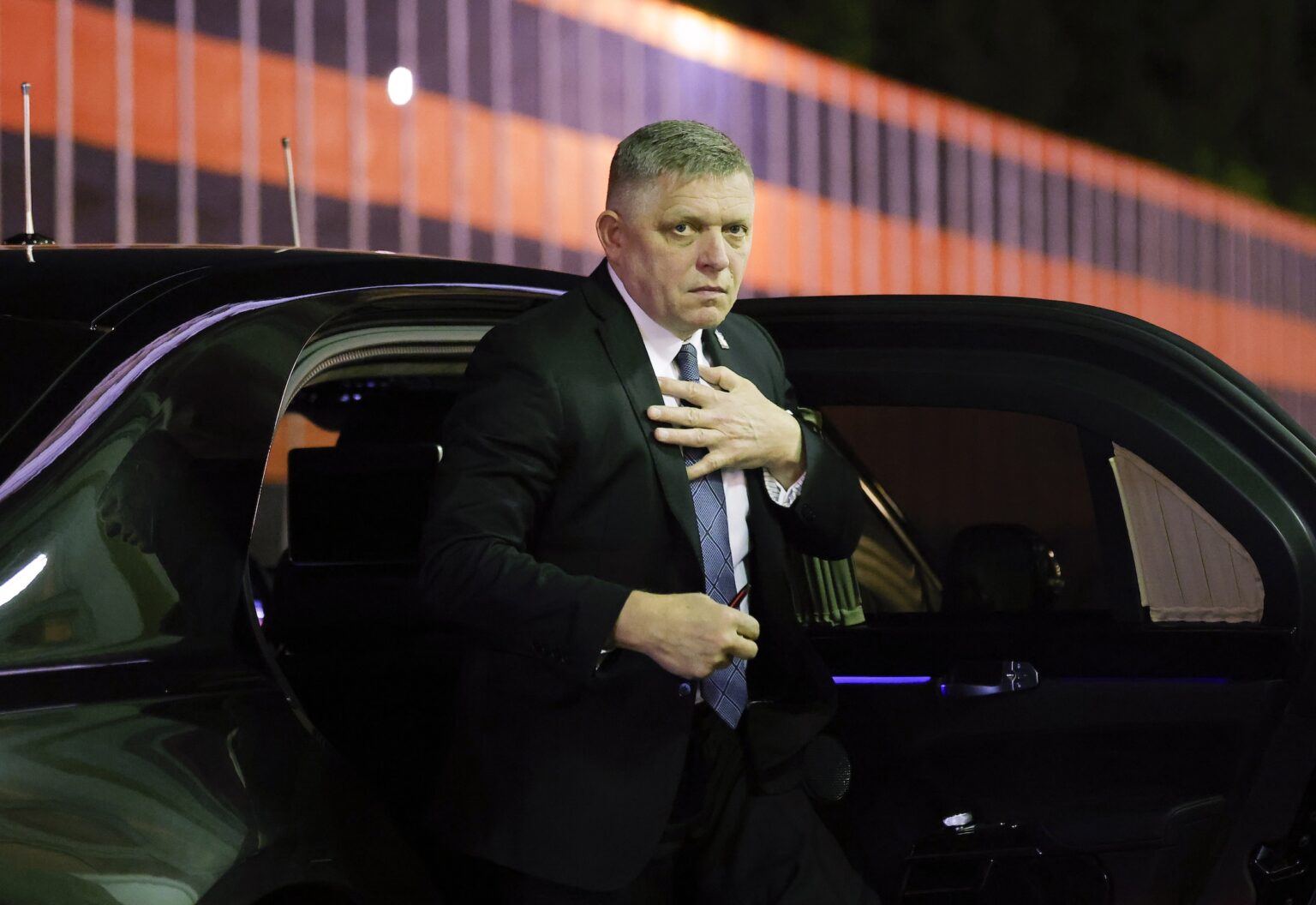
The Russian newspaper Moskovsky Komsomolets reported that the Czech Republic had banned Slovak Prime Minister Robert Fico from using its airspace for travel to Moscow. The Czech Foreign Ministry firmly denied the claim, describing it as false, according to the Czech news site Novinky.cz.
The report also said that several European countries, including the Czech Republic and Poland, had allegedly prevented the Slovak prime minister from flying to Russia. "Some European countries have already banned Fico’s plane from using their airspace – namely the Czech Republic and Poland", the newspaper wrote.
Czech officials responded swiftly. Foreign Ministry spokesman Adam Corgo confirmed that the Slovak authorities followed standard procedures and received the required clearance without delay. "The Slovak side submitted a standard application for an overflight permit, and it was issued without delay. The claims of a 'ban' are false", he said.
Baltic States Close Airspace
Prague therefore did not join countries that have refused overflight permission. Estonia, Latvia, Lithuania and Poland have closed their airspace to the Slovak prime minister. The Baltic states say the measure is intended to maintain political and economic pressure on Russia.
Estonian Foreign Minister Margus Tsahkna stressed that pressure on Moscow must be maintained: "We must continue to isolate the aggressor politically and economically and put firm pressure on it until it has fully come to terms with the consequences of its actions", he wrote on X.
Ukrainian Foreign Minister Andrii Sybiha also praised the Baltic states’ position. He thanked them for their "firm stance against the use of airspace to deepen relations with Russia" and called on other countries to follow suit.
Fico is travelling to Moscow for Victory Day celebrations, traditionally held in May. It is not his first recent visit to the Russian capital. However, given airspace restrictions, his route remains unclear. Media reports suggest he is even considering travelling by car.
The episode highlights ongoing tensions over competing narratives, with Czech officials emphasizing that the facts differ from the claims published by the Russian newspaper.