
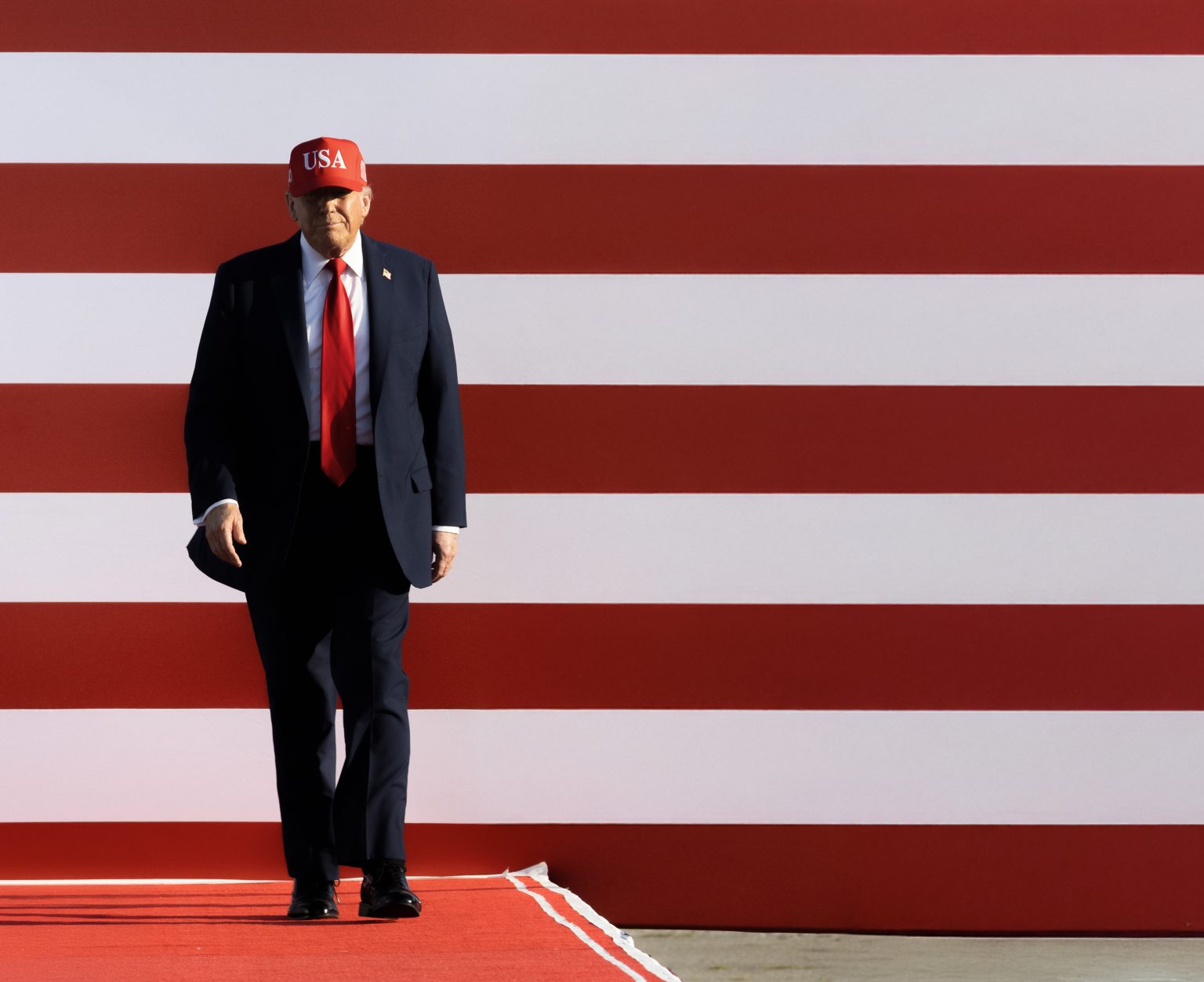
US President Donald Trump said the United States would begin an operation on Monday morning to free ships stranded in the Strait of Hormuz, describing the move as a “humanitarian gesture” to help neutral countries caught up in the US-Israeli war with Iran.
Trump said the effort would assist ships and crews that had been “locked up” in the strait and were running low on food and other supplies as Iran blocks access through the crucial waterway.
“We have told these Countries that we will guide their Ships safely out of these restricted Waterways, so that they can freely and ably get on with their business”, Trump wrote on Truth Social.
Iran has been blocking nearly all shipping from the Gulf apart from its own for more than two months. Last month, the US imposed its own blockade on ships from Iranian ports.
It was not immediately clear which countries the US operation would help or how it would work. The White House did not immediately respond to a request for further details, and the Pentagon declined to comment.
Trump warned that any interference with the US operation would “have to be dealt with forcefully”.
Project Freedom to Involve Destroyers and 15,000 Troops
US Central Command (CENTCOM) said its forces would begin supporting Project Freedom on 4 May to restore freedom of navigation for commercial shipping through the Strait of Hormuz. The mission, ordered by the president, is intended to support merchant vessels seeking to pass freely through the essential international trade corridor.
“Our support for this defensive mission is essential to regional security and the global economy as we also maintain the naval blockade”, CENTCOM commander Admiral Brad Cooper said.
US military support for the operation is expected to include guided-missile destroyers, more than 100 land- and sea-based aircraft, multi-domain unmanned platforms and 15,000 service members, according to CENTCOM.
The Maritime Freedom Construct, an initiative by the State and Defense Departments, is also part of the effort. It is intended to improve coordination and information sharing among international partners in support of maritime security in the strait.
Iran Reviewing US Response
Senior Iranian official Ebrahim Azizi warned that any US interference in the Strait of Hormuz would be considered a violation of the ceasefire after Trump announced that the United States would begin guiding ships through the waterway. Azizi, who heads the Iranian parliament’s National Security Commission, said: “The Strait of Hormuz and the Persian Gulf would not be managed by Trump’s delusional posts!”
Negotiations between the US and Iran have long been stuck over their differing positions on the nuclear program, with Washington insisting that Tehran accept strict limits and give up its stockpile of more than 400 kg of highly enriched uranium before the war can end.
“Under this framework, negotiations over the more complicated nuclear issue have been moved to the final stage to create a more conducive atmosphere”, the senior Iranian official said.
Tehran describes its nuclear program as peaceful, but says it is willing to discuss some restrictions in return for the lifting of sanctions. Iranian media said the 14-point proposal also includes the withdrawal of US forces from nearby areas, lifting the blockade, releasing frozen assets, paying compensation, lifting sanctions, ending the war on all fronts, including Lebanon, and creating a new control mechanism for the strait.
Pressure is also mounting on Trump over the blockade of the Strait of Hormuz, which has choked off 20% of the world’s oil and gas supplies and pushed up fuel prices, including in the US. At home, his Republican Party faces the risk of a voter backlash over higher prices in November’s midterm congressional elections.
Negotiations Show Little Progress
The situation is also evolving at the diplomatic level. According to Iranian state media, Tehran is reviewing the US response to its 14-point peace proposal, which Washington conveyed via Pakistan. At the same time, Iranian Foreign Ministry spokesperson Esmaeil Baghaei said: “At this stage, we do not have nuclear negotiations.”
Trump has indicated that he is likely to reject the proposal, saying Iran “has not paid a big enough price”. Asked whether he might resume attacks on Iran, he replied: “I don’t want to say that. I mean, I can’t tell that to a reporter. If they misbehave, if they do something bad, right now we’ll see. But it’s a possibility that could happen.”
The situation is complicated by developments in the region. Israel has ordered the evacuation of residents in southern Lebanon after what it described as a Hezbollah violation of the ceasefire, a development that could affect broader peace efforts.
(reuters, max)