
On the evening of 8 May, half a day before the start of the celebrations on Red Square in Moscow, Volodymyr Zelensky issued a presidential decree authorizing “the holding of a military parade in the city of Moscow (Russian Federation) on 9 May 2026”.
The decree also listed coordinates defining the precise area that was not to be subjected to Ukrainian attacks. In the event, it was not. Zelensky justified the decision by citing talks with Washington, numerous requests and humanitarian considerations.
A Prisoner Swap in Doubt
One of the main conditions for Ukraine not attacking the Russian capital during the celebrations of Germany’s defeat and the official end of World War II in Europe was a thousand-for-thousand prisoner exchange.
Russian President Vladimir Putin said on the evening after the celebrations, however, that Ukraine was not ready for the exchange. It is therefore still unclear whether it will take place. According to several observers, Putin’s failure to honor his promise may have been revenge for the mocking tone of Zelensky’s decree.
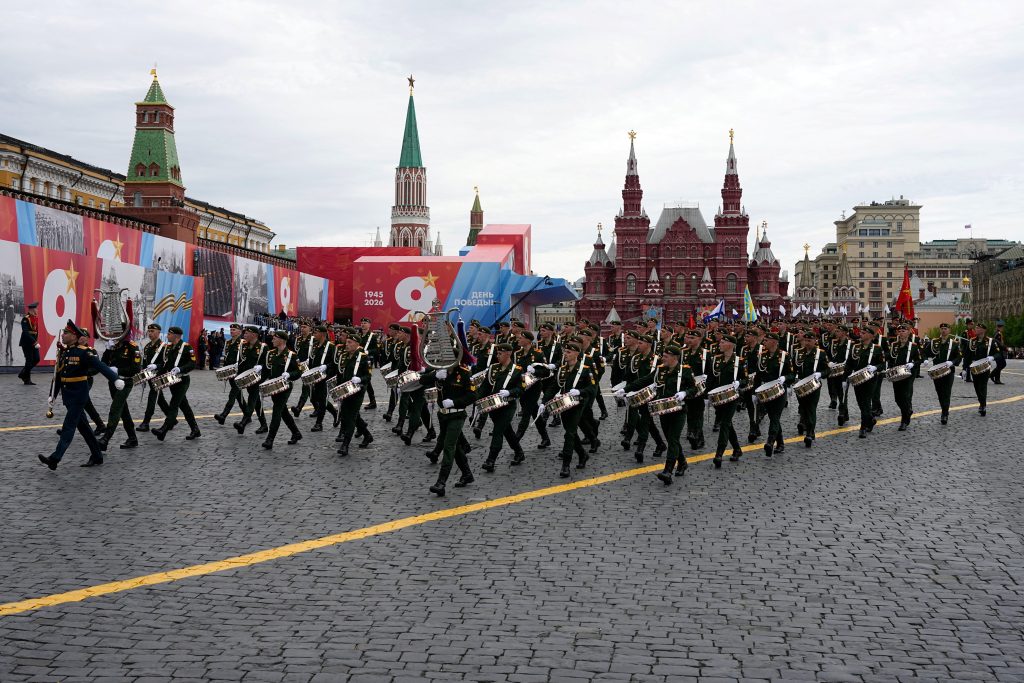
Whether or not the prisoner exchange happens, the celebrations and the military parade at their center were striking. It was impossible not to notice the far more modest budget and the incomparably smaller deployment of troops and equipment compared with previous years.
A Parade Stripped of Its Power
The Russian army, regarded as the world’s second-strongest military until the invasion of Ukraine, used to have something to show every year. The Moscow celebrations therefore drew military enthusiasts and curious onlookers alike, regardless of their ideological background. Put simply, there was always something to watch.
The full footage of this year’s celebrations on Moscow’s central square is still freely available, and it is hard not to notice how often the camera cuts to a man carrying a nuclear briefcase. In fact, the black case used for launching nuclear weapons became the only symbol of power the Russian military had left to display this year.
The march of troops across Red Square lasted only 16 minutes, the shortest since 1945, and no heavy military equipment was present. Because of the low number of troops, state television avoided drone footage that would have made the vast square look empty.
Nine Su-30 and MiG-29 fighter jets crossed the sky, followed at the end by six Su-25s spraying the colors of the Russian flag. Yet even that was not enough to make an impression. Compared with previous years, the display was simply too modest.
A Quick Exit for Putin
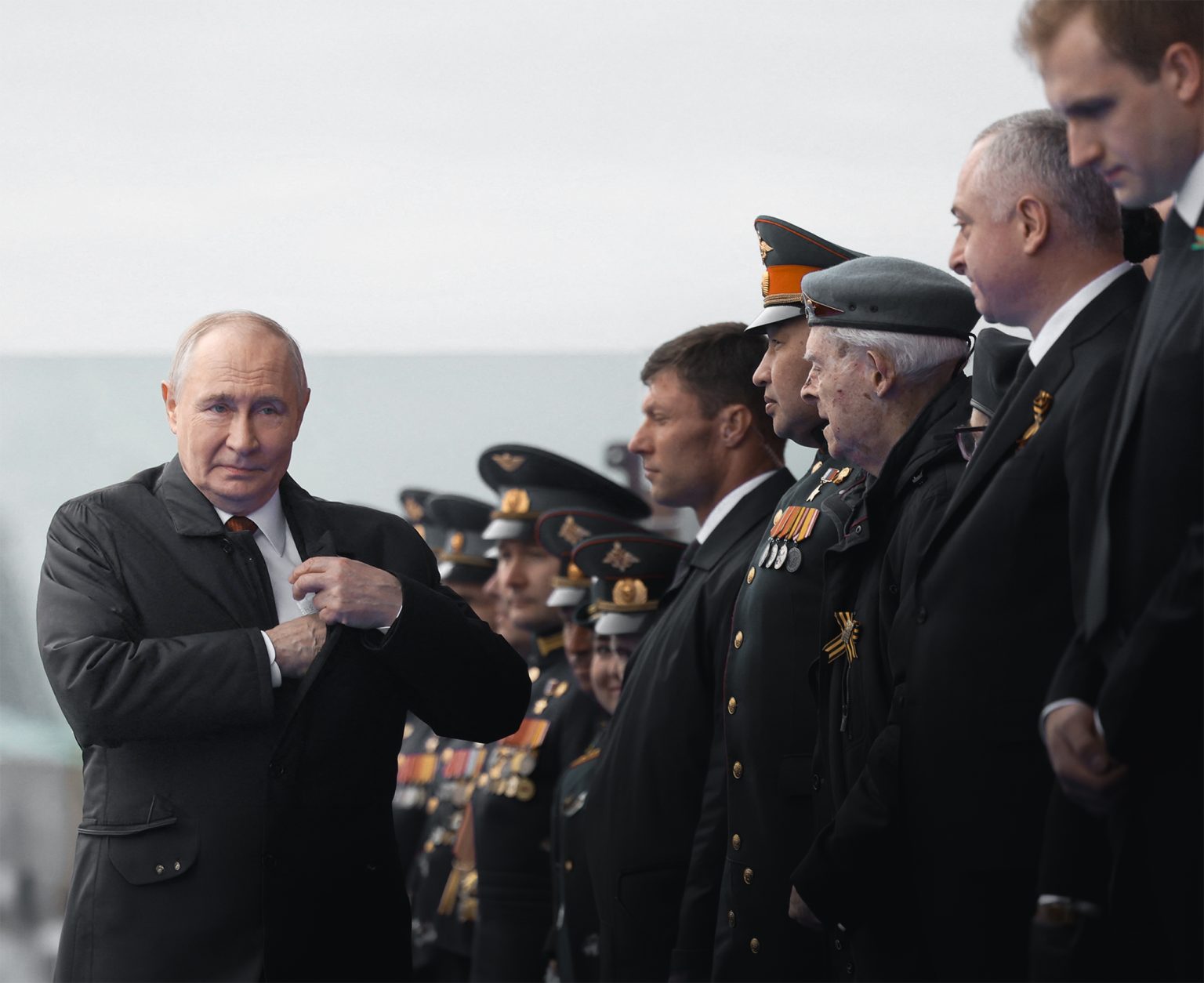
The Russian president’s behavior after the parade had ended also attracted attention. Instead of taking part in the traditional procession across the square and laying wreaths with foreign guests at the eternal flame, Putin briefly greeted a few veterans and quickly got into an armored vehicle.
He then drove straight to the Kremlin, the city’s central fortress, only a few hundred meters away. Security concerns are clearly playing an exceptionally important role.
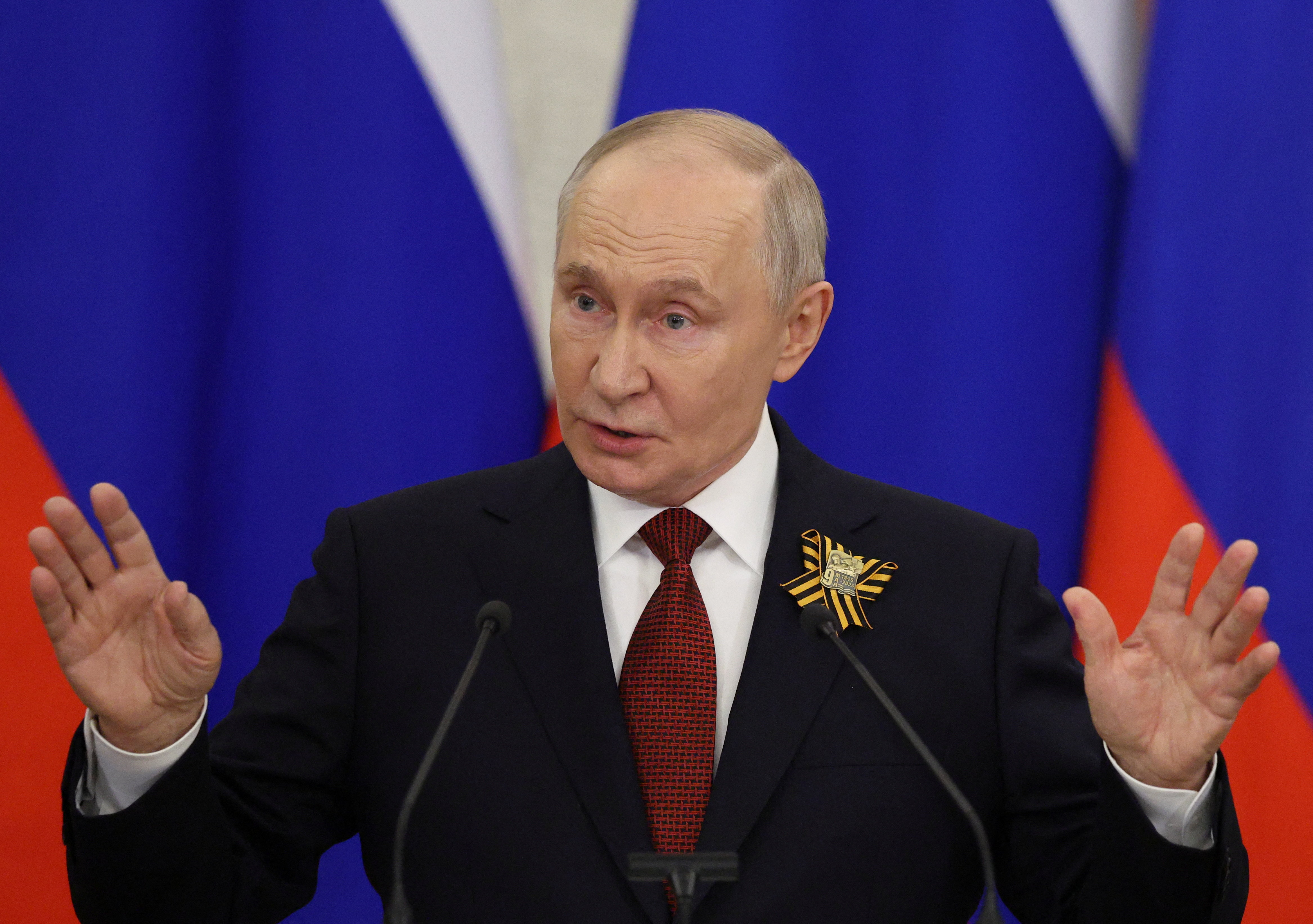
In his speech, Putin devoted considerable attention to the contribution of the so-called home front during the Soviet-German war, known in Russian historiography as the Great Patriotic War.
He was clearly applying those words to the current situation and directing them at workers in industry, agriculture and science, whom he thanked directly for their contribution to the achievements of the Russian army during the “special military operation”.
Internet restrictions and the fallout from the oil fires in Tuapse are draining Russians’ resolve to support the anti-Ukrainian campaign at home. Words like these were presumably intended to help restore that determination.
Nor was the mood helped by the fact that the sharp, energetic conductor of previous years seemed to have lost his usual spark. Major General Timofey Mayakin looked visibly subdued this time, and his movements lacked their familiar dynamism. It may seem a small detail, but it captured the atmosphere of this year’s celebrations well. The same mood could be read in Putin’s face during the ceremony.
The cloudy weather only added to the impression.
The Pomp Is Wearing Thin
The low number of foreign guests was also striking, including the absence of long-standing regulars at the celebrations from post-Soviet states.
On the occasion of 9 May, some veterans of the Soviet-German war received a one-off payment of 80,000 rubles, about $1,000. That is less than in Belarus, Kyrgyzstan, Uzbekistan, Tajikistan or Kazakhstan. It is not clear, however, whether this was an isolated case or another sign of cracks in the Russian economy.
Not since the collapse of the Soviet Union has the victory parade looked as grim as it did this time. An event that, only a few years ago, stunned the world with its grandeur and pomp now looks more like the ceremony of a state trying to preserve its former image as a great power.
It is also telling that Russians who support the Kremlin’s war effort in Ukraine are increasingly posting images of the 1945, 1985 and 2010 parades on social media, as if they were searching nostalgically in the past for an image of power they are starting to miss.