
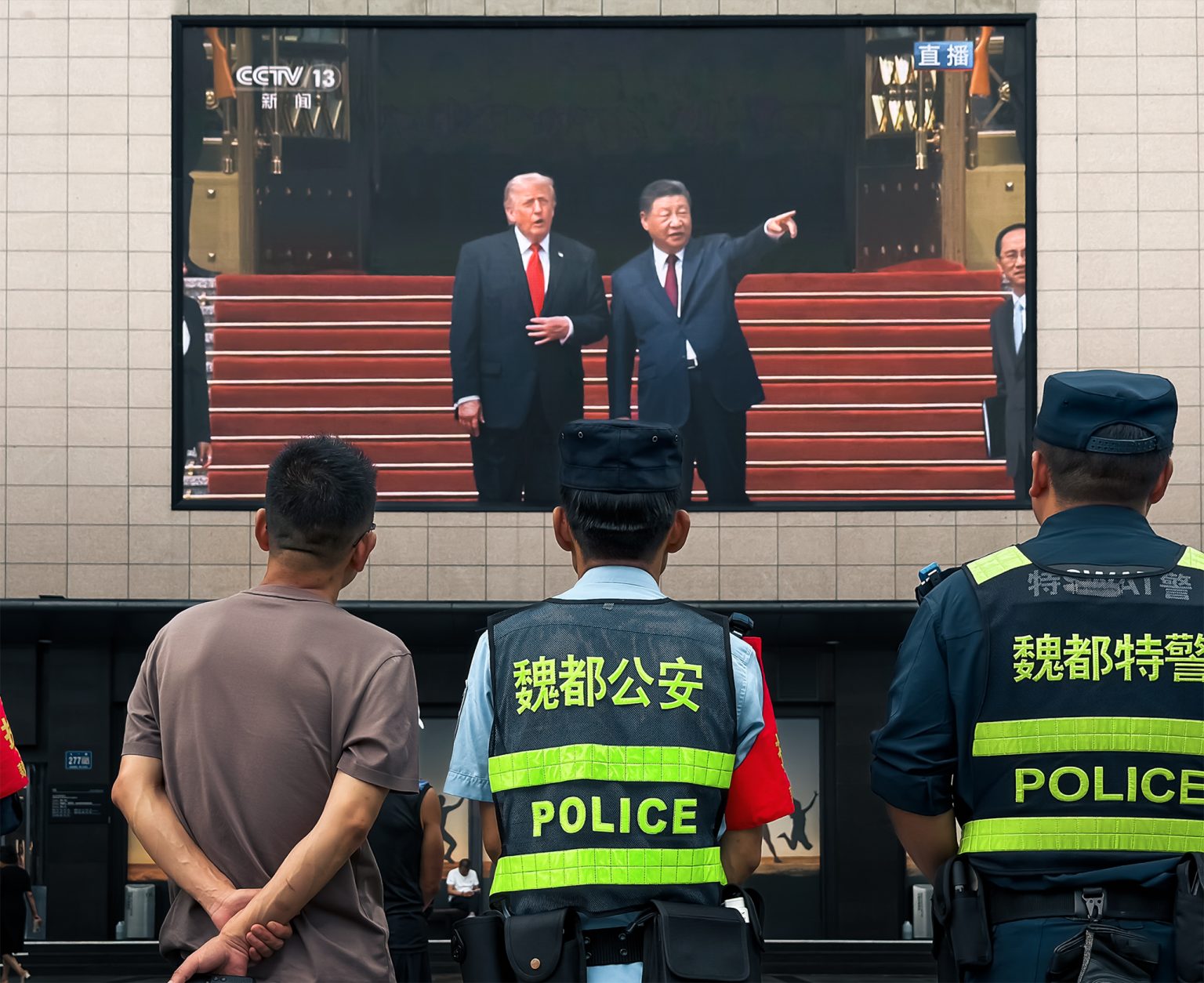
Despite the dignified reception, Beijing was careful not to give the impression, even by the slightest gesture, that it was prepared to yield to Washington on major issues.
On the contrary, it precisely calibrated a willingness to cooperate where it considered such cooperation advantageous, while remaining firm on core interests and non-committal everywhere else. China itself is also trying to find its footing between the end of global American hegemony, from which it has benefited economically, and the emerging multipolar order.
Both countries are economic superpowers. The US is still the world’s largest economy in terms of nominal output, while China has already overtaken it in purchasing power parity, accounting for 20% of world output compared with 15% for the US.
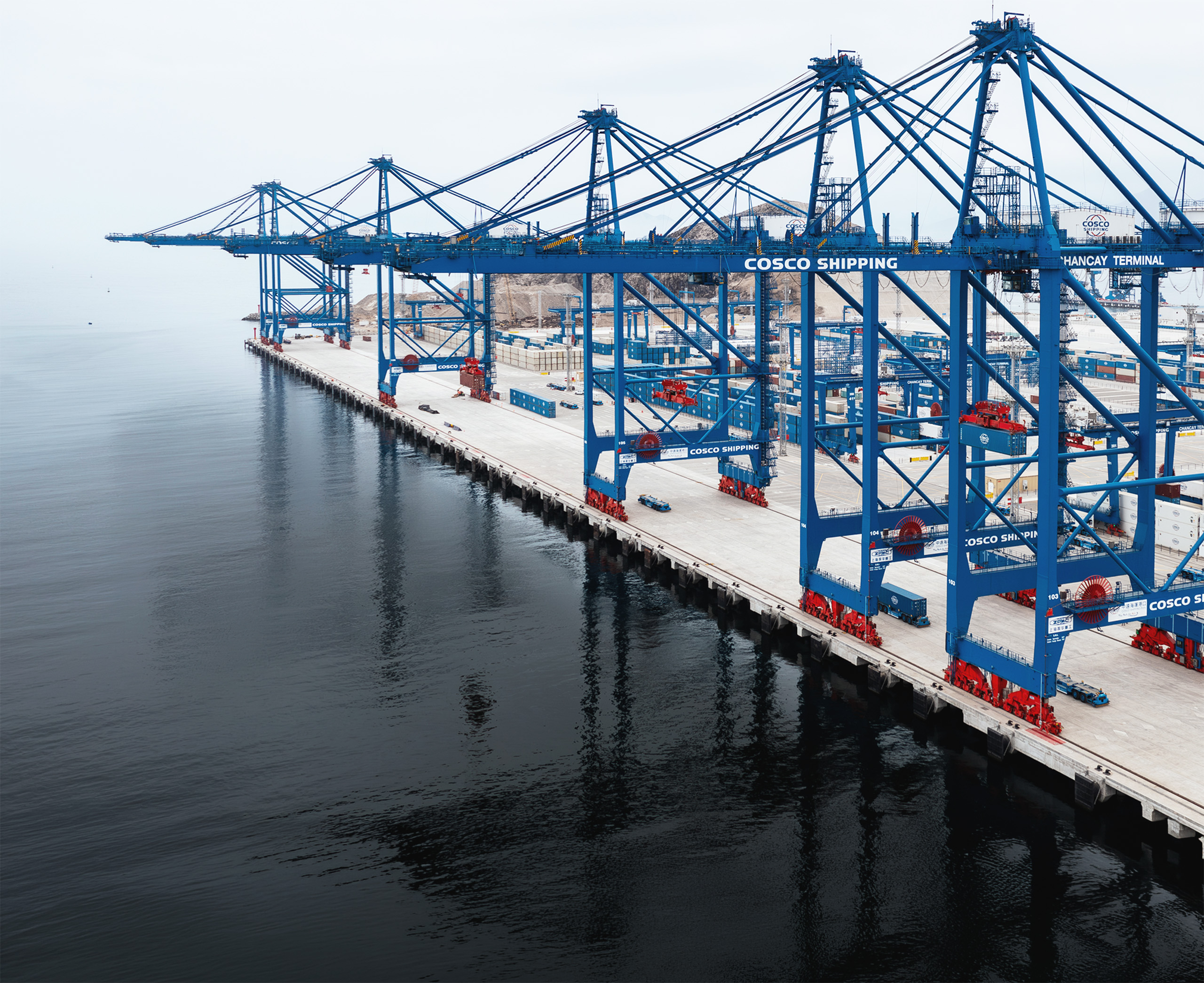
No country is a more important trading partner for China than the US, and Beijing runs its largest trade surplus with Washington. For the US, China is the third most important trading partner after Mexico and Canada, and Washington runs its largest trade deficit with Beijing.
China Insists on Reciprocity
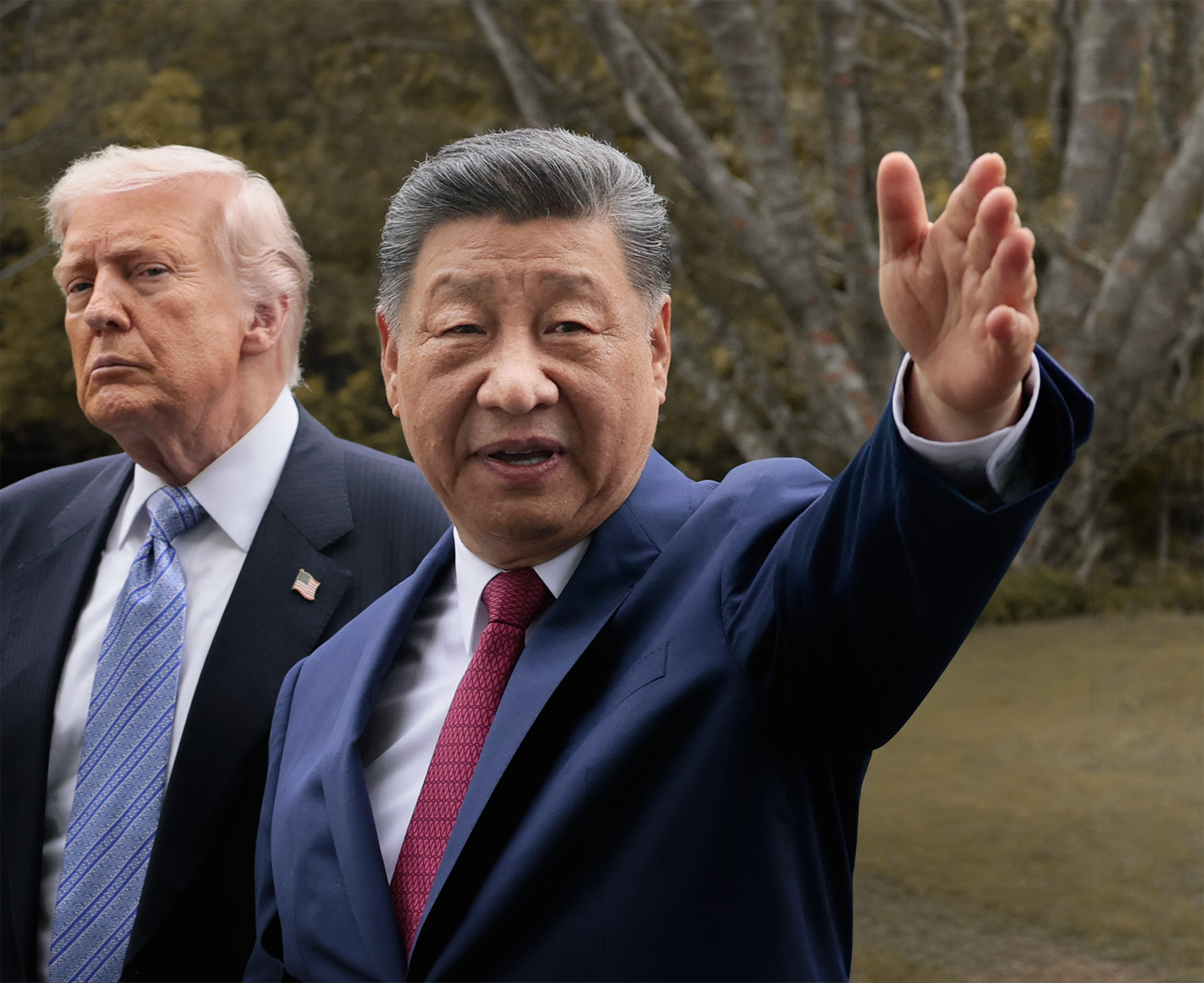
Trump tried last year to reduce both the deficit and dependence on China. But unlike others, China did not yield to his aggressive moves. When he sought to sharply increase tariffs on imports from China in the spring, Beijing responded in kind and chose to leave the matter there. When he imposed sanctions on hundreds of Chinese firms in the autumn, Beijing threatened sanctions on US exports of strategic raw materials, forcing Trump to back down again.
Undeterred, he announced sanctions on Chinese oil firms doing business with Iran a few weeks ago. Once again, Beijing made clear that it would not let the matter pass. If Trump thought such steps would put China under pressure, he achieved the opposite. In the end, he repeatedly put himself under pressure and damaged his own credibility.
Nevertheless, Beijing knows that it needs to negotiate with Trump. Its ties with the US matter more than any other foreign partnership, bringing China enormous gains as well as risks. President Xi Jinping expressed one hope and one warning at the start of the visit. Showing his familiarity with the American geopolitical debate, he publicly voiced the expectation that the two powers could avoid the Thucydides trap.
The ancient historian of the Peloponnesian War is much discussed in the US today. Two and a half thousand years ago, he explained that the Pan-Greek War was triggered by Sparta’s fear of the rising power of Athens, while several decades of warfare exhausted the Greeks and opened the door to Persian hegemony. It was also a reference to the thesis of a book on Thucydides’ Trap by the American political scientist Graham Allison, which has been received with considerable respect in China.
In today’s terms, the question is whether China’s rise will lead to war with the US.
Taiwan as the Key Test of Sino-American Relations
In subsequent talks, Xi added an unequivocal warning: hands off Taiwan. The foreign ministry spokeswoman then made clear that Beijing considered Taiwan the most important issue in Sino-US relations. She wrote on X that as long as the issue is handled correctly, relations between China and the US will remain stable, but that otherwise there will be a conflict that jeopardizes everything. The Chinese president appears to have spoken to his guest in the same terms.
This warning, too, is Thucydidean. The Peloponnesian War did not begin with a direct clash between Athens and Sparta, but with a dispute between their allies over a city claimed by both sides.
China insists on the status quo, under which both Beijing and Taipei claim that the island and the mainland form one state, while disagreeing over who represents it. For now, Beijing can live with the fact that almost all countries in the world recognize it as China’s government.
A declaration of independence by Taiwan would probably trigger a military response, although China is not really interested in war. But Beijing is likely to react much more strongly than in the past to any steps that could lead to such a declaration. That applies both to arms supplies to Taiwan and to meetings between senior representatives of countries that recognize China and Taiwanese officials, which some Czech politicians, for example, have turned into a business in recent years.
In any case, Donald Trump indicated on his return home that he had yet to change his mind about the $14bn supply of US weapons to Taiwan. It is unclear, however, what he might get from China in return for cancelling it.
Beijing will almost certainly not help him with Iran, as some in Washington had imagined. China does have an interest in keeping the Gulf calm, since almost half of its oil imports arrive on tankers sailing through the Strait of Hormuz. Yet it holds Washington responsible and will certainly not push Iran toward the capitulation envisaged by the US. Moreover, it has agreed with Iran that Chinese ships can pass through the strait.
Deals That Time Will Test
It is possible that Trump’s reward for being accommodating on Taiwan will be Chinese purchases of soybeans, beef or Boeing aircraft, albeit at lower levels than expected. Trump announced them triumphantly, but his Chinese partners have not yet confirmed the purchases.
At the same time, it is not clear whether the two governments have agreed on a joint approach against the misuse of Chinese chemical products used by Mexican gangs to produce fentanyl for the US market. It also remains to be seen what room American technology companies such as Tesla, Apple and Nvidia will be given in the Chinese market. Their chief executives accompanied Trump on the trip.
Beijing has no reason yet to trust Trump on anything and will wait to see how matters develop. It also showed its caution and intransigence in its approach to Secretary of State Marco Rubio. As a senator, Rubio had been at the forefront of various anti-China initiatives, prompting Beijing to put him on its sanctions list. As a member of the Trump delegation, however, he was allowed to travel to China for negotiations without being removed from the list. Beijing resolved the administrative discrepancy by changing the Chinese spelling of Rubio’s name, rewriting the first syllable with a different but identical-sounding character.
The Rise of Multipolarity
China is treading carefully because it is in a difficult position not only over Taiwan. While it welcomes the end of US hegemony, no country has benefited in recent decades as much from the liberal economic order that the US imposed on the world after World War II.
The emerging multipolar order gives China a decisive role, but it also lacks clear economic rules. A liberal economic order that creates mutual dependence is hardly compatible with multipolarity, in which everyone guards their own vulnerabilities against everyone else.
What is clear about the emerging economic rules is that they will be different without the American hegemon and probably less favorable to China, especially since, despite its weight, China will not be in a position to set and enforce them by itself.